How Much DNA Do Siblings Share? Full Siblings, Half Siblings and Identical Twins
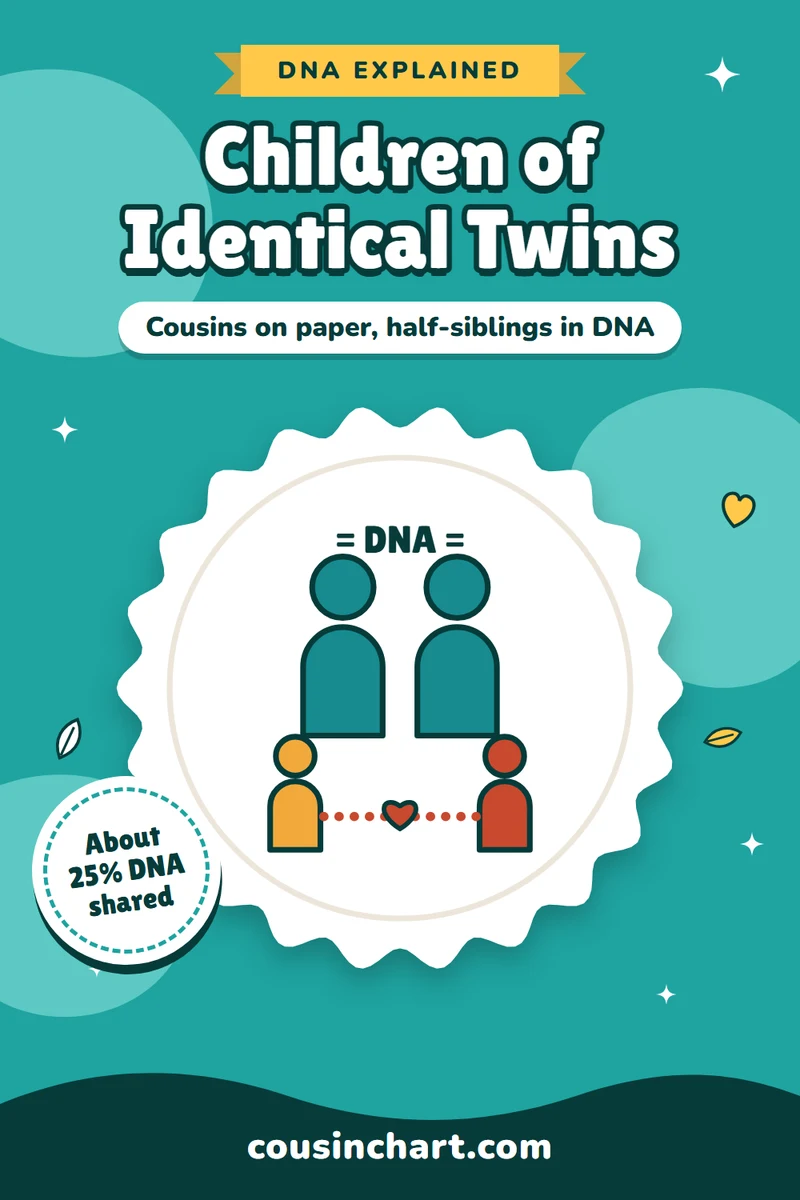
Full siblings share about 50 percent of their DNA on average, half siblings share about 25 percent, and identical twins share nearly all of it. Those numbers are averages, not promises: DNA is passed down in random pieces, so real results vary from pair to pair. Below is a chart of averages, a plain-English explanation of why siblings are alike but not identical, and tips for anyone opening a DNA kit this holiday season.
Tap one to see the answer.
▶ Check how you're related in the free calculator
DNA shared by relationship (averages)
| Relationship | Average DNA shared | Why |
|---|---|---|
| Identical twins | Nearly 100% | Same starting egg |
| Parent and child | About 50% | Half from each parent |
| Full siblings | About 50% | Same two parents, random mix |
| Fraternal twins | About 50% | Same as full siblings |
| Half siblings | About 25% | Only one parent in common |
| Grandparent, aunt or uncle | About 25% | One generation apart |
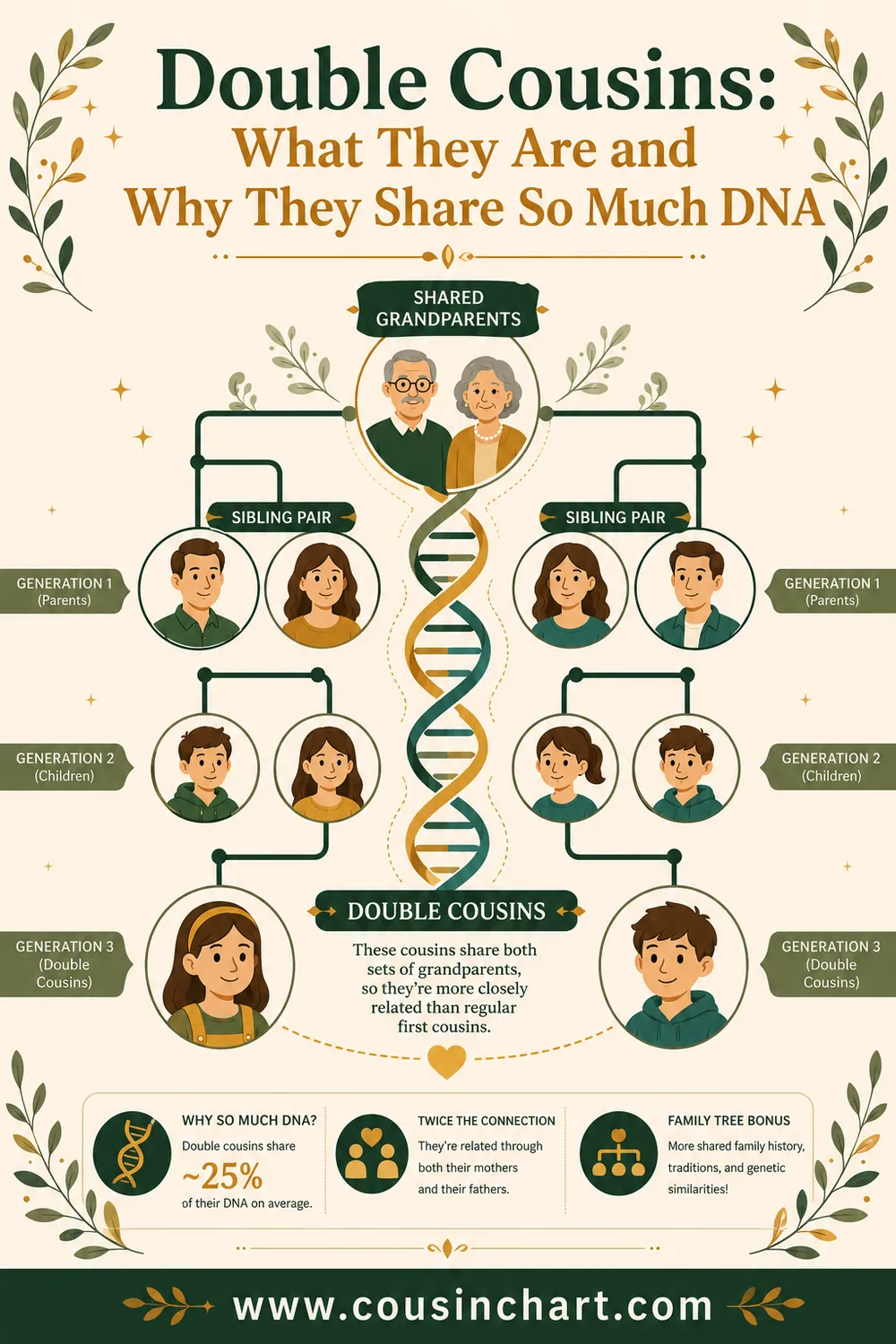
| First cousins | About 12.5% | Share grandparents |
These are well-known average figures. Your own results can be above or below them, and a DNA company may show them as a range.
Why full siblings are alike but not identical
Each parent has two copies of every piece of DNA and passes down one copy at a time, chosen at random. At any spot, two full siblings may get the same copy from both parents, the same copy from one parent, or different copies from both. On average, that works out to about half of their DNA in common. It is like two kids each picking half of a shared deck of cards: the hands overlap, but they are not the same hand.
Half siblings: why about 25 percent
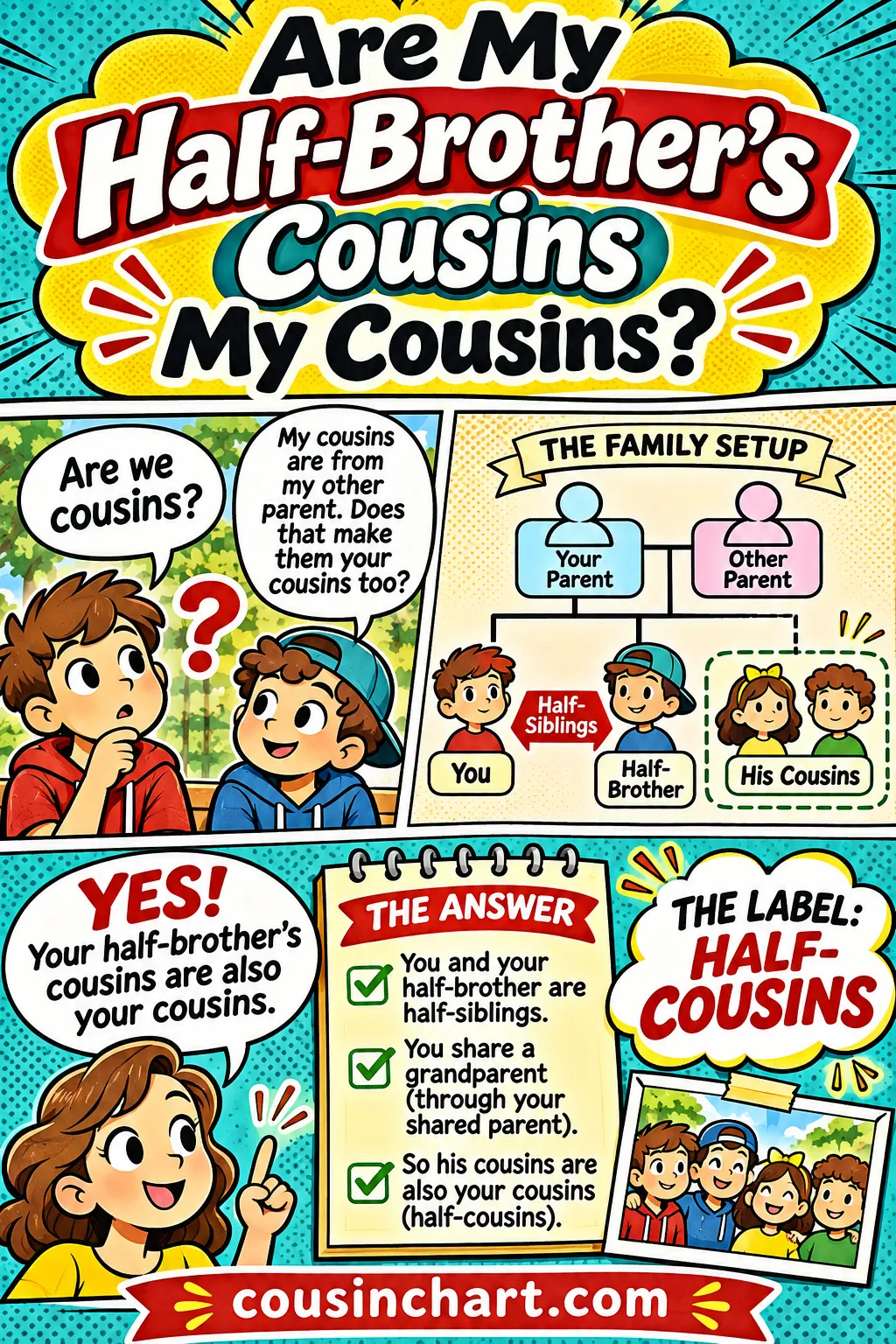
Half siblings share one parent, so they can only match through that parent. Since each of them got about half of that parent's DNA, the overlap averages around a quarter. That figure is close to what a grandparent or an aunt shares with you, so a test may not say "half sibling" with certainty. Our guide to aunt, uncle, grandparent or half sibling explains how to tell them apart, and DNA tests for half siblings covers what a test can show.
Why results vary
- Random sorting. Which pieces get passed down is a matter of chance.
- Different companies. Each company uses its own method, so numbers can differ a little.
- Ancestry estimates. Siblings can show different ethnicity estimates, even when they share both parents. Our guide to DNA ethnicity estimates explains why.
- Averages hide the spread. Two full siblings can share a little more or less than half.
DNA kits as gifts: be kind with the results
- Ask before you give. A DNA kit can bring surprises, and not everyone wants those.
- Read the privacy settings. See DNA test privacy before anyone sends a sample.
- Talk about it first. Agree as a family on how to handle unexpected matches.
- Label the matches. Our relationship labels for DNA kit gifts make family names easier to read.
- Remember the limits. A DNA test shows probabilities, not a verdict. For any question about family, a gentle conversation is better than a number.
More to read: do cousins share DNA, how much DNA do cousins share, more DNA from mother or father, half siblings vs full siblings and centimorgans explained.
Not sure how you are related to someone? The free relationship calculator shows exactly how.
▶ Check how you're related in the free calculator
Frequently Asked Questions
How much DNA do siblings share?
Full siblings share about 50 percent of their DNA on average. Half siblings share about 25 percent on average. Identical twins share nearly all of it.
How much DNA do half siblings share?
About 25 percent on average, which is about the same as a grandparent, an aunt or an uncle. That is why a DNA test alone can have trouble telling them apart.
Do siblings share the same DNA?
Not exactly the same. Each parent passes down a random mix, so full siblings are alike in some places and different in others. Only identical twins start out with nearly the same DNA.
Why can two full siblings get different results?
Because DNA is passed down in random pieces. One sibling may get more of a grandparent's pieces than the other, so each sibling's ancestry results can differ.
Can siblings share more than 50 percent?
Real results vary around the average, so a pair of full siblings may share a little more or a little less than 50 percent. Averages are a guide, not a promise.