Double Cousins: What They Are and Why They Share So Much DNA
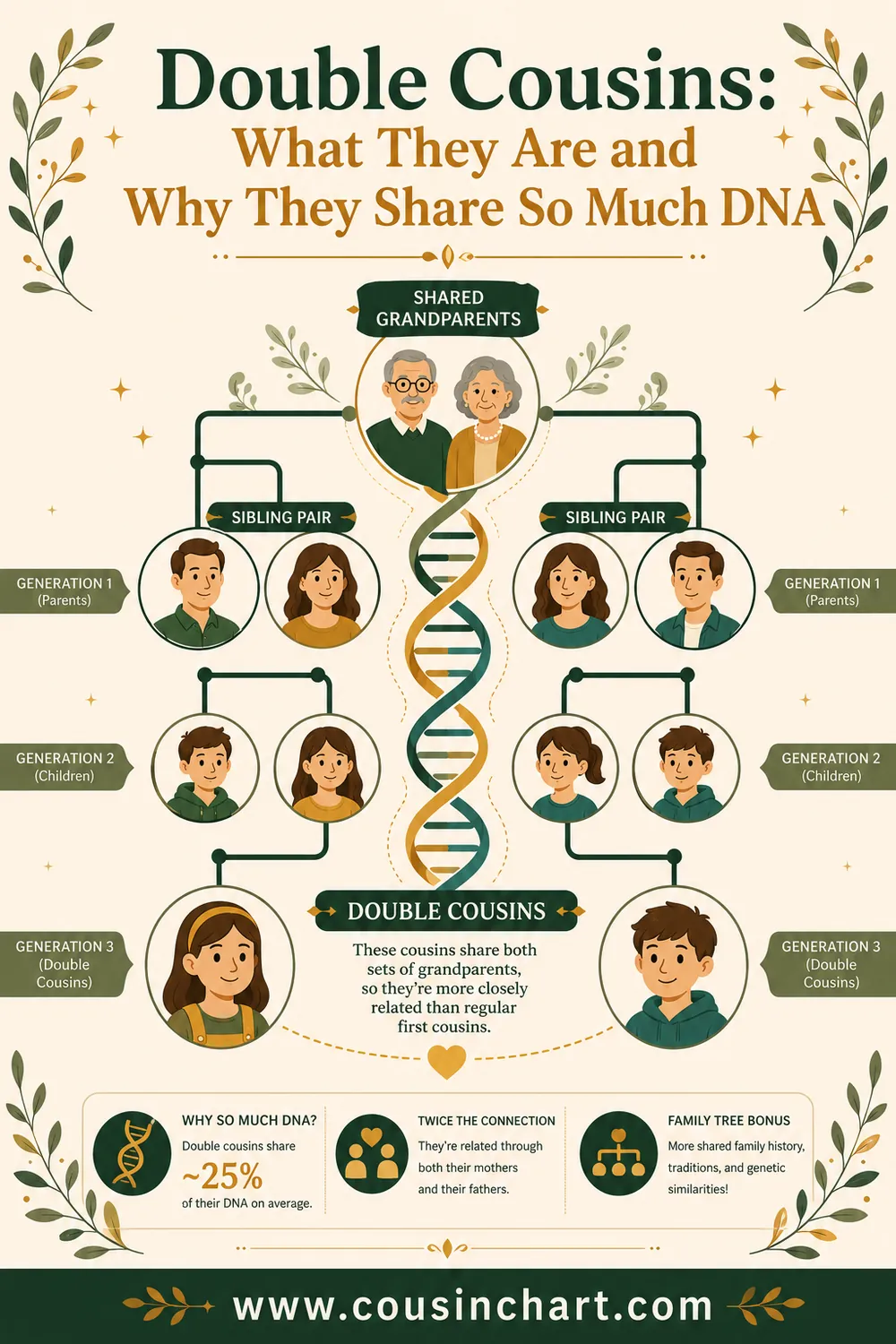
Double cousins happen when two siblings from one family have children with two siblings from another family — say, two brothers marry two sisters. The children are first cousins through both parents, share both sets of grandparents, and share about 25% of their DNA — double the usual cousin amount, and as much as half-siblings.
It's one of the most delightful quirks in all of kinship: cousins who are genetically as close as grandparents and grandchildren. This guide covers how it happens, the DNA math, what happens in the next generation, and the famous twins-marrying-twins edge case. To map your own family's tangles, the free relationship calculator on our homepage is built for exactly this.
Relationship quick-check. Tap a phrase to see the correct term:
The answer will appear here.
How Double Cousins Happen
The recipe requires two marriages between the same two families:
- Two brothers marry two sisters, or
- A brother and sister marry another family's sister and brother, or
- Any two siblings pair up with any two siblings from another family.
Nobody here is related to their own spouse — both marriages are perfectly ordinary. The "double" happens one generation later. Normally, first cousins connect through exactly one shared pair of grandparents: your mom and their mom are siblings, say, and the other sides of your families are unrelated. Double first cousins connect through both sides at once. Your dads are brothers and your moms are sisters, so every grandparent you have, they have too.
On paper the kids are still just first cousins — the degree doesn't change. What changes is the number of connecting paths, and DNA counts paths.
The DNA Math: Why 25%?
Regular first cousins share about 12.5% of their DNA, all of it traceable to the one grandparent couple they have in common. Double first cousins run that same 12.5% inheritance through two independent grandparent couples — roughly 12.5% via the paternal side plus 12.5% via the maternal side — landing at about 25% on average.
That 25% puts double first cousins in surprising company:
| Relationship | Avg DNA shared |
|---|---|
| Full siblings | ~50% |
| Half-siblings | ~25% |
| Double first cousins | ~25% |
| Grandparent / grandchild | ~25% |
| Aunt or uncle / niece or nephew | ~25% |
| Regular first cousins | ~12.5% |
A DNA test genuinely cannot tell a double first cousin from a half-sibling by the share amount alone (segment patterns can offer clues — double cousins tend to share more fully identical regions — but the headline percentage matches). More than one family has had a jolt reading a match list before remembering that Grandpa and his brother married a pair of sisters. If a mystery 25% match just appeared in your results, check for a double-marriage before assuming a family secret. And to see how any specific pair connects, sketch it in the relationship calculator.
As always, these are averages — real results scatter a few points either side.
Double Cousins Have Half the Usual Grandparents (Sort Of)
Here's a fun way to feel the closeness. Most pairs of first cousins have six distinct grandparents between them: the two they share, plus two unshared per cousin. Double first cousins have just four — every grandparent is shared. Their family reunions are the same event on both sides; their aunts and uncles overlap completely; their family medical history reads almost like siblings'.
Culturally, families with double cousins tend to notice it. The kids often describe each other as "basically my brother/sister," and the genetics quietly agrees.
What About the Next Generation?
The doubling passes down the tree, halving as it goes — the same way ordinary cousin DNA does, just starting from a higher number:
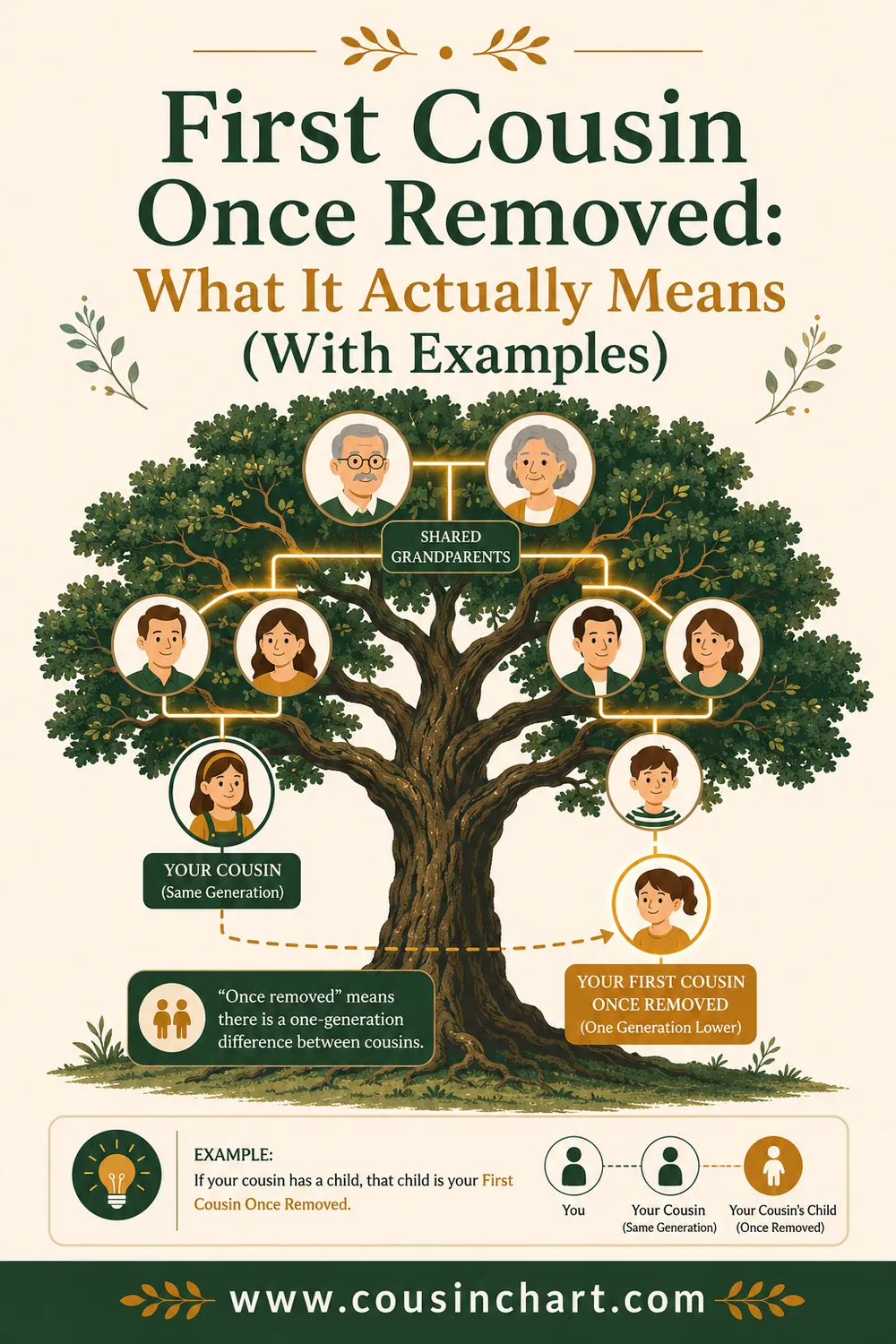
- A double first cousin's child is your double first cousin once removed: ~12.5% average shared DNA (a regular first cousin once removed averages 6.25%).
- Children of two double first cousins are double second cousins: ~6.25% average, versus 3.125% for regular second cousins.
- Grandchildren pair up as double third cousins (~1.56%), and so on down.
The naming convention just prefixes "double" to the standard term, and every DNA average doubles relative to the ordinary version. Everything else about counting the relationship — degrees, removals — works exactly like the standard system.
The Extreme Case: Twins Marrying Twins
Take the double-cousin recipe and push it to the limit: identical twins marrying identical twins (a so-called quaternary marriage). Two identical twin sisters marry two identical twin brothers; each couple has kids.
Legally and socially, the children are first cousins. Genetically, they're equivalent to full siblings — roughly 50% shared DNA. Because each set of parents is genetically indistinguishable from the other set, a DNA test would read the cousins as siblings. A handful of documented twin-pair marriages exist (twin-festival romances are a real phenomenon), and their children are a favorite example in genetics courses.
The one-twin-pair version is more common: if just your moms are identical twins (dads unrelated), you and your cousin are genetically half-siblings (~25%) — your maternal DNA comes from what is, genetically, the same mother.
Is There Anything Wrong With Double Cousins?
Nothing whatsoever — it's worth saying plainly, because the term sometimes gets whispered like a scandal. No one married a relative. Two unrelated families simply linked twice, which was extremely common historically: small towns, immigrant communities where two families knew each other well, siblings introducing siblings. If anything, genealogists love finding double marriages, because they explain otherwise-confusing DNA amounts and knit two research trees into one.
The only practical wrinkle: if two double first cousins were to have children together, they'd carry the genetic equivalence of half-siblings, so the usual cousin-marriage considerations apply with more force. Marriage law in most places treats double first cousins the same as first cousins.
How to Spot Double Cousins in Your Own Tree
Double marriages hide in plain sight, especially a few generations back. The tell-tale signs:
- A DNA match sharing about double the expected amount. A documented second cousin sharing ~450 cM instead of ~230, or a first cousin sharing ~1,700 instead of ~850, is the classic signature. Before suspecting a closer secret relationship, check for a second sibling-marriage between the same families.
- The same two surnames marrying twice. Scan your tree for repeat pairings — two Kowalski–Rossi marriages in one generation is the paper-trail version of the DNA signal.
- "Both sides" matches. On testing sites that split matches by parent, a double-cousin-line match shows kinship through both your maternal and paternal sides — normally impossible for one relative, and a near-certain flag.
- Family stories about shared weddings. Double marriages often happened literally together — two brothers marrying two sisters in one ceremony was common and memorable. If Grandma mentions a "double wedding," ask who married whom.
Historically, these pairings were everywhere: siblings socialized with the same neighboring families, immigrant communities were small, and a good match for one brother often introduced the other. If your ancestors lived in a village of 300 people for two centuries, assume at least one double connection — and expect your DNA-match amounts to run "hot" on that branch. When you find one, map the two paths separately in the relationship calculator to see both connections drawn out.
FAQ
What exactly is a double cousin?
A first cousin through both of your parents at once — the result of two siblings from one family having children with two siblings from another family. Double first cousins share both sets of grandparents.
How much DNA do double first cousins share?
About 25% on average — twice the ~12.5% of regular first cousins, and the same average as half-siblings, grandparents, and aunts/uncles. DNA tests often flag double cousins as "close family" for this reason.
Are double cousins the same as second cousins?
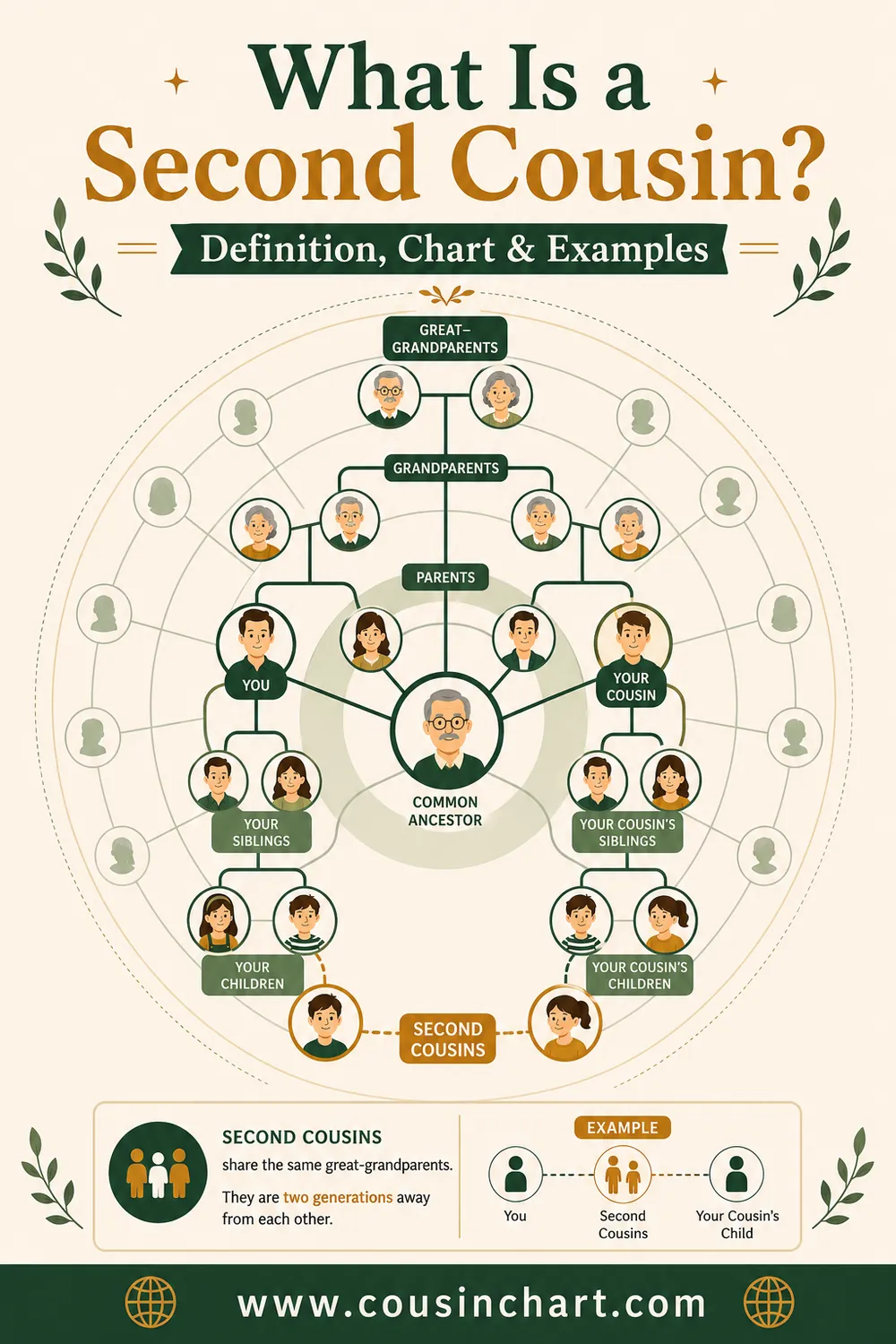
No. Second cousins are a further relationship (shared great-grandparents, ~3.125% DNA). Double cousins are first cousins doubled up — much closer. The similar-sounding names are just an unfortunate coincidence.
Can double first cousins marry?
In most jurisdictions they're treated like first cousins, so it depends on local law — and genetically they're as close as half-siblings, which is why even permissive laws sometimes single them out. As always, this is tree math, not legal advice.
What are the children of double first cousins to each other?
Double second cousins — same-generation cousins connected through two great-grandparent couples, sharing about 6.25% of their DNA, double the usual second-cousin amount.
Do double cousins show up differently on DNA tests?
They share about twice the expected DNA for their labeled relationship, so tests often estimate them one notch closer than the paper trail says — a double first cousin can be predicted as a half-sibling or "close family." Knowing about a double marriage in the tree resolves the surprise.
Untangle Your Own Family's Knots
Double cousins are what happens when a family tree contains a braid: same degree on paper, twice the connection in blood. If your tree has one of these knots — or any relationship you can't quite name — the free family relationship calculator will trace the path and label it correctly in seconds. Bring it to the next reunion; the double cousins will want to see their 25% for themselves.