DNA Tests for Half-Siblings: How Results Show Up
Two very different products get called a half-sibling test, and picking the wrong one wastes months. A consumer ancestry kit will find a half-sibling you did not know about; an accredited siblingship test will produce a document a court might accept — and neither does the other's job. There is a third option most people never hear about, and it is usually the best one: test the parent you already share. That single decision turns an ambiguous result into a clear one more reliably than any brand choice. Whichever route you take, the shared centimorgan figure is the number that carries the meaning, and the DNA match calculator is built to interpret it.
What do you need the test to do? Tap the closest match.
Tap an option above. In short: consumer kits discover, accredited labs certify, and the shared parent settles.
Which test should you use?
It depends entirely on what the result is for, and the two products are not interchangeable.
To discover an unknown half-sibling, use a consumer ancestry kit. An autosomal test at a large matching database will show them in your list if they have tested there too. This is how the overwhelming majority of half-siblings actually find each other.
To confirm a half-sibling you already know, both of you test in the same pool. Matching only happens inside one company's database, so either test at the same place or have one person upload their raw data file to the site where the other sits.
To support a legal claim, use an accredited relationship-testing laboratory. Inheritance disputes, immigration applications and benefits claims need collection under chain of custody, with identity verified and samples tracked. A consumer kit fails that test by design.
And in almost every case, add the shared parent if you can. It is the highest-value extra sample in this kind of testing, for reasons that come down to how much information the laboratory has to work with.
How does a half-sibling appear in a consumer match list?
Usually near the top, and usually under a label that is broader than you expect.
The platforms display a predicted relationship, not a fact. Sites convert your shared DNA into a most-likely relationship and show it as a label. Because several relationships share the same range, half-siblings frequently appear under a general "close family" style heading rather than being named outright.
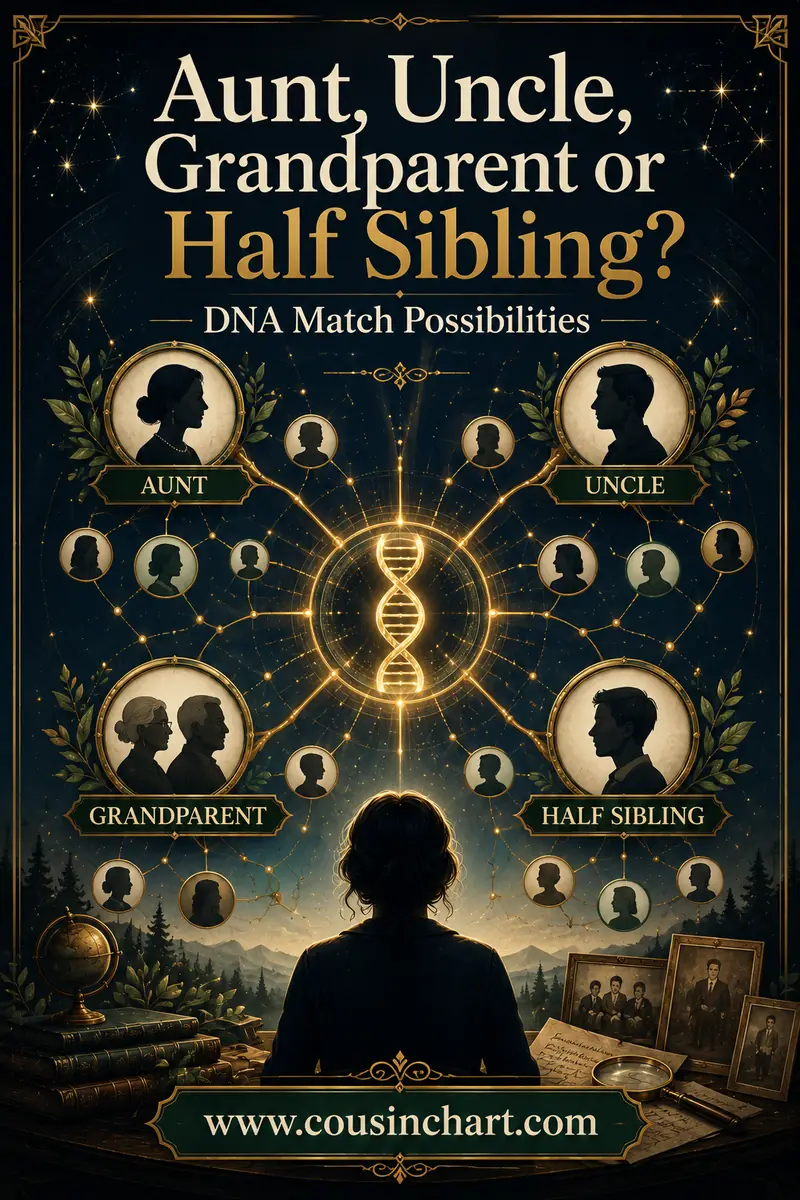
The number underneath is what matters. Half-siblings typically share somewhere around 1,300–2,300 cM. So do grandparents, aunts and uncles — the overlap is genuine, not a flaw in the site, and the practical ways to separate them are set out in the guide to telling an aunt, uncle, grandparent or half-sibling apart.
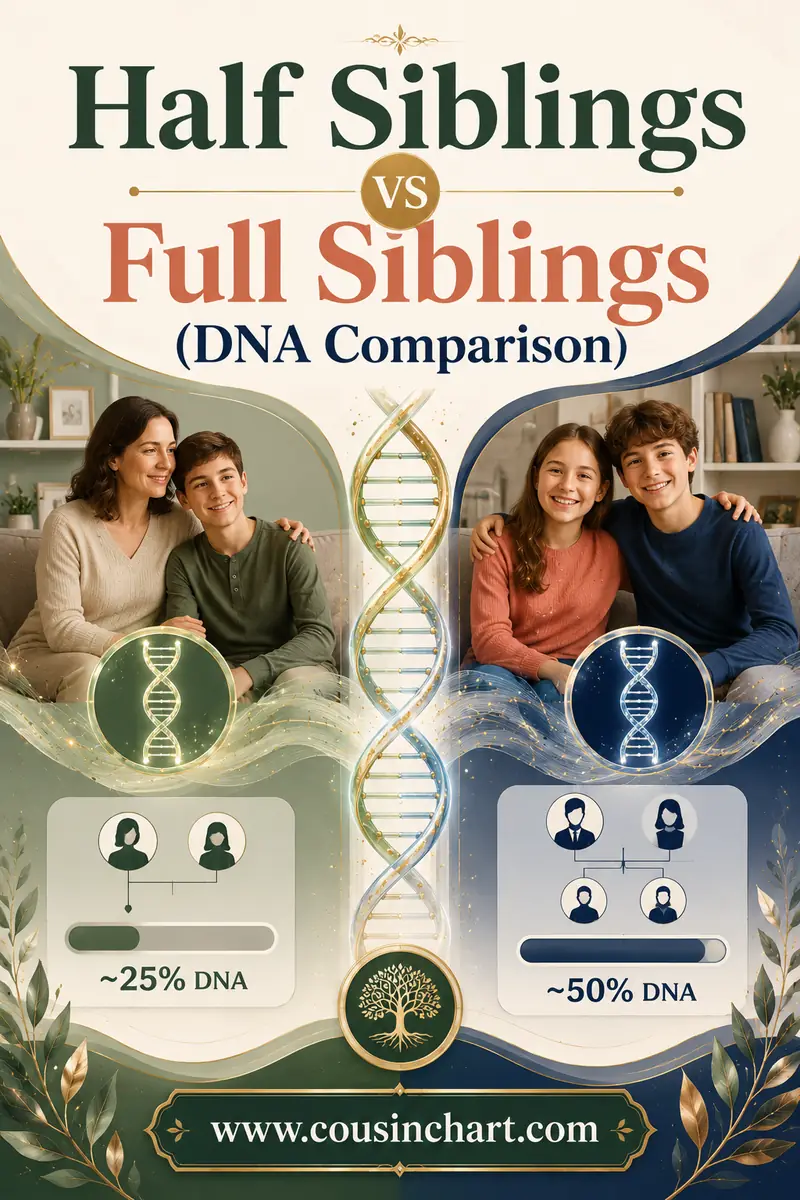
Full siblings sit clearly higher. They share substantially more, and one platform feature settles it outright: fully identical regions, stretches where you match on both copies of a chromosome. Full siblings have them; half-siblings do not. The detail is in the guide to half-siblings versus full siblings.
Expect a wait, then a jolt. Results take a few weeks, and a close unexpected match is a genuinely destabilising thing to open on a phone at work. Choose when you look.
How do the two kinds of test compare?
| Consumer ancestry kit | Accredited siblingship test | |
|---|---|---|
| Main purpose | Discovery and genealogy | Documentation for legal or official use |
| Who must participate | Anyone who chooses to test | Both siblings, at arranged appointments |
| Sample collection | Posted to your home, self-collected | Supervised, identity checked, chain of custody |
| Typical cost | Low, often discounted | Several times higher |
| What you get | A match list with shared cM and a predicted label | A report with a siblingship index and probability |
| Legal standing | None | Accepted by many courts and agencies |
| Finds unknown relatives | Yes, that is its strength | No, it only tests the people submitted |
| Certainty about half versus full | Usually clear, occasionally ambiguous | Depends heavily on whether a parent is tested |
The right column cannot find anyone. A siblingship test compares two specific people who both agree to attend. If you do not yet know who your half-sibling is, it is useless.
The left column cannot prove anything officially. No identity verification means no legal weight, however accurate the underlying analysis is.
Many people end up using both. Discover through a consumer database, then repeat through an accredited laboratory if a court, an embassy or an estate needs it.
Why is a sibling test weaker than a paternity test?
This surprises people, and it explains why sibling results sometimes come back inconclusive.
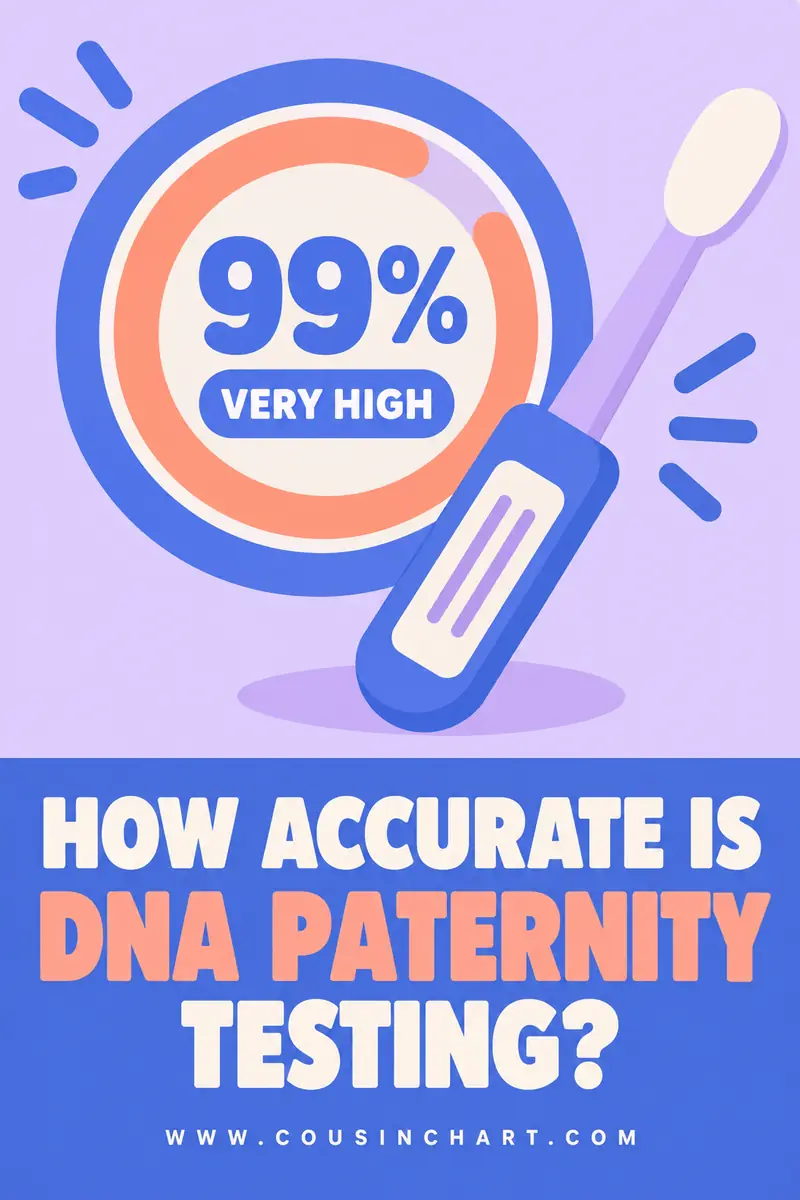
Parent and child share a fixed relationship. A child inherits exactly one copy of each chromosome from each parent, so a paternity comparison is close to a direct check — which is why those results reach very high probabilities, as covered in the guide to DNA paternity test accuracy.
Siblings share a random sample. Full siblings share about half their DNA on average and half-siblings about a quarter, but the actual amount varies. The laboratory is comparing two randomly drawn hands from the same deck rather than checking a copy against an original.
So the answer comes as an index, not a verdict. A siblingship report gives a likelihood ratio and a probability rather than the near-certainty of a paternity result, and a middling index genuinely means "cannot say".
Half versus unrelated is easier than half versus full. Distinguishing a quarter-sharing relationship from no relationship is straightforward. Separating half-siblings from other quarter-sharing relatives is where results get soft.
Why does testing the shared parent change everything?
Because it lets the laboratory subtract one side of the equation.
It removes the parent's contribution. If you and your suspected paternal half-sibling both test alongside your known mother, everything you share that did not come from her must have come from somewhere else — which is precisely the question being asked.
It converts a probability into a near-certainty. The same comparison that produces an ambiguous index without the parent often becomes decisive with them included.
It works on consumer platforms too. Checking whether a new match also matches your parent immediately tells you which side of your family they sit on, which is the fastest single filter available in genetic genealogy.
Test the older generation while you can. A parent, aunt or uncle carries DNA you have already lost, and their results resolve questions yours never will.
What if only one of you will test?
It happens often, and there are still useful moves.
A parent's kit substitutes surprisingly well. If the suspected shared parent tests, the other person will appear as a parent-child match — no cooperation needed from the sibling at all.
Aunts, uncles and cousins triangulate. A half-sibling will match your father's siblings at roughly aunt or uncle levels while not matching your mother's side at all. That asymmetry is often decisive on its own.
X-DNA can rule things out in specific configurations. Two people who share a father inherit his single X chromosome identically if they are both daughters, which is a strong signal — the patterns are set out in the guide to X-DNA inheritance.
And sometimes the answer is to wait. Databases grow every month. A relationship that cannot be resolved today is frequently settled by a new match next year.
What can the result actually settle?
Less than people hope in one direction, and more than they fear in another.
It settles biology, not family. DNA can tell you that you share a parent. It cannot tell you what that person owes you, or what you owe them, and a half-sibling relationship is not the same thing as a step-sibling one — a distinction covered in the guide to half-siblings versus step-siblings.
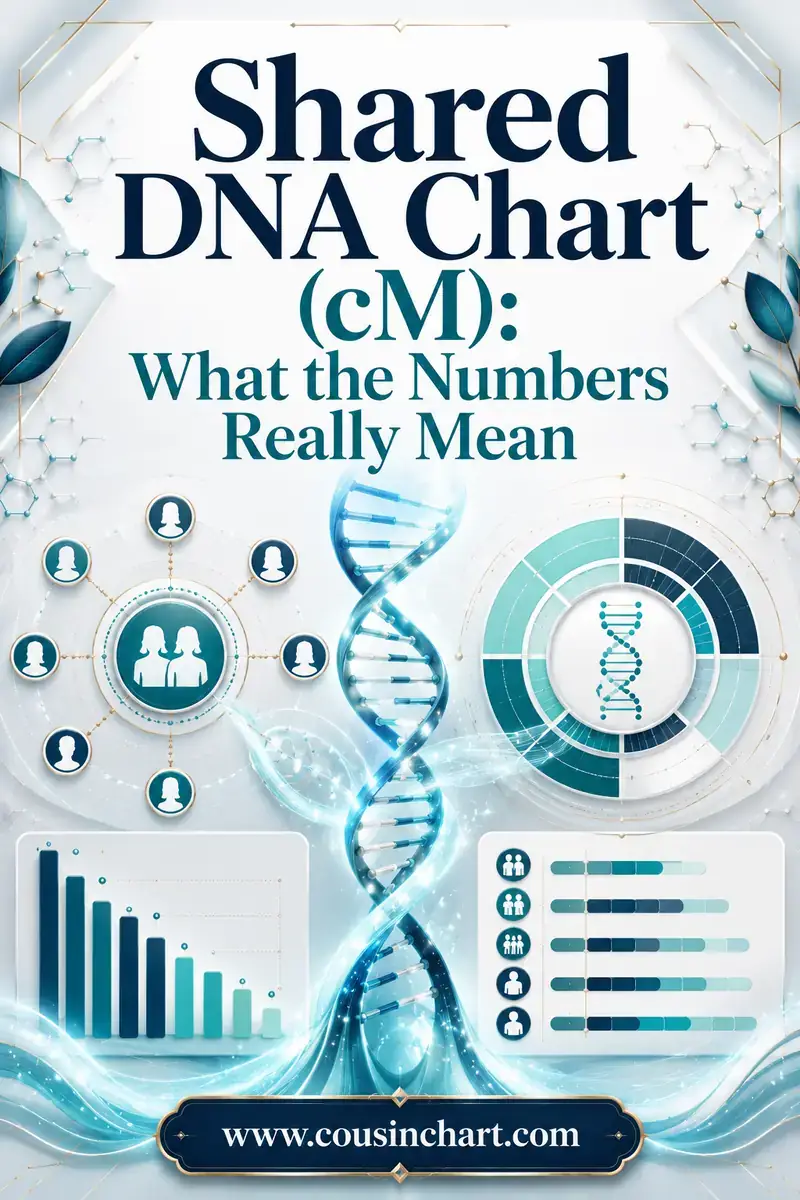
Read a single number cautiously. Shared cM ranges overlap heavily between relationship types, so one figure rarely identifies a relationship alone. Put it alongside ages, shared matches and which side of the family the match sits on; the shared cM chart guide shows how wide the overlaps really are.
A consumer result is not a legal document. If money, immigration status or an estate depends on it, plan for an accredited retest from the start rather than discovering the requirement later.
And it may answer a question nobody asked. Half-sibling discoveries frequently expose an affair, a donor conception or an adoption that a parent never disclosed.
How do you handle the conversation?
Carefully, and preferably before the results arrive rather than after.
Decide what you want from contact. Information, a relationship, a medical history, or simply an acknowledgement. Knowing your own answer keeps a first message short and calm.
Lead with low pressure. A brief note that names the shared DNA, says what you are hoping for and explicitly offers the other person an exit does far better than a long life story.
Give people time. A half-sibling may be learning about a parent's secret in the same moment they learn about you. Silence for weeks is common and is not usually a refusal.
Line up support first. Someone to talk to on the day the results land is worth more than any feature on any kit.
FAQ
What is the best DNA test for half-siblings?
For discovering an unknown half-sibling, an autosomal consumer test at the largest matching database. For confirming a known one, both people testing in the same database. For a legal claim, an accredited relationship-testing laboratory using chain-of-custody collection, which consumer kits do not provide.
How much DNA do half-siblings share?
Half-siblings typically share roughly 1,300 to 2,300 centimorgans, about 25% of their DNA. That same range also fits grandparents, aunts and uncles, so the number alone rarely identifies the relationship without age, shared matches or a tested parent to narrow it.
Will a consumer DNA test say "half-sibling" outright?
Not always. Platforms show a predicted relationship label, and because several relationships share the same DNA range, half-siblings often appear under a broader "close family" heading. The shared centimorgan figure beneath the label carries more information than the label itself.
Can a home DNA test be used in court for a sibling claim?
No. Court and agency use requires chain-of-custody collection at an accredited laboratory, with identity verified and samples tracked. Home kits are self-collected and unverified, so they carry no legal standing regardless of how accurate the underlying analysis is.
Why did my siblingship test come back inconclusive?
Siblings share a random sample of DNA rather than a direct copy, so results come as a probability rather than a verdict. Without the shared parent tested, half-sibling and other quarter-sharing relationships can produce a middling index that genuinely cannot distinguish between them.
Should the shared parent take the test too?
Yes, whenever possible. Testing the parent you both share lets the laboratory subtract their contribution, which usually turns an ambiguous result into a clear one. On consumer sites, checking whether a match also matches your parent instantly shows which side they belong to.
Pick the test that matches the question
Work backwards from what you need the answer for. If you are looking for someone who may not know you exist, a consumer autosomal kit in a large database is the only thing that will find them. If you already know each other and simply want certainty, test in the same pool and add the shared parent, which does more for accuracy than any brand comparison. And if an estate, an embassy or a court is involved, go straight to an accredited laboratory, because a home kit will not be accepted at any price. Once you have a number, the cousin calculator will show you every relationship it could reasonably fit.