Fifth Cousin: What It Means, Fifth Cousin Once Removed, Sixth Cousin and DNA
A fifth cousin is someone who shares a set of 4th great-grandparents with you, six generations back from each of you. A sixth cousin shares 5th great-grandparents, and "once removed" means one of you is one generation closer to the shared ancestors than the other. Fifth cousins are very distant relatives, and many do not share any DNA a test can find. Below is a chart of cousins from first to sixth, how "removed" works at this distance, and what DNA can and cannot tell you.
Tap a pair to see the right term.
▶ Check how you're related in the free calculator
Cousin chart: first through sixth cousins
| Cousin | Shared ancestors | Generations back |
|---|---|---|
| 1st cousin | Grandparents | 2 |
| 2nd cousin | Great-grandparents | 3 |
| 3rd cousin | 2nd great-grandparents | 4 |
| 4th cousin | 3rd great-grandparents | 5 |
| 5th cousin | 4th great-grandparents | 6 |
| 6th cousin | 5th great-grandparents | 7 |
The rule: the number of the cousin is one less than the number of generations back, and the number of "greats" is two less than that. The sixth cousin shares an ancestor seven generations back, which is the fifth "great" in front of grandparent.
Fifth cousin once removed
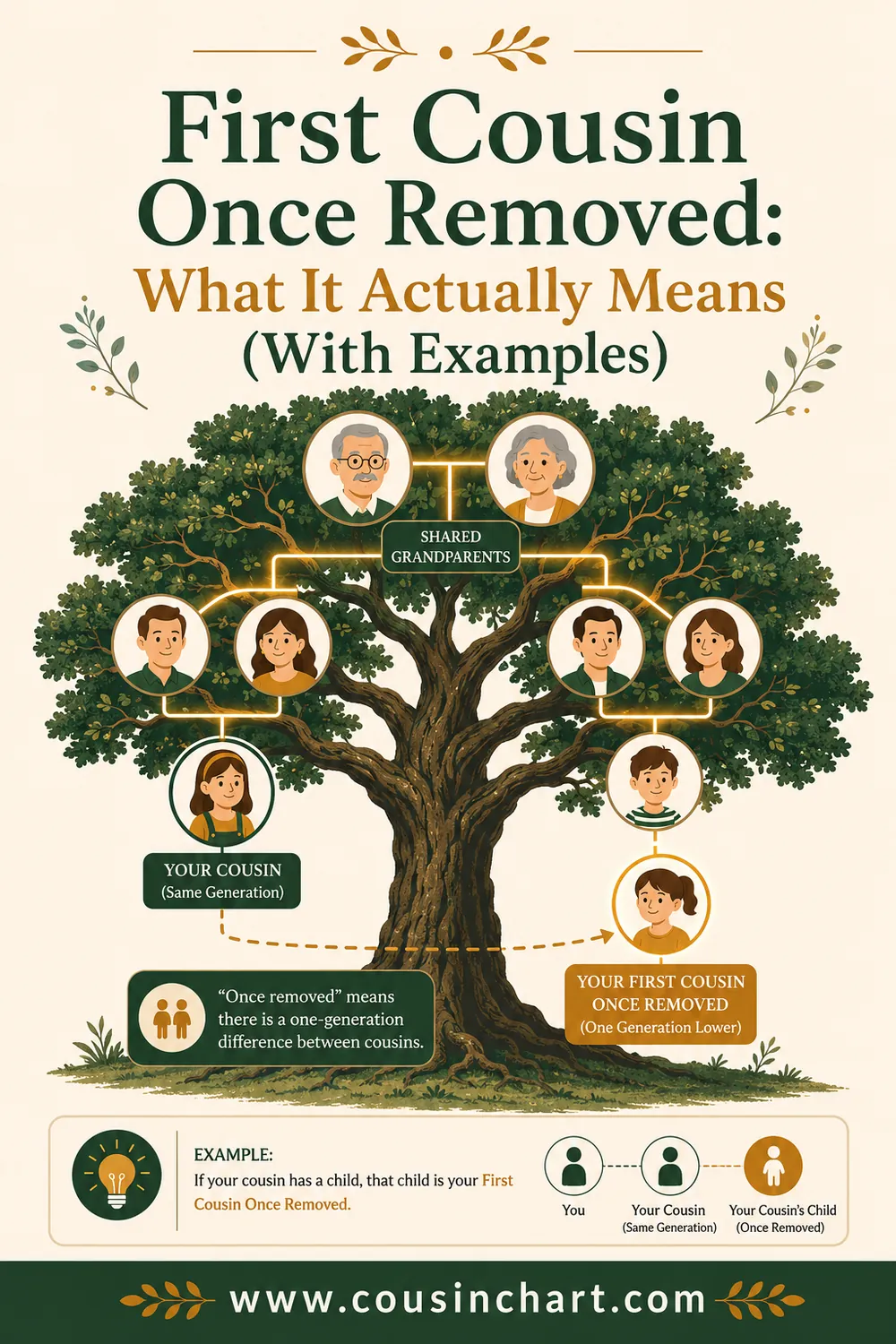
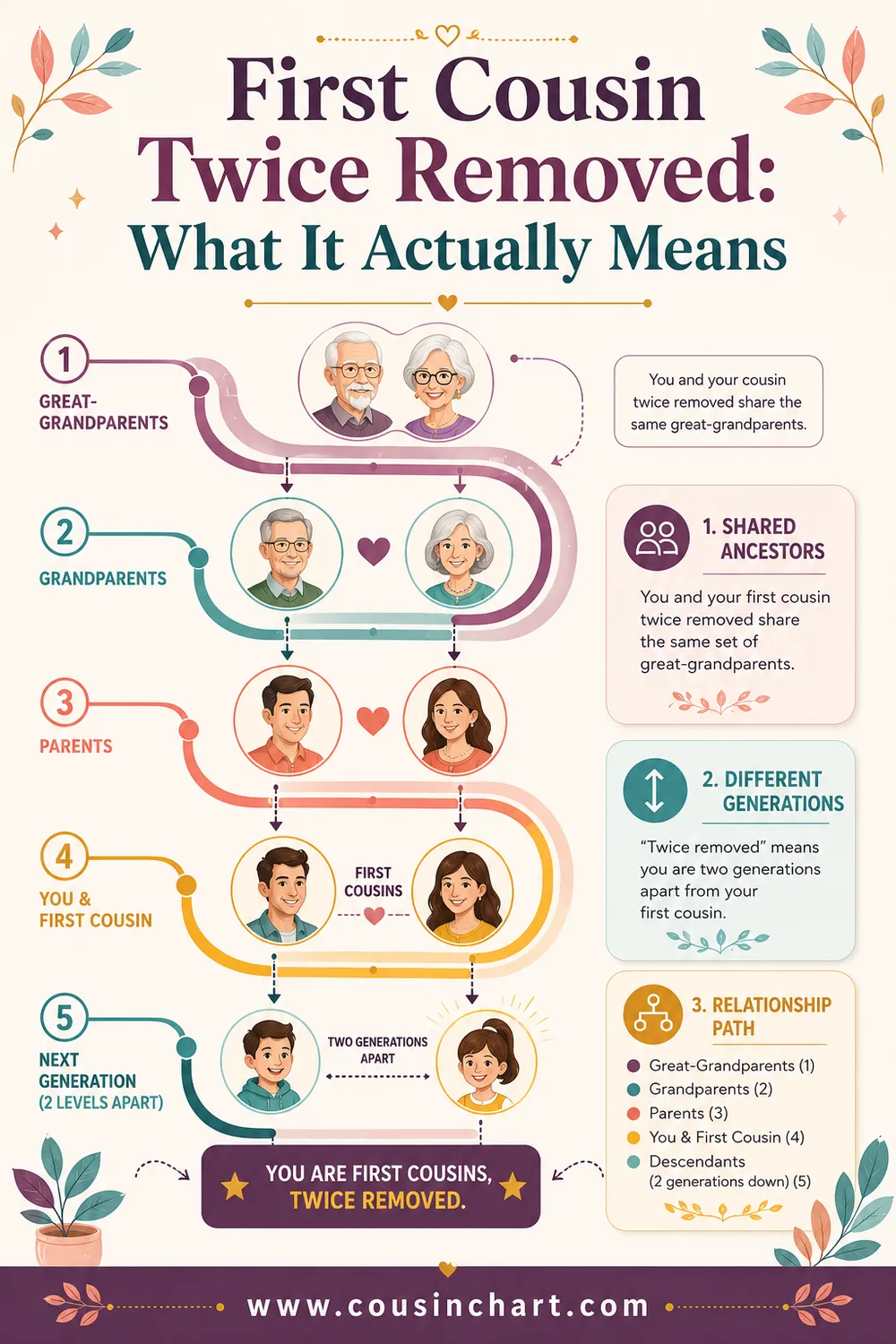
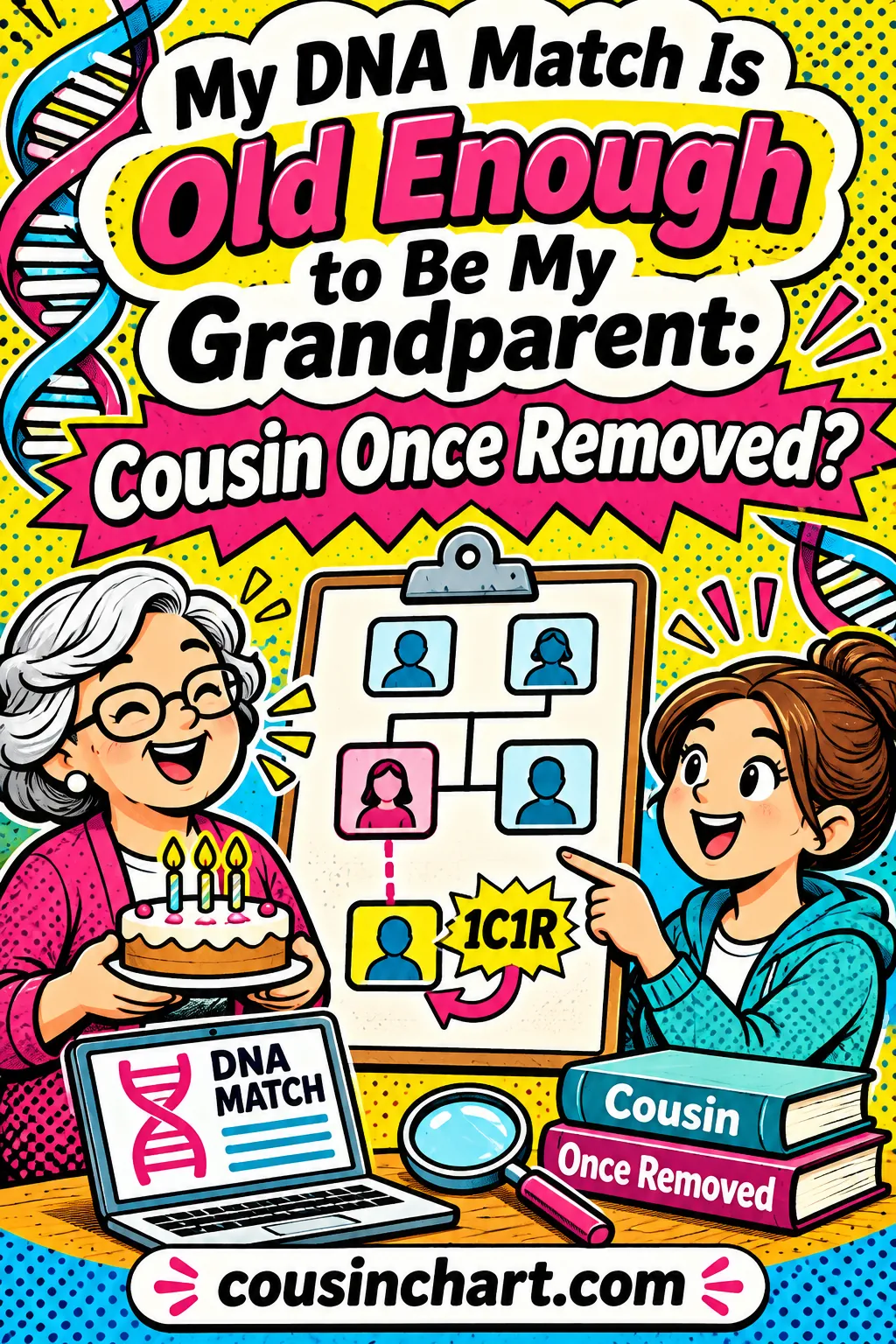
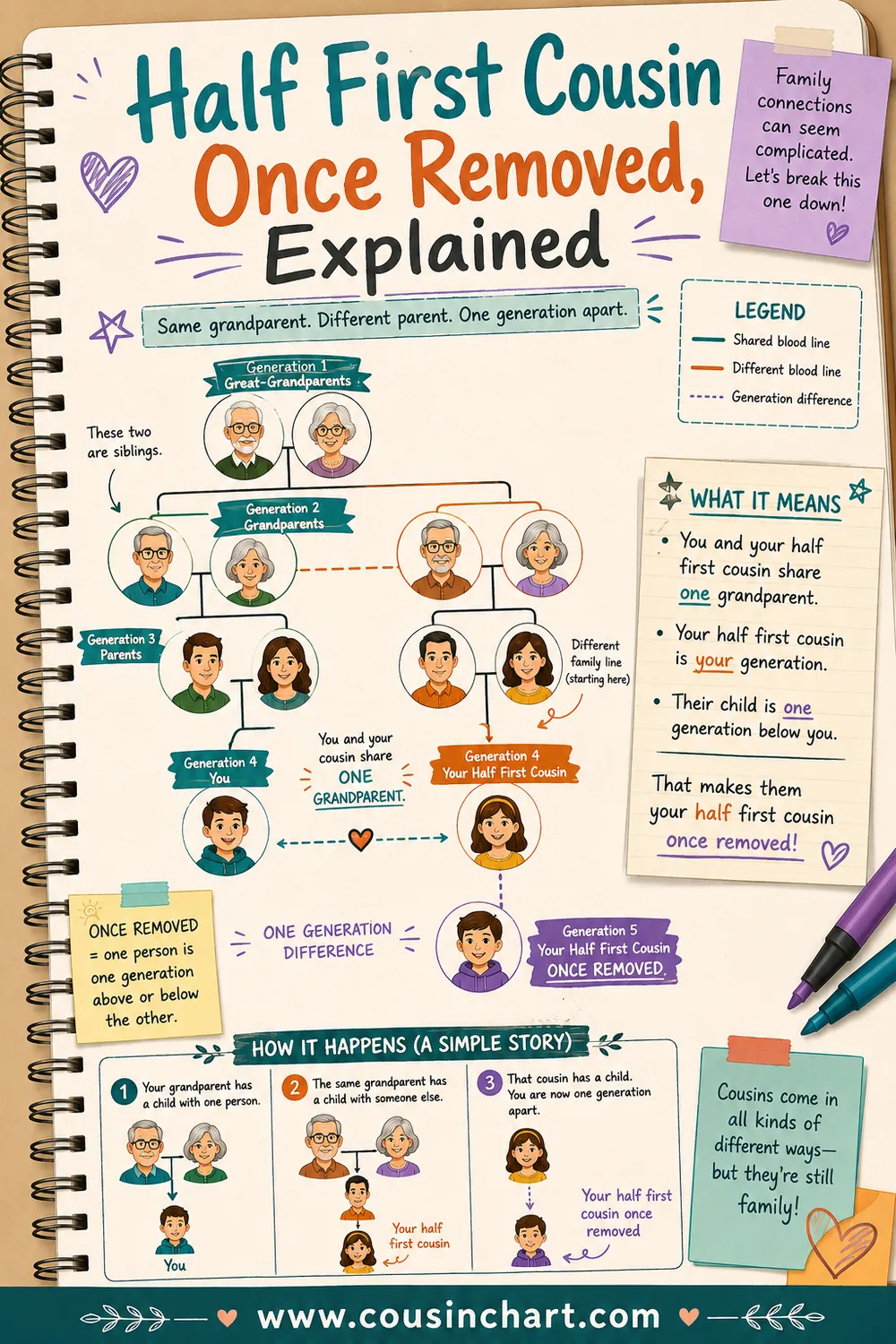
"Removed" counts the difference in generations between you and your cousin. If your fifth cousin has a child, that child is your fifth cousin once removed, because they are one generation farther from the shared 4th great-grandparents than you are. In the other direction, your fifth cousin's parent is also your fifth cousin once removed. Our guides on third cousin once removed and cousin three times removed show the same idea at closer distances.
| You and your cousin | Term |
|---|---|
| Same generation, 4th great-grandparents shared | 5th cousin |
| One of you is a generation farther | 5th cousin once removed |
| Both 7 generations from the ancestors | 6th cousin |
| One 6 generations away, the other 7 | 5th cousin once removed |
How far back is a fifth cousin?
Six generations. If you count about 25 to 35 years per generation, that is roughly 150 to 200 years, so a fifth cousin's shared ancestors were often born in the 1700s or early 1800s for most people today. These are rough numbers because generation lengths vary a lot.
What is a fifth cousin DNA match?
Fifth cousins may share small pieces of DNA, but often they do not. DNA is passed down in pieces, and by six generations back, any one ancestor contributes very little. Some fifth cousins show up as matches on a test and many do not, so a missing match does not mean you are not related. Our guides on do cousins share DNA and centimorgans explained give more detail.
Why fifth cousins matter in family history
- Records. Following a line back to the shared ancestors can help you find old records and places.
- Big family trees. Shared ancestors may have dozens or hundreds of descendants today.
- Surnames. A fifth cousin may carry a different surname because lines split many times.
Common mistakes
- Mixing up "removed" and "great." "Removed" is a gap between generations; "great" is how far back the shared ancestors are.
- Counting from the wrong person. Always count back to the shared ancestors from each person.
- Assuming a DNA match is needed. Cousins at this distance can be related with no test match.
More cousin guides
See what is a third cousin, distant cousins explained, degrees of cousinship and the common ancestor chart.
Not sure how you are related to someone? The free relationship calculator shows exactly how.
▶ Check how you're related in the free calculator
Frequently Asked Questions
What is a fifth cousin?
Someone who shares a set of 4th great-grandparents with you. That is six generations back from each of you.
What is a fifth cousin once removed?
A person one generation closer to or farther from the shared ancestors than you are. For example, your fifth cousin's child is your fifth cousin once removed.
What is a sixth cousin?
Someone who shares 5th great-grandparents with you, which is seven generations back from each of you.
Do fifth cousins share DNA?
Sometimes, but often not in amounts that a test can detect. DNA is passed down in unpredictable pieces, so some fifth cousins show up as matches and many do not.
How far back is a fifth cousin?
Six generations, which is roughly 150 to 200 years. The exact number of years depends on how old each generation was when it had children.