What Should I Call My Mother-in-Law? Options, Etiquette and How to Ask
If you're wondering what to call your mother in law, here's the honest answer: whatever she's comfortable with and you can say without wincing. In most American families today, that means her first name. Some people call her "Mom" or a variation like "Mom Linda." Others start with "Mrs. Smith" and switch once she invites them to. The best way to choose is simple, even if it feels awkward: ask her. This guide walks through every option, the etiquette behind each, word-for-word ways to bring it up, and how families in other cultures handle the same question.
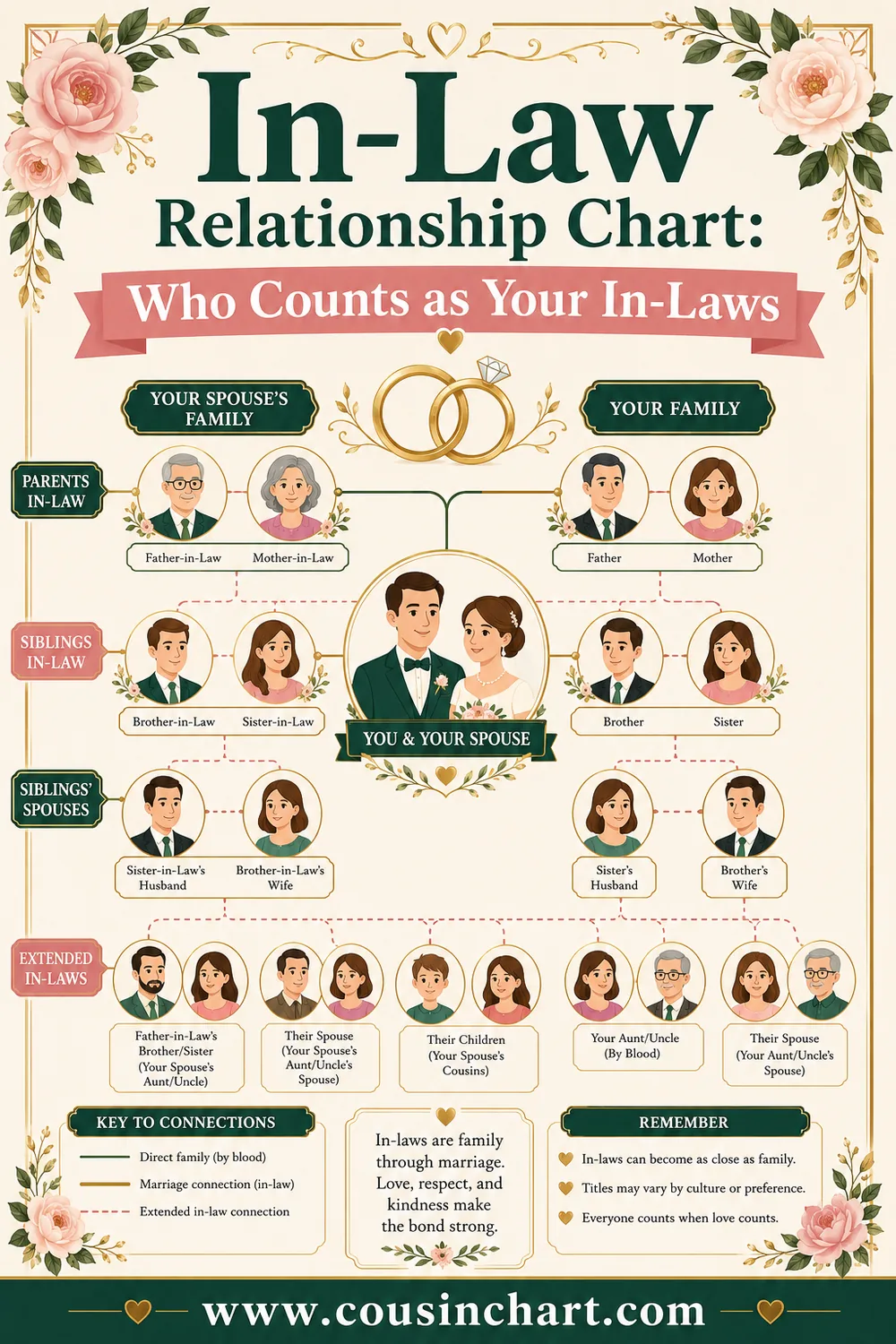
If you're still sorting out who counts as an in-law in the first place, our in-law relationship chart maps every relative you gain by marriage. This page picks up where that one leaves off: not what she is to you, but what you actually say when you walk into her kitchen.
Quick check. Tap a question for the short answer:
What to Call Your Mother in Law: The Short Answer
Let's start with the definition so we're on the same page. Dictionary.com defines a mother-in-law simply as "the mother of one's spouse," and traces the word back to Middle English, recorded between 1350 and 1400. So the title is old. What's changed is how people address her.
Here's the quick version of what most people do:
- If she hasn't told you a preference: start with Mrs. (or Ms.) plus her last name if you're meeting her for the first time, or her first name if she introduced herself that way.
- If she asks you to call her by her first name: do it. That's the most common arrangement in the US.
- If she asks you to call her Mom: you can, or you can kindly suggest a variation that feels right to you.
- If you're not sure: ask her directly or ask your spouse to find out. It's a normal question, and most mothers-in-law appreciate being asked.
One reason first names have become the default: people are marrying later, as established adults. The Census Bureau estimates that in 2025 the median age at first marriage was 30.8 for men and 28.4 for women, up from 23.5 and 21.1 in 1975. A 30-year-old who calls coworkers, bosses and neighbors by first name often finds "Mrs. Smith" feels oddly formal, and "Mom" feels like it belongs to someone else.
The Main Options, Compared
Every option has its fans. Here's how they stack up.
| Option | How it feels | Works best when | Watch out for |
|---|---|---|---|
| First name ("Linda") | Warm, adult, equal | She introduced herself by first name, or invited you to use it | Some older or more traditional women may find it too casual unless they offer it. |
| Mrs. / Ms. + last name ("Mrs. Smith") | Respectful, formal | First meetings; very traditional families | Can feel cold once you're married; most people move on from it. |
| Mom / Mother | Close, family-like | She asks for it and you're comfortable; your own mother is not living or not in your life | Can feel like a betrayal of your own mom, or like a title you haven't earned yet. |
| Mom + first name ("Mom Linda") | Close but distinct | You want "Mom" warmth without confusing her with your own mother | Some find it a mouthful; it often shortens on its own. |
| A family-language word ("Mama," "Amma," "Eomeonim") | Cultural, respectful | Your spouse's family uses a language with a set form | Learn the exact word and pronunciation from your spouse first. |
| Her grandparent name ("Nana," "Grandma") | Cozy, practical | Once you have kids and she has a grandparent name | Fine at home, but can feel odd in a one-on-one conversation. |
| A nickname she already uses ("Bunny," "Dee") | Friendly, familiar | Everyone in the family uses it | Wait to be invited; nicknames can feel presumptuous from a newcomer. |
| No name at all ("Hi!") | Avoidant | A short-term fix while you figure it out | Gets awkward fast. Most people fall into this by accident. |
The "no-name zone" is real
If you've ever found yourself waiting until your mother-in-law is looking at you before you speak, just so you don't have to call her anything, you're not alone. It's one of the most common in-law experiences, and it can last for years. People often call it the "no-name zone." The fix is almost always the same: a single, short conversation. We'll give you scripts for that in a moment.
Why the Mother-in-Law Name Question Feels So Loaded
It's just a word, so why does it feel so big? Because it's really a question about closeness and belonging.
Researchers who study in-law relationships keep landing on the same theme: feeling like part of a shared family matters. A study by communication researchers Christine Rittenour and Jordan Soliz surveyed 190 daughters-in-law and found that shared family identity was a key link between how mothers- and daughters-in-law communicate and whether the daughter-in-law planned future contact and caregiving. In plain terms: when you feel like "one of us," the relationship tends to go better. What you call each other is one small, visible signal of that.
Closeness can cut both ways, though. In a long-running University of Michigan study of married couples led by psychologist Terri Orbuch, as reported by WBUR, couples where the husband felt close to his wife's parents had a 20% lower risk of divorce, while couples where the wife felt close to her in-laws had a 20% higher risk. Orbuch suggested that wives may find it harder to set boundaries with very close in-laws, and may come to read their involvement as interference. The takeaway isn't "stay distant." It's that warmth works best alongside clear boundaries, and a name is part of how you set the tone.
So if picking a name feels heavier than it should, that's why. You're not overthinking it. You're quietly deciding how close you want to be, and how fast.
Seeing it from her side
It helps to remember that she may be just as unsure as you are. A mother-in-law is adjusting too: her child now has a new closest person, and she's figuring out where she fits. Some of the reasons she might care about the name:
- She wants you to feel welcome. Offering "Mom" is often a way of saying "you're one of us now."
- She doesn't want to push. Many mothers-in-law never mention a preference because they don't want to seem demanding, and they're quietly waiting for you to ask.
- She has her own history. If she had a cold or difficult mother-in-law herself, she may be trying hard to do things differently.
- She's used to a certain formality. Some women from older generations or more formal backgrounds expect "Mrs." until they say otherwise, and see that as respect, not distance.
Asking her directly covers every one of these. It tells her you care what she thinks, and it lets her say what she'd like without feeling pushy.
What the word "in-law" tells you
The "in law" part of mother-in-law is a reminder that this relationship comes from marriage, not birth. Dictionary.com explains that the Middle English "in lawe" referred to a status tied to Roman and later canon law's prohibition of marriages within certain degrees of kinship, and that the short form "in-law" as a noun was first recorded only between 1890 and 1895. She's your mother "in the eyes of the law," which is exactly why so many people feel "Mom" has to be offered, not assumed.
How to Ask Your Mother-in-Law What She'd Like to Be Called
The single best move is to ask. It shows respect, it ends the guessing, and it's usually over in 30 seconds. Here's how to do it well.
- Talk to your spouse first. Ask what their siblings' spouses call her, whether she's ever mentioned a preference, and whether there's a family tradition. Your spouse may already know the answer.
- Pick a relaxed moment. One-on-one or with just your spouse there. Not during a holiday dinner with 20 relatives watching.
- Keep it light. Treat it as a nice question, not a negotiation.
- Offer your own comfort level if you have one. If "Mom" isn't going to happen for you, it's kinder to say so gently now than to dodge her name for a decade.
- Say thank you and use it right away. Using the name in the same conversation locks it in.
Scripts you can borrow
Feel free to adjust these to sound like you.
"Now that we're officially family, I've been wondering what you'd like me to call you. Is Linda okay, or would you prefer something else?"
"I realized I never asked: what would you like me to call you? I want to get it right."
"I'd love to call you something that feels like family. Would 'Mom Linda' feel okay to you? I want to keep 'Mom' for my own mom, but I'd like something closer than Mrs. Smith."
"Your other kids' spouses call you Linda. Would you like me to do the same?"
If you're nervous about asking, there's another route: let your spouse ask for you. "Hey Mom, Jordan wants to know what you'd like to be called" is completely normal and takes the pressure off you.
When to bring it up
Common natural moments include:
- Right after the engagement, when families start talking more often.
- At or after the wedding, especially if she says something like "Welcome to the family."
- When she signs a card or text in a way that hints at a preference ("Love, Mom" or "Love, Linda").
- When you have your first child and everyone's titles are shifting anyway.
There's no deadline. But the longer you wait, the more awkward it gets, so sooner is usually kinder for both of you.
If She Wants You to Call Her Mom (and You'd Rather Not)
This is the toughest version of the question. Your mother-in-law says warmly, "Please, call me Mom!" and something in you freezes. Maybe your own mother is very present in your life. Maybe your mother has died and the word feels sacred. Maybe you've only known her for a year. All of these are fair feelings.
A few ways to handle it kindly:
- Thank her for the gesture first. She's offering closeness. Acknowledge that before anything else: "That really means a lot to me."
- Explain briefly, without a speech. "I've only ever called one person Mom, and it feels strange to me to use it for someone else. Would you mind if I called you Linda?"
- Offer a middle ground. "Mom Linda," "Mama L," or a word from her family's language can give her the warmth she's hoping for without asking you to share a title you'd rather keep for your own mother.
- Leave the door open. "Maybe one day it'll feel natural, and I'll surprise you." Some people do grow into "Mom" over the years.
What if she seems hurt? Give it time, stay warm, and let your actions do the talking. Showing up, remembering her birthday and including her matter more than a title. If it keeps causing friction, it's fair to ask your spouse to talk to their mother. They know her best.
And if you want to call her Mom
Then go for it, as long as she's comfortable. Many people do this, especially if they're close to their spouse's family or don't have a living mother of their own. A simple "Would it be okay if I called you Mom?" is a lovely question. Most mothers-in-law are touched to be asked.
How Other Cultures Address a Mother-in-Law
In many cultures there's no guesswork at all: there's a customary form, and everyone knows it. If you've married into a family with a different heritage, learning their form can be a meaningful gesture. Always check with your spouse, since families and regions vary.
| Culture or language | Common term of address | Notes |
|---|---|---|
| Korean | 어머님 (eomeonim) for a husband's mother; 장모님 (jangmonim) is the classic term for a wife's mother | The honorific -님 (-nim) adds respect. Many sons-in-law also use 어머님 for a wife's mother. |
| Mandarin Chinese | 妈 (mā), "Mom," once married | The terms of reference differ by side: 婆婆 (pópo) is a husband's mother, 岳母 (yuèmǔ) a wife's mother. Switching to "Mom" at the wedding is called 改口 (gǎikǒu), "changing the mouth." |
| Japanese | お義母さん (okāsan) | Sounds exactly like "mother," but is written with 義 (meaning "in-law" or "by duty") when it refers to a mother-in-law. |
| Hindi-speaking families | "Mummy ji," "Mummy" or "Maa," often with the respectful -ji | Practices vary a lot by region and family; the suffix -ji adds respect. |
| Filipino families | "Mama" or "Nanay," sometimes "Ma" plus her name | Children-in-law commonly use the same parent terms their spouse uses. |
| Spanish-speaking families | Her first name, "Señora," or a mother term she invites | Suegra is the word for mother-in-law, but it's used to talk about her, not usually to address her. |
| Italian families | Her first name, "Signora" at first, or "Mamma" if she invites it | Suocera means mother-in-law and, like suegra, is mainly a term of reference. |
Notice a pattern? Several cultures expect you to call your spouse's mother "Mom" from the wedding on. That's a big contrast with the US custom of first names. If you're in a cross-cultural marriage, it's worth talking with your spouse about which custom you'll follow with each side of the family. You might call your American mother-in-law Linda and your Korean mother-in-law 어머님, and both choices are correct in context.
An ancient example
One of the most famous mother-in-law relationships in literature is the biblical story of Ruth and Naomi. After both of their husbands die, Naomi urges her widowed daughters-in-law to go home. One of them, Orpah, kisses her mother-in-law goodbye. Ruth refuses to leave, telling Naomi, in a widely quoted line from the Book of Ruth, "your people shall be my people". It's a reminder that the bond between a person and their spouse's mother can be one of chosen loyalty, whatever word you use for her.
Before the Wedding: Dating, Engagement and the In-Between Stage
Technically, she isn't your mother-in-law until you're married. So what do you call your partner's mom while you're dating or engaged?
- First meeting: Use whatever your partner suggests. If you don't know, "Mrs. Smith" or "Ms. Smith" is the safe start. Many mothers will immediately say, "Oh, call me Linda."
- Dating seriously: Most people are on a first-name basis by now.
- Engaged: This is a natural time to revisit the question. Some families start using "Mom" here; others wait for the wedding; most just keep first names.
- Talking about her to others: "My partner's mom," "my fiancée's mother" or "my future mother-in-law" all work. Some people use "mother-in-law" loosely for a long-term partner's mother even without marriage; that's a choice for you and your partner.
If you're in a long-term relationship without plans to marry, there's no special word for your partner's mother in English. Most people just use her name and describe her as "my partner's mom."
Special Situations
Real families are rarely tidy. Here's how people commonly handle the trickier cases.
Your spouse has two moms, or a mom and a stepmom
If your spouse has two mothers, you have two mothers-in-law. The easiest approach is first names for both, or matching pairs like "Mom Linda" and "Mom Jess." If your spouse has a stepmother, she's your stepmother-in-law. Follow your spouse's lead: if your spouse calls her by her first name, you probably will too. Our step family relationship chart shows exactly how those step-ties connect.
You call your own mother "Mom" too
This is the most common reason people don't use "Mom" for a mother-in-law. Having two "Moms" at the same holiday table can get confusing, especially in conversation ("Mom said..."). First names solve it, and so do variations like "Mom Linda."
After a divorce
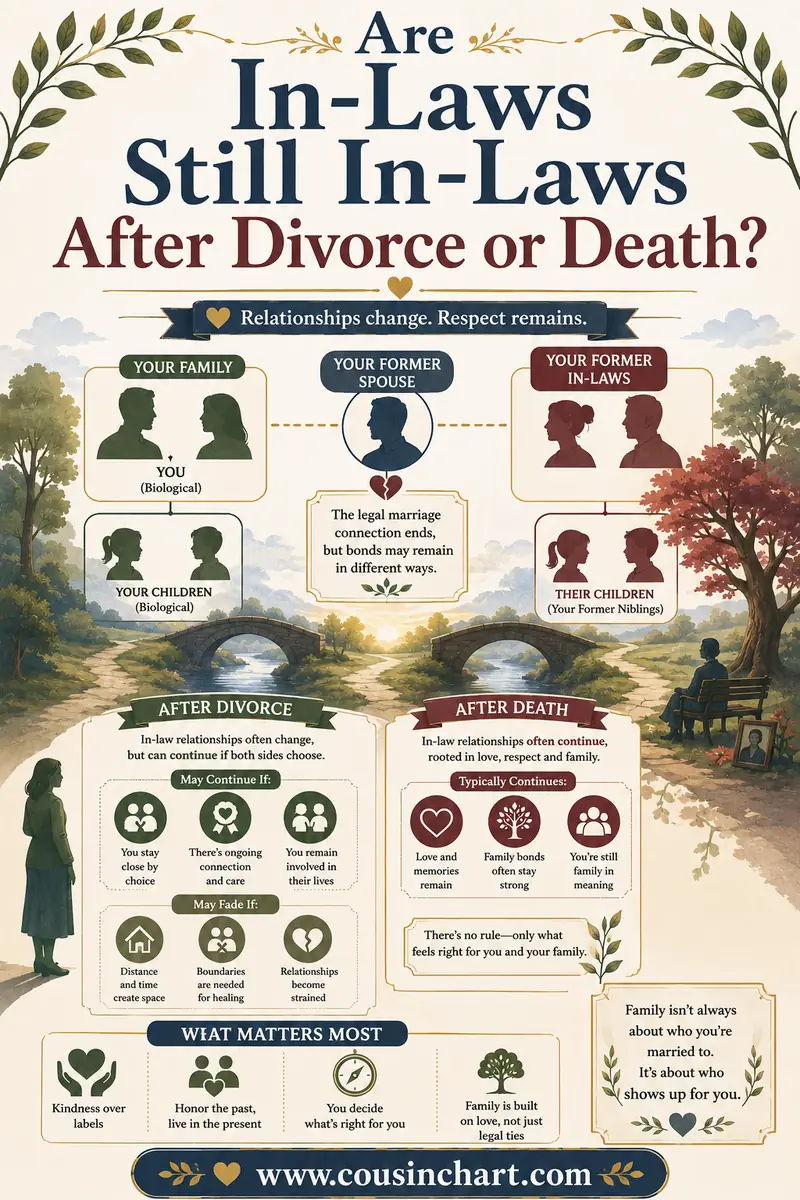
Most people go back to first names, or to whatever feels comfortable given the relationship. If there are grandchildren, many former in-laws stay warm and keep using the names they always did. Our guide to in-laws after divorce or death covers what she's called afterward and how the relationship changes.
After your spouse dies
Many widowed people stay close to their mother-in-law and keep calling her exactly what they did before. Nothing about a death requires changing the name. If you remarry, you might gain a second mother-in-law, and both relationships can continue side by side.
You're the son-in-law
Everything on this page applies to sons-in-law too. The research above suggests sons-in-law who feel close to their wife's parents may actually help the marriage, so don't be shy about asking what she'd like to be called.
Your mother-in-law's other children-in-law
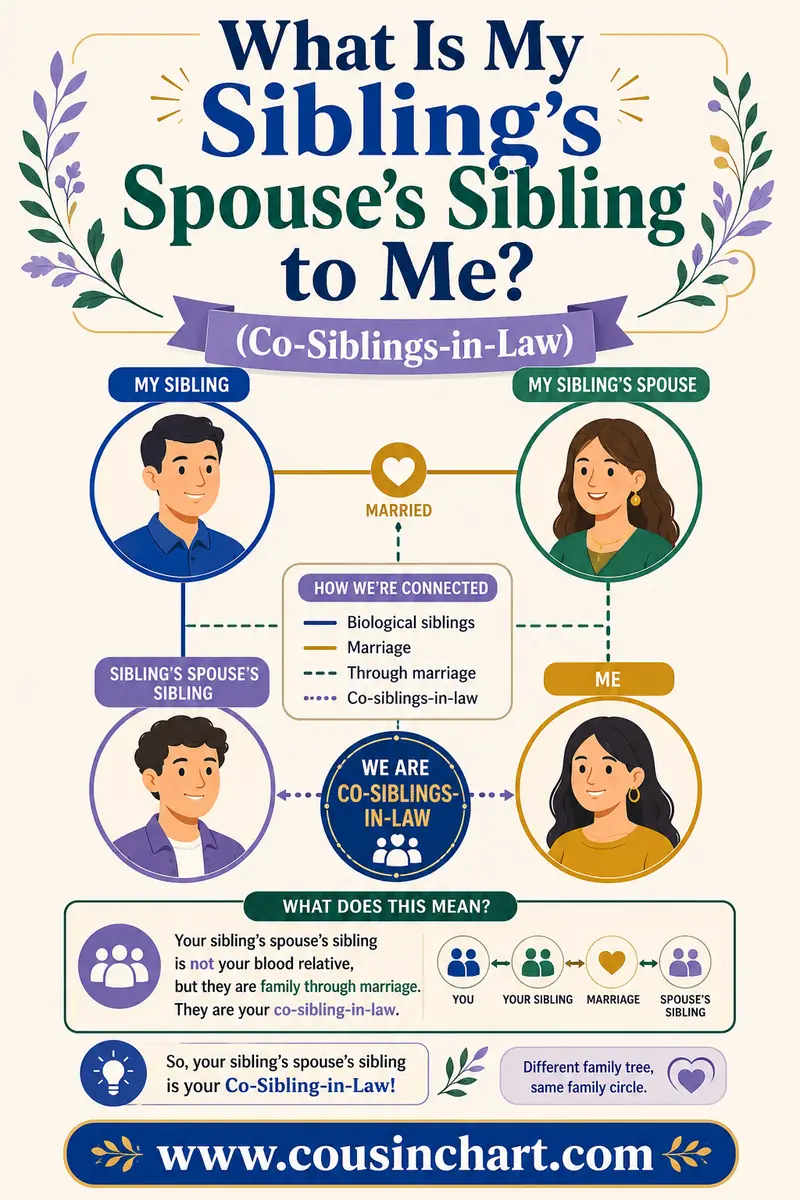
If your spouse has married siblings, their spouses are your co-siblings-in-law. It's smart to check what they call her. If everyone else uses "Linda" and you suddenly start calling her "Mom," it can feel like you're competing. If they all say "Mom," your "Mrs. Smith" might sound distant. You don't have to match, but it's useful to know.
What Your Kids Will Call Her
Once grandchildren arrive, a lot of adults quietly switch to the grandparent name. "Ask Nana if she wants coffee" becomes "Nana, do you want coffee?" It's a common shift and helps little kids learn the name.
A few things to keep in mind:
- Ask her what grandparent name she'd like. Most grandparents still go by a grandparent title. An AARP survey found that while most answer to "grandma" or "grandpa," about one in 20 grandparents prefers their first name.
- Coordinate with your own parents. If your mom wants to be "Nana," your mother-in-law will need a different name, like "Grandma" or "Gigi." Settle it before the baby arrives if you can.
- It's fine if your name for her and your kids' name for her differ. You can keep calling her Linda while your kids call her Grandma.
Choosing grandparent names is a whole topic of its own, with names from dozens of languages and tips for second and third sets of grandparents. We cover it in our guide to grandparent names.
Writing Her Name: Cards, Texts and Formal Occasions
What you call her out loud and how you write her name aren't always the same. Here's a quick guide.
| Situation | Common choice | Example |
|---|---|---|
| Birthday or holiday card | Whatever you call her out loud | "Dear Linda," "Dear Mom" |
| Mother's Day card | Her name plus a warm line | "Happy Mother's Day, Linda. Thank you for raising my favorite person." |
| Wedding program | Full name and role | "Mother of the Groom: Linda Smith" |
| Thank-you note after a gift | Her name, sometimes with her spouse | "Dear Linda and Robert" |
| Obituary or memorial | Full name and relationship | "Survived by her son-in-law, Jordan" |
| Family tree | Full birth name; married name as noted | "Linda Ann (Garcia) Smith" |
| Phone contact | Whatever helps you find her fast | "Linda (Mom-in-law)" |
A tip: if you're unsure whether to sign a card "Love, your daughter-in-law," most people just sign their first name. The card itself says the rest.
Common Mistakes (and How to Avoid Them)
- Waiting years to ask. The longer you put it off, the stranger the conversation feels. One short question early saves a lot of dodging.
- Assuming "Mom" without asking. Even a well-meant "Mom" can land wrong if she's private or formal, or if she's still adjusting to her child's marriage.
- Refusing "Mom" without warmth. If you don't want to use it, say so kindly and offer something else. A flat "no" can sting.
- Letting your spouse stay out of it. Your spouse knows their mother. They can help you read her, or ask on your behalf.
- Using a nickname too soon. If her siblings call her "Bunny," wait until she invites you to use it.
- Calling her "your mom" to your spouse in front of her. It can sound distant. Use her name or her title.
- Thinking the name decides the relationship. Plenty of people are deeply close to a mother-in-law they call by her first name, and some who say "Mom" are not close at all. The name is a signal, not the whole story.
Four Real-Life Scenarios, Talked Through
These examples use made-up people to show how the advice plays out. They're illustrative, not real families.
1. Priya and the "Mom" request
Priya has been married to Sam for six months. At a family dinner, Sam's mother, Carol, says, "You know, you can call me Mom." Priya's own mother is alive and close by, and Priya feels torn. Later that week, over coffee, she says: "It meant so much that you offered. I think of my mom as 'Mom,' so would it be all right if I called you 'Mom Carol'?" Carol laughs and says she loves it. A year later, it's shortened to "Mama C." Nobody planned that; it just happened.
2. Marcus and the no-name zone
Marcus has been married for eight years and has never called his mother-in-law anything. He says "Hi!" when he arrives and waits for eye contact before speaking. He finally mentions it to his wife, Dana, who says, "Oh, she'd love it if you called her Bev. Everyone does." The next visit, Marcus says, "Bev, can I get you anything?" and that's it. Eight years of avoidance, ended in four words. It's a very common story.
3. Elena and two languages
Elena grew up in an English-speaking family in Ohio and married Joon, whose parents moved from Korea. Joon explains that his mother would feel respected if Elena called her 어머님 (eomeonim). Elena practices it with Joon and uses it at their next visit. Joon's mother is visibly delighted. Meanwhile, Joon calls Elena's mother by her first name, Karen, which is what Karen prefers. Each spouse follows the custom of the other's family, and both mothers-in-law feel honored.
4. Chris and the second marriage
Chris's first wife died, and he stayed close to her mother, whom he has always called "Mom Ruth." When he remarries, his new wife's mother, Angela, asks what he'd like to call her. Chris says, "I still call my first wife's mother Mom Ruth, and I hope that's okay. Would 'Angela' work for you?" Angela appreciates the honesty, and both relationships continue side by side.
What these have in common: each one was settled by one short, honest conversation. The name came out of the relationship, not the other way around.
When the Relationship Is Strained
Not every mother-in-law relationship is warm. If there's tension, the name question can feel like one more thing to fight about. A few thoughts:
- Keep it neutral and polite. Her first name, or Mrs. plus her last name if that's what she prefers, is always respectful. You don't need to use "Mom" to be civil.
- Don't use the name as a weapon. Switching from "Mom" back to "Mrs. Smith" in the middle of an argument sends a message that's hard to take back. If you need distance, set it through clear boundaries, not titles.
- Let your spouse lead with their parent. Your spouse usually has the most influence with their own mother. Many couples agree that each partner handles tough conversations with their own family.
- Remember the research on boundaries. The University of Michigan findings reported by WBUR suggest that closeness without clear boundaries can strain a marriage. Being polite and a little more reserved is a perfectly healthy option.
If the relationship is affecting your marriage or your well-being, a licensed family therapist can help you and your spouse find a way forward together.
And What About Your Father-in-Law?
Everything above applies to fathers-in-law too, with a few small differences people often notice:
- Fathers-in-law are often more casual about it. Many will say "Call me Bob" at the first handshake, which settles it.
- "Dad" is a less common request. When it comes, the same approach works: thank him, then say yes, or suggest a variation like "Pops" or his first name.
- Nicknames travel fast. If his friends call him "Coach" or "Skip," you may be invited to join in sooner than with a mother-in-law's nickname.
- Cultural forms have a matching word. In Korean, for example, a daughter-in-law uses 아버님 (abeonim), the respectful form of "father," and a son-in-law traditionally uses 장인어른 (jang-in-eoreun) for his wife's father.
It's often easiest to ask about both parents at once: "What would you two like me to call you?" One question, two answers, and nobody feels singled out.
A Quick Decision Guide
If you want a fast way through, answer these in order:
- Has she told you what she'd like? If yes, use it (or kindly suggest a close variation). Done.
- Does her family's culture have a customary form? If yes, ask your spouse how to say it, and use it.
- What do her other children-in-law call her? That's a good default.
- Still unsure? Use her first name if she introduced herself that way, or Mrs./Ms. plus her last name if she didn't, and ask her the next time you're together.
It also helps to keep the bigger picture in mind. Your mother-in-law is a relative by marriage, not by blood, and our explainer on blood relatives vs. relatives by marriage shows how those two kinds of family differ on a chart. The name you choose doesn't change that structure, but it shapes how the relationship feels day to day.
Finding the Right Name for Your Mother-in-Law
There's no single right answer to what to call your mother-in-law. First names are the most common choice in the US, "Mom" is lovely when both of you want it, and many cultures have a customary form that settles the question for you. What matters most is that you ask, listen and use the name warmly. A 30-second conversation now can save years of the no-name zone.
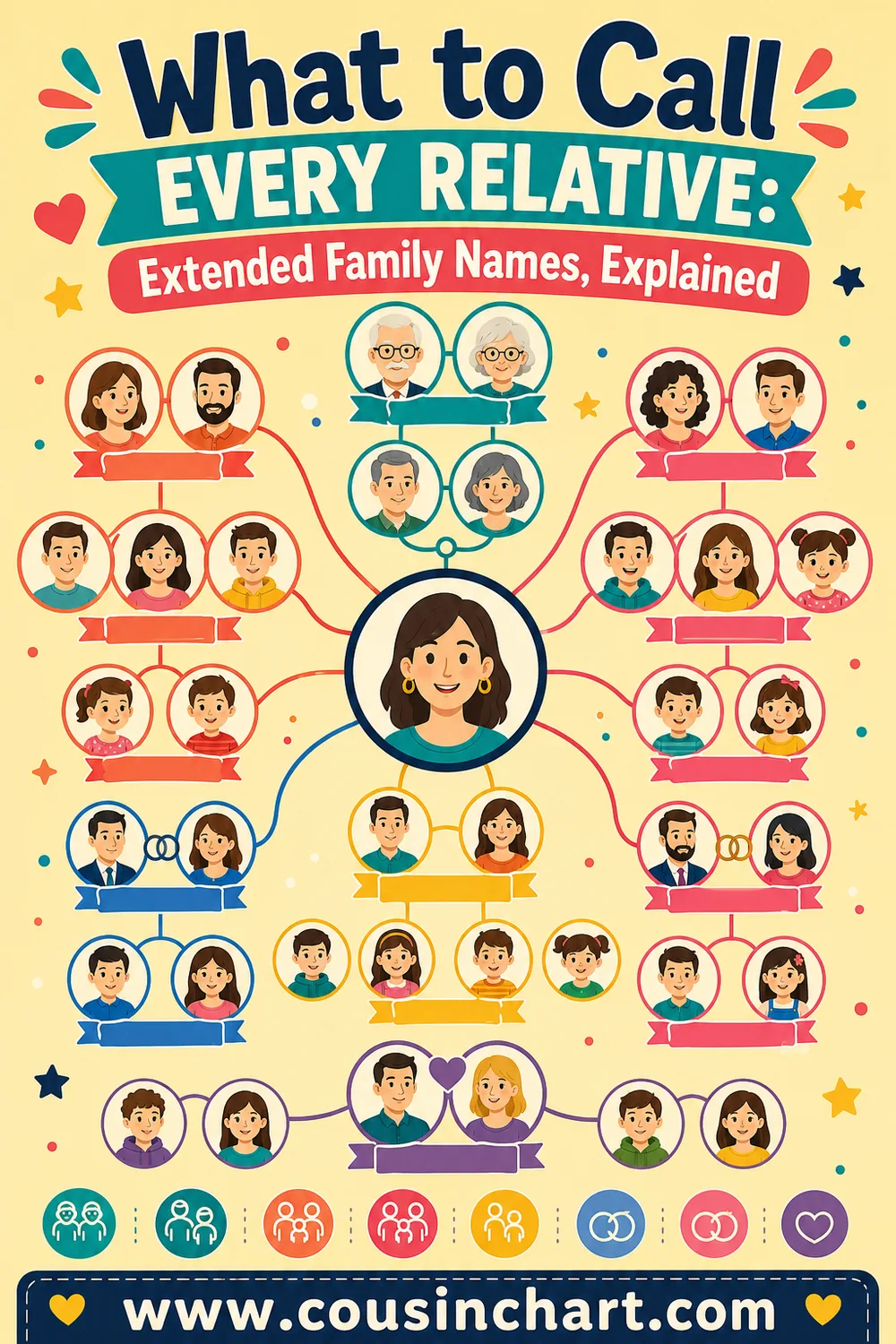
For the bigger map of everyone you gained by marriage, head back to our in-law relationship chart, and see what to call every relative for the full list of family titles. And if you want to know exactly how someone in your spouse's family connects to you, try our free family relationship calculator: you pick how two people connect, and it names the relationship.
Frequently Asked Questions
What should I call my mother-in-law?
Call her whatever she prefers and you're comfortable saying. In most American families today that means her first name. Some people use Mom, a variation like Mom Linda, or a customary word from the family's language. If you don't know her preference, start with Mrs. or Ms. plus her last name, or her first name if she introduced herself that way, and then ask her. It's a normal question, and most mothers-in-law appreciate being asked.
Is it rude to call your mother-in-law by her first name?
Usually not. First names are the most common way adults in the US address their in-laws, especially since people now tend to marry in their late twenties or thirties. It can feel too casual in very traditional families, or in cultures where a son- or daughter-in-law is expected to say Mom or use an honorific. If she introduced herself by her first name or invited you to use it, you're on solid ground. When in doubt, ask her.
Do I have to call my mother-in-law Mom?
No. You never have to call anyone Mom. If she asks, thank her for the warm gesture, then explain briefly that you've only ever used Mom for your own mother, and suggest an alternative such as her first name or Mom plus her first name. Many people find a middle ground that gives her the closeness she's hoping for. Some people grow into using Mom over the years, and some never do. Both are fine.
How do I ask my mother-in-law what she wants to be called?
Choose a relaxed, private moment and keep it light. You might say, Now that we're family, what would you like me to call you? Is Linda okay? If you have a preference, mention it kindly. Talk to your spouse first, since they may already know her wishes or what their siblings' spouses use. You can also ask your spouse to bring it up for you. Then use the name right away so it sticks.
What do you call your mother-in-law before you're married?
While you're dating, use whatever your partner suggests. If you don't know, Mrs. or Ms. plus her last name is a safe start, and most mothers quickly say to use their first name. By the time you're dating seriously or engaged, most people are on a first-name basis. Engagement is also a natural time to revisit the question. When talking about her to others, my partner's mom or my future mother-in-law both work well.
What do Korean daughters-in-law call their mother-in-law?
In Korean, a daughter-in-law usually addresses her husband's mother as eomeonim, written 어머님. The honorific ending nim adds respect to the word for mother. A son-in-law traditionally calls his wife's mother jangmonim, 장모님, though many sons-in-law also say eomeonim. Customs vary by family and generation, so if you've married into a Korean family, ask your spouse which form their parents expect and practice the pronunciation with them first.
What should I call my mother-in-law after a divorce?
Most people return to her first name, or keep whatever name feels comfortable given the relationship after the divorce. If you share children, many former in-laws stay on warm terms and keep using the names they always used, especially in front of the grandchildren. There's no rule that the name must change. When you talk about her to others, former mother-in-law or my children's grandmother are clear and respectful descriptions.
What will my kids call my mother-in-law?
That's a separate decision from what you call her. Ask her what grandparent name she'd like, such as Grandma, Nana or Gigi, and coordinate with your own parents so the grandparents have names kids can tell apart. An AARP survey found most grandparents still go by a grandparent title, while about one in 20 prefers their first name. Many adults start using the grandparent name themselves once kids arrive, which helps little ones learn it.
What is the difference between a mother-in-law and a stepmother-in-law?
Your mother-in-law is your spouse's mother. Your stepmother-in-law is your spouse's stepmother, the woman married to your spouse's parent. Both are relatives by marriage rather than by blood. If your spouse has two mothers, you simply have two mothers-in-law. For what to call a stepmother-in-law, follow your spouse's lead: if your spouse uses her first name, you'll probably do the same, and if your spouse calls her Mom, ask her what she'd like from you.
Sources
We checked every source below while writing this guide. Last reviewed October 30, 2026, by Joan Ramos.
- Mother-in-law (definition and origin) (Dictionary.com)
- In-law (definition and origin) (Dictionary.com)
- Census Bureau Releases New Estimates on America's Families and Living Arrangements (2025) (U.S. Census Bureau)
- Communicative and Relational Dimensions of Shared Family Identity and Relational Intentions in Mother-in-Law/Daughter-in-Law Relationships (Rittenour and Soliz, 2009) (University of Nebraska-Lincoln, DigitalCommons)
- The Outsized Power of the Son-in-Law (WBUR)
- 2018 Grandparents Today National Survey (AARP Research)
- Ruth 1:16 (Sefaria)