Can Step-Siblings Date or Marry? The Law, the Family and What to Think About
Can step siblings date? In most cases, yes. Step-siblings aren't blood relatives, so they share no DNA through their parents, and the US marriage laws we reviewed focus on blood relatives, adoptive relatives and step-parent and step-child pairs rather than step-siblings. Still, laws vary by state and country, adoption can change the picture, and the family side of things often matters more than the legal side.
This guide explains what makes someone a step-sibling, what "blood relative" and "relative by marriage" mean in law, how a few real statutes handle step-relatives, and how families can handle the situation with care. It's written for young adults, parents and anyone curious about how step-families work.
What is a step-sibling?
A step-sibling is the child of your step-parent. You become step-siblings when your parent marries (or, in everyday speech, partners with) someone who already has a child. You don't share a biological parent. Your only link is the marriage between your parents.
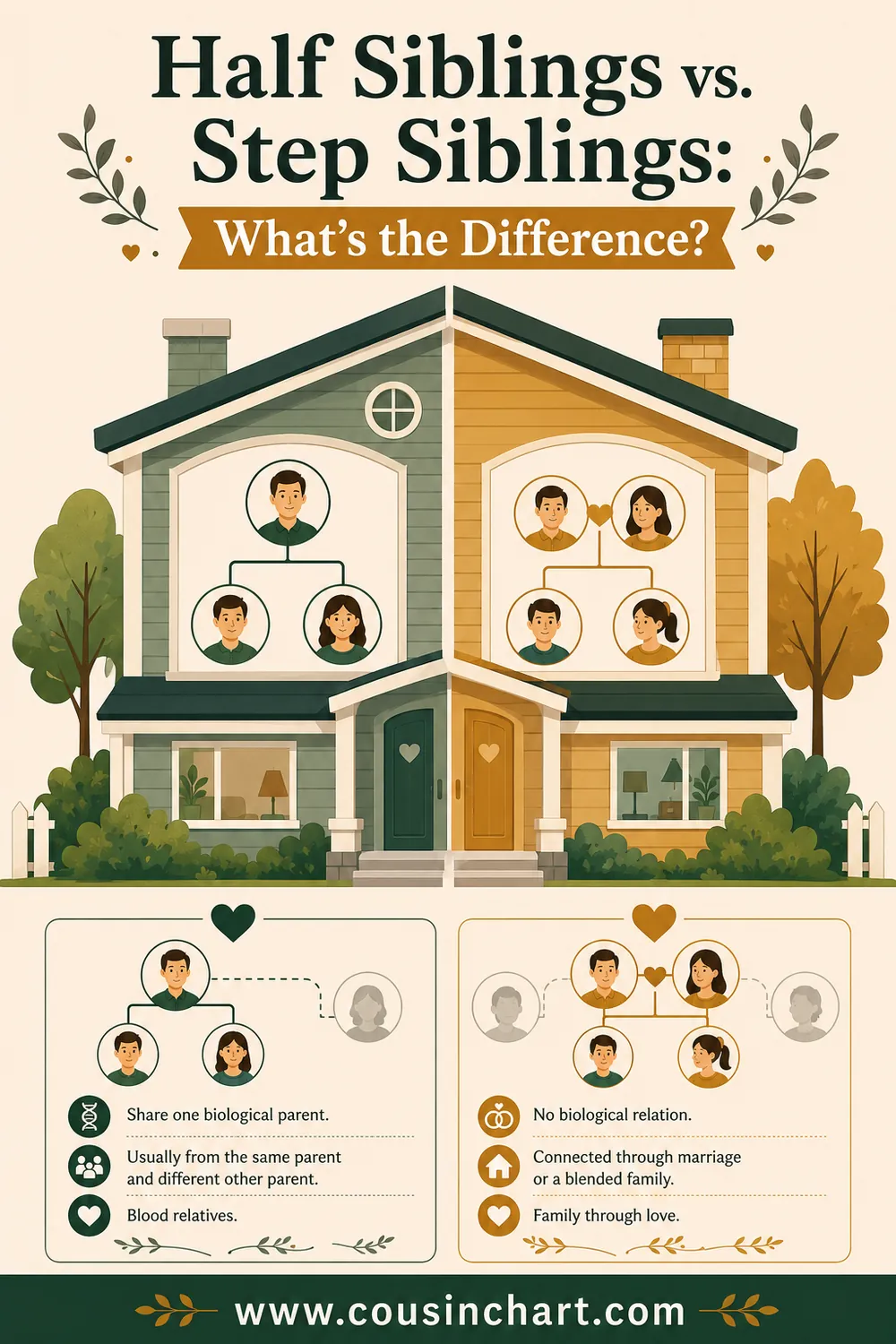
That's different from a half-sibling, who shares one biological parent with you, and from an adoptive sibling, who's legally your brother or sister through adoption. People mix these up all the time, so here's a side-by-side look. For more detail, see our guide to half-siblings vs. step-siblings.
| Type of sibling | How the link is formed | Shared biological parents | Related by blood? |
|---|---|---|---|
| Full sibling | Same mother and father | 2 | Yes |
| Half-sibling | One shared parent | 1 | Yes |
| Step-sibling | Your parent married their parent | 0 | No |
| Adoptive sibling | Legal adoption into the same family | Usually 0 | Usually no, but legally siblings |
| Former step-sibling | The parents' marriage has ended | 0 | No |
One more wrinkle. If your parent and step-parent later have a baby together, that baby is a half-sibling to both of you, and is related by blood to each of you. You and your step-sibling still aren't related by blood to each other.
Step-families are common
If you're part of a blended family, you've got plenty of company. The US Census Bureau's report on adopted children and stepchildren estimated that about 4.3 million children lived with at least one step-parent in 2010. A 2026 Pew Research Center analysis of Census Bureau data found that 17% of US children lived in a blended family in 2023. Among children living with a parent and a step-parent, 15% lived with step-siblings only and 14% lived with both step-siblings and half-siblings.
With that many step-families, it isn't surprising that questions about step-sibling relationships come up.
Can step siblings date? The short answer
It helps to split this question into three parts, because each one has a different answer.
- Biologically: Step-siblings share no common parent, so there's no genetic relationship through the step-family. Unless they happen to be related some other way, a DNA test would show them as unrelated.
- Legally: In the US, marriage rules are set by each state. The statutes we looked at don't list step-siblings among the relationships that can't marry. But laws vary, a few states also restrict some relationships by marriage, and adoption can make step-siblings into legal siblings.
- Socially and in the family: This is usually the hardest part. How the parents, other siblings and extended family feel can depend on ages, how long the two grew up together and whether they ever lived in the same home as children.
So the honest answer is: often legally allowed, biologically unrelated, and personally complicated. The rest of this article unpacks each part.
A quick check you can run
Ask yourself these questions. If you answer "yes" to any of them, read the matching section below with extra care.
- Did a step-parent legally adopt either of you? (See "When adoption changes the answer.")
- Are either of you under 18? (Laws about minors apply, and this isn't a decision for young teens to make alone.)
- Do you live in, or plan to marry in, a place that restricts relationships by marriage? (See the law sections.)
- Did you grow up in the same house as young children? (See "Family dynamics.")
Are step-siblings blood relatives?
No. The law draws a line between two kinds of family ties:
- Consanguinity means a blood relationship. Cornell Law School's Legal Information Institute (LII) defines consanguinity as the relationship between people who share a common ancestor.
- Affinity means a relationship created by marriage. The same LII entry explains that affinity refers to relationships created by marriage. In-laws and step-relatives fall into this group.
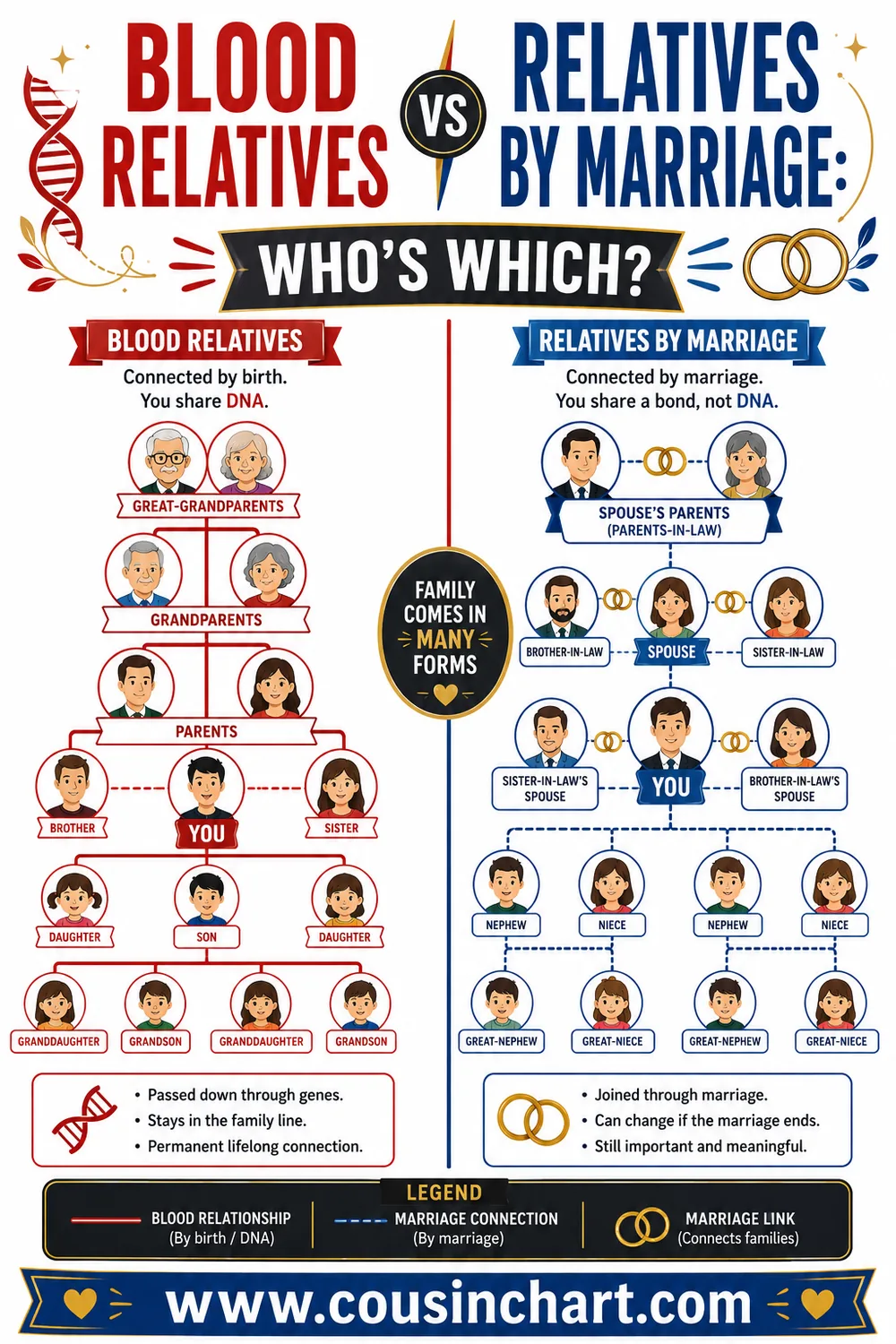
Step-siblings are related by affinity, not consanguinity. Their tie exists because their parents married. For a broader look at the two categories, see our guide to blood relatives vs. relatives by marriage, and for the blood side in detail, our explainer on consanguinity.
Blood vs. marriage: where step-relatives fit
| Relative | Type of relationship | Shares DNA through this link? |
|---|---|---|
| Sister or brother | Blood (consanguinity) | Yes |
| Half-sister or half-brother | Blood (consanguinity) | Yes |
| First cousin | Blood (consanguinity) | Yes |
| Step-parent | Marriage (affinity) | No |
| Step-sibling | Marriage (affinity) | No |
| Step-cousin | Marriage (affinity) | No |
| Brother-in-law or sister-in-law | Marriage (affinity) | No |
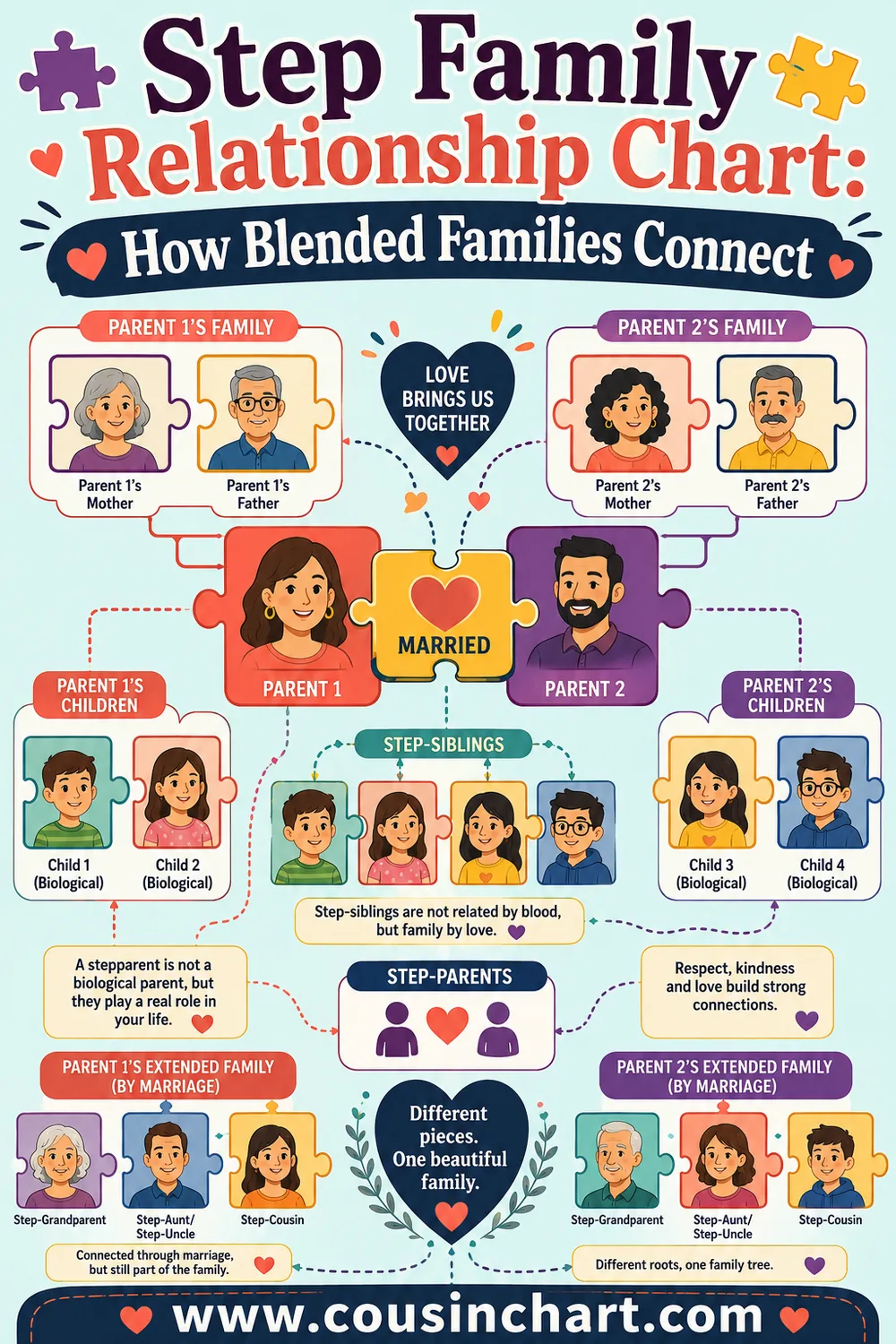
Step-relatives can stretch further than people expect. Your step-parent's nieces and nephews are your step-cousins. Our step-family relationship chart maps them all out, and our page on step-cousins covers that relationship specifically.
What about step-siblings who turn out to be related?
Now and then, step-siblings discover they're related some other way. Maybe their families come from the same small town, or two families were already connected before the parents married. In those cases, the blood relationship (if any) is what matters for both genetics and law, not the step-relationship. A DNA test is the clearest way to check.
What US law says about marrying a step-relative
In the US, each state writes its own marriage laws. There isn't one federal list of who can and can't marry. Cornell LII's entry on incest explains that marrying a relative within the prohibited degree of consanguinity is barred, and that incest is a crime in all states. The examples it gives are blood relatives: siblings, parents and children, grandparents and grandchildren, and aunts or uncles with nieces or nephews.
The key words there are "prohibited degree." Each state decides which degrees are prohibited. Most statutes focus on blood relatives and adoptive relatives. Some also include certain relatives by marriage. LII's consanguinity entry notes, for example, that Georgia prohibits marriages within prohibited degrees of both consanguinity and affinity.
Worked example: Texas
Texas is a useful example because its rules are short and clear. Texas Family Code Section 6.201 makes a marriage void when one person is related to the other as:
- an ancestor or descendant, by blood or adoption;
- a brother or sister, of the whole or half blood or by adoption;
- a parent's brother or sister, of the whole or half blood or by adoption; or
- the son or daughter of a brother or sister, of the whole or half blood or by adoption.
Then Texas Family Code Section 6.206 adds one relationship by marriage: a marriage is void if one person is a current or former stepchild or stepparent of the other.
Notice what's on the list and what isn't. Step-parent and step-child pairs are covered, even after the marriage that created the step-relationship has ended. Step-siblings aren't named in either section. So under these Texas sections, step-siblings who aren't related by blood or adoption aren't in a prohibited category. That's a reading of the text, not legal advice, and you'd want a Texas family lawyer to confirm it for a real situation.
Step-parent vs. step-sibling: why the law treats them differently
Laws that reach relatives by marriage tend to focus on the step-parent and step-child relationship. That relationship involves a parent figure and a child in the same household, and the law is protective about it. Step-siblings are usually peers, which is why statutes are less likely to mention them. It's also why the step-parent marriage itself can matter in ways people don't expect, which we cover below.
When adoption changes the answer
This is the edge case that catches people out. If a step-parent legally adopts their spouse's child, that child becomes the step-parent's legal child. Now look at the Texas list again: it includes a brother or sister "by adoption."
Here's a worked example:
- Alex's mom marries Jordan's dad when Alex is 8 and Jordan is 9. At that point, Alex and Jordan are step-siblings.
- Two years later, Jordan's dad adopts Alex. Alex is now Jordan's dad's legal child.
- Alex and Jordan now share a legal parent, so they're siblings by adoption, not just step-siblings.
Under statutes like Texas's that cover siblings by adoption, that change could put them in a prohibited category, even though they still share no DNA. If adoption is part of your family story, it's essential to get legal advice.
Does the parents' marriage matter?
Yes, in a few ways:
- It's what creates the step-relationship. If the parents never married, the children may be "step-siblings" in everyday speech but not relatives by affinity in a legal sense.
- Some laws keep counting after divorce. Texas's step-parent rule applies to a current or former step-parent or step-child. Whether any rule about relatives by marriage continues after a divorce depends on how each statute is written.
- Household rules matter while it's ongoing. While the parents are married and the kids live under one roof, family expectations, household rules, and laws that protect minors all apply.
- Where you live matters, not just where the wedding is. Each state applies its own rules, so check the law in the place you live as well as the place you plan to marry.
How to look up the law where you live, step by step
Because the answer depends on location, it's worth knowing how to check for yourself. Here's a method that works for most US states.
- Find your state's family code or domestic relations code. Every state publishes its statutes online, usually on the state legislature's website. Search for your state's name plus "family code" or "domestic relations."
- Look for the section on void or prohibited marriages. It's often titled something like "consanguinity," "prohibited marriages," "void marriages" or "degrees of relationship."
- Read the list carefully. Note whether it mentions only blood relatives ("whole or half blood"), whether it includes adoptive relatives ("by adoption"), and whether it mentions step-relatives or "affinity."
- Check the words "current or former." Some sections, like Texas's step-parent rule, apply even after the parents' marriage ends.
- Look for related criminal laws. Many states also have a separate criminal statute on incest. Cornell LII's incest entry is a good starting point for understanding the terms.
- Confirm with a professional. Statutes get amended, and courts interpret them. A short consultation with a family lawyer is the reliable way to be sure.
If you're outside the US, the same approach works: find the national or regional marriage law and look for the list of prohibited relationships, often split into blood relatives and relatives by marriage, as in England and Wales.
Step-sibling marriage laws outside the US
Other countries have their own rules. England and Wales are a helpful comparison because the law spells out relationships by marriage in detail.
Schedule 1 of the Marriage Act 1949 lists the prohibited relationships in two parts:
- Part 1 (kindred): blood and adoptive relatives, including children, parents, grandparents, grandchildren, siblings, half-siblings, aunts and uncles, and nieces and nephews.
- Part 2 (affinity): relationships through a former spouse or civil partner, such as the child or grandchild of a former spouse, or the former spouse of a parent or grandparent.
Step-siblings don't appear in either part. And Section 1 of the Act says a Part 2 marriage, such as a former step-parent and step-child, isn't void because of affinity only when both people are at least 21 and the younger person was never a "child of the family" of the other before turning 18. In other words, England and Wales treat a step-parent who helped raise a child very differently from two adults who met later in life.
Many other countries have their own lists, and some cultures and religious traditions have their own expectations that go beyond civil law. If you're anywhere other than the places described here, check the current law where you live.
How three sets of rules compare
| Relationship | Texas (Family Code 6.201 and 6.206) | England and Wales (Marriage Act 1949) |
|---|---|---|
| Brother or sister (full or half) | Void | Void |
| Brother or sister by adoption | Void | Not named (Part 1 lists adoptive parents and children, not adoptive siblings) |
| Step-parent and step-child | Void, current or former | Void unless both 21+ and the younger was never a child of the family |
| Step-siblings (no blood or adoptive link) | Not listed | Not listed |
| First cousins | Not in 6.201's list | Not listed |
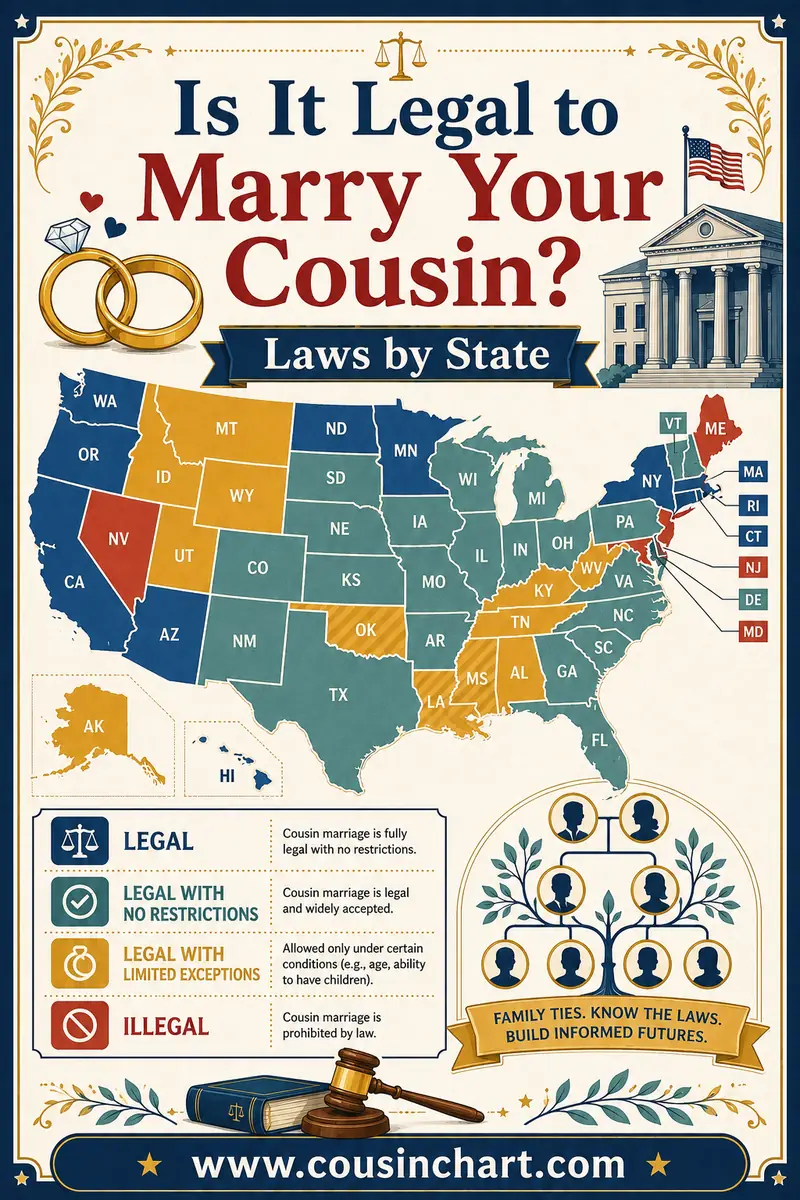
This table only summarizes the specific sections linked above, and laws can change. Cousin rules vary widely across US states; our guide to cousin marriage laws covers them.
Family dynamics: why it can feel complicated
Even when the law is clear, families often aren't. The American Psychological Association's guide to making stepfamilies work says that, under the best conditions, it may take two to four years for a new stepfamily to adjust to living together. It also notes that younger adolescents, around ages 10 to 14, may have the hardest time adjusting. That's a lot of change for everyone, and a relationship between step-siblings adds another layer.
Growing up together vs. meeting as adults
A key factor is whether the two people were raised as part of the same household. Researchers have looked at how growing up together shapes the way people see family members. In a 2003 study in the Proceedings of the Royal Society B, Debra Lieberman and colleagues found that the longer people had lived with an opposite-sex sibling as children, the more strongly they disapproved of romantic relationships between siblings in general, and this held even when the children living together weren't genetically related.
In plain terms, living together as kids tends to make people think of each other, and of relationships like this, as "family." That helps explain why families often react very differently to these two situations:
- Two adults who met after their parents married, never lived together as children, and see each other at holidays. Many families find this easier to accept.
- Two people raised in the same house from early childhood. Relatives may see them as brother and sister, whatever the DNA says, and may find a romance very hard to accept.
How a relationship can affect the rest of the family
- The parents' marriage. The parents may feel caught between their own children, or worry about how a breakup would affect the household.
- Other siblings. Younger siblings and half-siblings may feel confused about what the relationship means for them.
- Extended family. Grandparents and cousins may have strong opinions, especially if they think of the two as siblings.
- Breakups. If the relationship ends, both people may still see each other at every family event.
None of this means a relationship can't work. It means it's worth thinking about the whole family, not just the two people involved.
Common step-sibling situations compared
Every family is different, but these patterns come up often. The table gives general things to think about, not rules.
| Situation | Legal picture (general) | Family considerations |
|---|---|---|
| Adults who met after their parents married, never lived together | Usually not a prohibited relationship, but check local law | Often easier for families to accept; still needs open conversation |
| Raised in the same home from childhood | Same as above unless adoption occurred | Family may see them as siblings; reactions can be strong |
| Were dating before their parents met each other | Usually not a prohibited relationship, but check local law | The parents' relationship may feel awkward; timing and honesty matter |
| Parents have divorced | Former step-siblings; check how local statutes treat former affinity | Less day-to-day overlap, but history still matters |
| A step-parent adopted one of them | May now be legal siblings by adoption; get legal advice | Usually raised as siblings, which adds family complexity |
| Either person is under 18 | Laws about minors apply; not a decision for minors to make alone | Parents are responsible for household boundaries and safety |
Special situations worth thinking through
They were dating before their parents met. Sometimes two people are already a couple when one person's mom meets the other person's dad, perhaps at a school event or through the couple themselves. If the parents then decide to marry, the couple becomes step-siblings overnight. Families in this spot often talk openly about how the parents' plans and the couple's plans fit together, since both relationships affect the same household.
There's a big age gap. A 30-year-old and a 14-year-old step-sibling aren't peers, and any romantic interest there isn't appropriate. Laws protecting minors apply, and adults in the family have a responsibility to keep boundaries clear and kids safe.
They still live under the same roof. Even for two adults, sharing a home with parents and younger siblings changes things. Couples in this situation often find it's kinder to everyone to wait until at least one of them lives independently.
The relationship ends. A breakup between step-siblings doesn't end the step-relationship, because that comes from the parents' marriage. Holidays, birthdays and family photos can feel awkward for a while. Agreeing in advance to stay polite at family events, whatever happens, can protect everyone else.
Extended family has strong feelings. Grandparents, aunts and uncles may have watched the two grow up as "brother and sister." Their reactions may be strong at first. Time, patience and respectful conversation usually help more than debate.
What to call everyone if step-siblings marry
Here's a part of the question people rarely think about: what happens to the family tree? When two step-siblings marry, some relatives end up with two relationships to each other at once. Let's walk through an example.
Sam's mom, Lisa, married Riley's dad, Mark. Years later, Sam and Riley, now adults who met after the wedding, decide to marry.
- Lisa is Sam's mom, and was already Riley's step-mom. Now she's also Riley's mother-in-law.
- Mark is Riley's dad, and was already Sam's step-dad. Now he's also Sam's father-in-law.
- Sam and Riley were step-siblings. Now they're spouses. Most families simply use "husband," "wife" or "spouse" from then on.
- Sam's sister was Riley's step-sister. Now she's also Riley's sister-in-law.
- If Lisa and Mark had a son together, he's a half-brother to both Sam and Riley, and now he's also each one's brother-in-law.
What about Sam and Riley's future children? Lisa and Mark are both their biological grandparents, one through each side, since Lisa is Sam's mom and Mark is Riley's dad. That's a tidy outcome: the step-grandparent label disappears, because each one is a blood grandparent through their own child.
Most families keep it simple and use the closest, warmest title. If the double relationships make your head spin, our step-family relationship chart lays out the step and in-law labels side by side.
Questions to talk through before going public
Before telling anyone, it can help for the two people involved to talk through a few questions privately. Honest answers make the family conversation much easier.
- How long have we known each other, and did we live together as children?
- Is either of us adopted by the other's parent?
- Have we checked the law where we live and where we'd want to marry?
- How do we think each parent will react, and why?
- How will we act at family events while things are new?
- What will we do if one of us wants to end the relationship?
- Who outside the family, such as a counselor or trusted friend, can we talk to?
There's no score to add up. The point is to show your family that you've thought about them, not just about yourselves.
How to approach a step-sibling relationship respectfully
If you're an adult and you and a step-sibling have feelings for each other, here are some steps that can help you handle it with care.
- Check the facts first. Confirm whether either of you was adopted by a step-parent, and look up the law where you live or plan to marry. If anything is unclear, ask a family lawyer.
- Take time to be sure. Living in a new blended family can stir up big emotions. Give the feelings time before making them public.
- Talk honestly with each other. Discuss what you each want, how you'd handle family events, and what happens if things don't work out.
- Think about timing. If the parents just married, the family may still be adjusting. The APA's two-to-four-year adjustment estimate is a reminder that blended families need time.
- Tell the parents together, calmly. Pick a private, unhurried moment. Explain that you've thought it through and that you care about the family.
- Expect a range of reactions. Some parents are supportive right away. Others need time. Listening, rather than arguing, usually helps.
- Respect household boundaries. If you still live at home, follow the family's rules and be considerate of younger siblings.
- Consider family counseling. A family therapist can help everyone talk things through. The APA notes that a psychologist can help blended families adjust.
Advice for parents
If you're the parent or step-parent, a few things tend to help:
- Stay calm. A strong first reaction can push young adults away. It's fine to say you need time to think.
- Separate the law from your feelings. You can acknowledge that a relationship may be legal while still sharing honest concerns.
- Keep everyone safe and age-appropriate. With minors in the home, parents set the boundaries.
- Protect your own marriage. Talk with your spouse privately before responding to the kids, so you're on the same page.
- Think about the other children. Younger siblings may need simple, reassuring explanations.
Explaining it to younger children
Younger siblings and half-siblings may have questions, and they deserve answers they can understand. A few tips:
- Keep it short and simple. For a young child, something like "Sam and Riley aren't related by blood. They care about each other and they're a couple now" is often enough.
- Reassure them about their own place. Kids may wonder whether this changes who their brothers and sisters are. Let them know their own relationships haven't changed.
- Use the family's real words. If the family uses "step-brother" or "step-sister," explain that the "step" means the connection comes from a marriage, not from being born into the same family.
- Answer questions as they come. Children often ask more later, once they've had time to think. Patience matters more than a perfect first explanation.
When former step-siblings reconnect years later
Sometimes two people lived in a step-family for a short time as teens, the parents divorced, and they lost touch. Years later, they meet again as adults. Families often see this differently from a relationship that starts while the step-family is still together, because there's distance, time and independent adult lives involved. The legal questions are the same as above: check whether any adoption happened, and how local law treats former relationships by marriage. The family questions are usually gentler, but it's still kind to let both former step-parents hear the news directly rather than through the grapevine.
Common myths about step-siblings and relationships
- "Step-siblings are related by blood." They aren't. They're related only through their parents' marriage.
- "It's illegal everywhere." The laws we reviewed don't list step-siblings, but laws vary by state and country, so don't assume either way.
- "It's legal everywhere." Some places restrict relationships by marriage, and adoption can turn step-siblings into legal siblings.
- "Divorce erases everything." Some laws, like Texas's step-parent rule, still apply to former step-relationships.
- "Half-siblings and step-siblings are the same." Half-siblings share a parent and DNA. Step-siblings share neither.
- "If it's legal, the family will be fine with it." Legal and comfortable aren't the same thing. Family feelings deserve attention too.
Showing step-siblings on a family tree
If your family is making a tree, step-siblings belong on it. The usual way is to show each child under their own biological or adoptive parents, then draw a marriage line between the two parents. That makes it clear the children are linked through the marriage, not by blood. If two step-siblings later marry, the tree simply shows a new marriage line between them, connected back to their separate parents. Our blended family tree template is built for exactly this kind of layout.
A note on legal questions
This article is general information, not legal advice. Marriage laws vary by state and country, they change over time, and details like adoption, age and where you live can change the answer. If you're thinking about marrying a step-relative, or you're unsure how the law applies to your family, talk to a family lawyer where you live. For family stress, a licensed family therapist or psychologist can help.
Wrapping up: can step siblings date or marry?
Step-siblings aren't blood relatives, and the US and UK statutes covered here don't list them among the relationships that can't marry. Watch for the exceptions: adoption by a step-parent, places that restrict relationships by marriage, and anything involving minors. Beyond the law, the biggest questions are about family: how long the two grew up together, how the parents feel, and how everyone can stay kind to each other through the change.
Want to see exactly how two people in a blended family are connected? Try our free family relationship calculator. It names the relationship for you in seconds.
Keep reading: How to Show Adoption on a Family Tree (Symbols, Layouts and Kind Wording).
Frequently Asked Questions
Is it legal for step-siblings to get married?
In many places, yes, but it depends on where you live. In the US, each state sets its own marriage rules. The statutes reviewed for this article, such as Texas Family Code sections 6.201 and 6.206, list blood relatives, adoptive relatives and step-parent and step-child pairs, but not step-siblings. England and Wales also don't list step-siblings in the Marriage Act 1949. Some states restrict certain relationships by marriage, and adoption can turn step-siblings into legal siblings. Check your local law and talk to a family lawyer for your situation.
Are step-siblings related by blood?
No. Step-siblings don't share a biological parent. They're connected only because one person's parent married the other person's parent. Lawyers call this kind of tie affinity, meaning a relationship created by marriage, as opposed to consanguinity, which is a blood relationship based on a shared ancestor. A DNA test would normally show two step-siblings as unrelated, unless their families happen to be connected in some other way. If their parents have a baby together, that baby is a half-sibling to both of them, but the step-siblings still aren't blood relatives to each other.
What happens if a step-parent adopts one of the step-siblings?
Adoption can change the legal picture. When a step-parent adopts their spouse's child, that child becomes the step-parent's legal child, so the two children now share a legal parent. That makes them siblings by adoption, not just step-siblings. Some marriage laws, including Texas Family Code section 6.201, prohibit marriage between siblings by adoption, even though there's no genetic relationship. If adoption is part of your family history and you're thinking about marriage, it's important to get advice from a family lawyer where you live.
Can step-siblings date if their parents are divorced?
Once the parents' marriage ends, many people describe the children as former step-siblings. Whether the end of the marriage changes anything legally depends on how local laws are written. For example, Texas's rule on step-parents and step-children applies to current or former step-relationships, but step-siblings aren't named in that rule at all. In practice, divorce usually means less day-to-day contact, which can make a relationship feel less complicated for the family. Still, shared history matters, so open and respectful conversation remains important.
What's the difference between a step-sibling and a half-sibling?
A half-sibling shares one biological parent with you, so you're related by blood and share about a quarter of your DNA on average. A step-sibling shares no biological parent with you. You're connected only because your parent married their parent. That's why the law usually treats them very differently. Half-siblings appear on prohibited-marriage lists in places like Texas and England and Wales, while step-siblings generally don't. If your parent and step-parent have a child together, that child is your half-sibling and your step-sibling's half-sibling too.
Is it weird to like your step-sibling?
Feelings aren't something to be ashamed of, and situations like this happen in blended families. Whether acting on them makes sense depends on a lot of things: your ages, whether you grew up in the same home, how long your parents have been together and how your family is likely to react. Research suggests that growing up together tends to make people see each other as family, so people who met as adults often find things simpler. Taking time, talking honestly and getting support from a counselor can help you decide what's right.
How do you tell your parents you're dating your step-sibling?
Plan the conversation together. Choose a calm, private time when nobody is rushed, and tell your parents together rather than letting them find out from someone else. Explain that you've thought it through, that you care about the family, and that you understand it may take them time to adjust. Listen to their concerns without arguing. Some parents will need days or weeks to process the news. If the conversation gets stuck, a family therapist can help everyone talk more openly and find a way forward that respects the whole household.
Do step-siblings share any DNA?
Through the step-relationship itself, no. DNA passes only from biological parents to children, and step-siblings don't share a biological parent. So unless they're connected through some other branch of their families, a DNA test should show them as unrelated. Occasionally, step-siblings discover a distant blood connection, for example if their families come from the same small community. In that case, the actual blood relationship is what matters for genetics and for any marriage laws, and a DNA test is the most reliable way to find out.
Can step-cousins date?
Step-cousins are even more distant than step-siblings. They're usually the child of your step-parent's brother or sister, or the step-child of your aunt or uncle, so you share no blood relationship and usually never lived together. The marriage statutes reviewed for this article, in Texas and England and Wales, don't mention step-cousins. As always, laws vary by state and country, and adoption can create legal relationships that didn't exist before. Families tend to find step-cousin relationships less complicated than step-sibling ones, because there's rarely a shared childhood home.
If step-siblings marry, what do they call their parents?
Each person's parent becomes the other's parent-in-law, on top of already being a step-parent. For example, if Sam's mom married Riley's dad, and Sam and Riley later marry, Sam's mom is Riley's step-mom and mother-in-law, and Riley's dad is Sam's step-dad and father-in-law. In everyday life, most families just keep using the names they already used, like first names or Mom and Dad. If the couple has children, both parents become those children's biological grandparents, one through each side of the family.
Sources
We checked every source below while writing this guide. Last reviewed October 30, 2026, by Joan Ramos.
- Incest (Legal Information Institute, Cornell Law School)
- Consanguinity (Legal Information Institute, Cornell Law School)
- Texas Family Code Section 6.201, Consanguinity (State of Texas (statute text via Public.Law))
- Texas Family Code Section 6.206, Marriage to Stepchild or Stepparent (State of Texas (statute text via Public.Law))
- Marriage Act 1949, Schedule 1: Kindred and Affinity (legislation.gov.uk, The National Archives)
- Marriage Act 1949, Section 1: Marriages within prohibited degrees (legislation.gov.uk, The National Archives)
- Making stepfamilies work (American Psychological Association)
- 5 facts about U.S. children living in blended families (Pew Research Center)
- Adopted Children and Stepchildren: 2010 (press release CB14-73) (US Census Bureau)
- Does morality have a biological basis? An empirical test of the factors governing moral sentiments relating to incest (Lieberman, Tooby and Cosmides, 2003) (PubMed, National Library of Medicine)