Half Siblings vs. Step Siblings: What's the Difference?
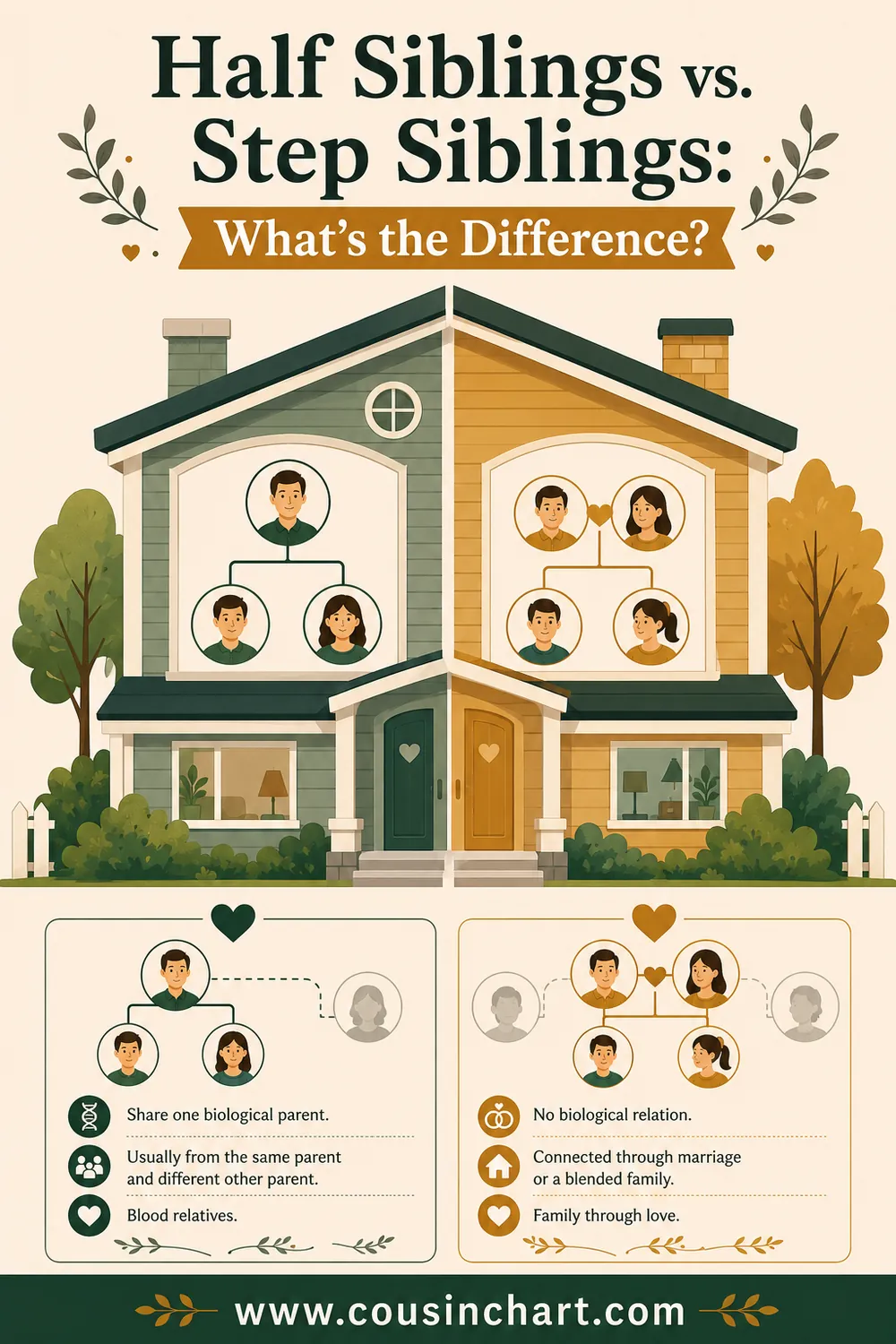
The difference comes down to blood. A half sibling shares one biological parent with you — same mom or same dad, but not both. A step sibling shares no biological parents with you at all — they're the child your step-parent brought into the family when they married your parent. Half siblings share DNA (about 25% on average); step siblings share none.
That's the core of it, but blended families generate follow-up questions fast: what's the new baby to everyone? Do step siblings become "real" siblings if adoption happens? What's your half sister's daughter to you? This guide covers all of it, and when your family tree branches in complicated ways, the free family relationship calculator on our homepage names any connection in seconds.
Relationship quick-check: tap a phrase to see the correct term.
Tap a phrase above to see the answer.
Work out any family relationship →The one-sentence definitions
Half sibling: a person who shares exactly one biological parent with you. If your dad has a daughter with someone other than your mom, she's your half sister. If your mom has a son from an earlier relationship, he's your half brother.
Step sibling: the child of your step-parent from a different relationship. Your mom marries a man who already has kids — those kids are your step siblings. The marriage connects you; biology doesn't.
The quick test: trace the parents. One shared biological parent = half. Zero shared biological parents, connected only by a parent's marriage = step. Two shared biological parents = full siblings, no prefix needed.
Half vs. step vs. full: the comparison table
| Full siblings | Half siblings | Step siblings | |
|---|---|---|---|
| Shared biological parents | Both | One | None |
| Average shared DNA | ~50% | ~25% | 0% |
| Related by | Blood | Blood | Marriage |
| Common ancestors with you | Yes — both parents | Yes — one parent | No |
| Show up in DNA test matches | Yes, strongly | Yes | No |
| Typical legal status | Siblings | Siblings (rules vary slightly by state) | Not legal relatives unless adopted |
| On a family tree | Same two parent lines | One shared parent line | Connected via a marriage line only |
Averages are worth a caveat: DNA inheritance is random, so real half siblings might share anywhere from roughly 18% to 32%. But the categories never blur — a step sibling won't show up as a DNA match at all, while a half sibling always will.
Half siblings: one shared bloodline
Half siblings are blood relatives, full stop. You share a parent, which means you share grandparents on that side, aunts and uncles on that side, and a real branch of the family tree.
A few things people get wrong about half siblings:
- "Half" doesn't mean "less than." The prefix is genealogical bookkeeping, not a measure of closeness. Plenty of half siblings grow up in the same house and never use the word at all.
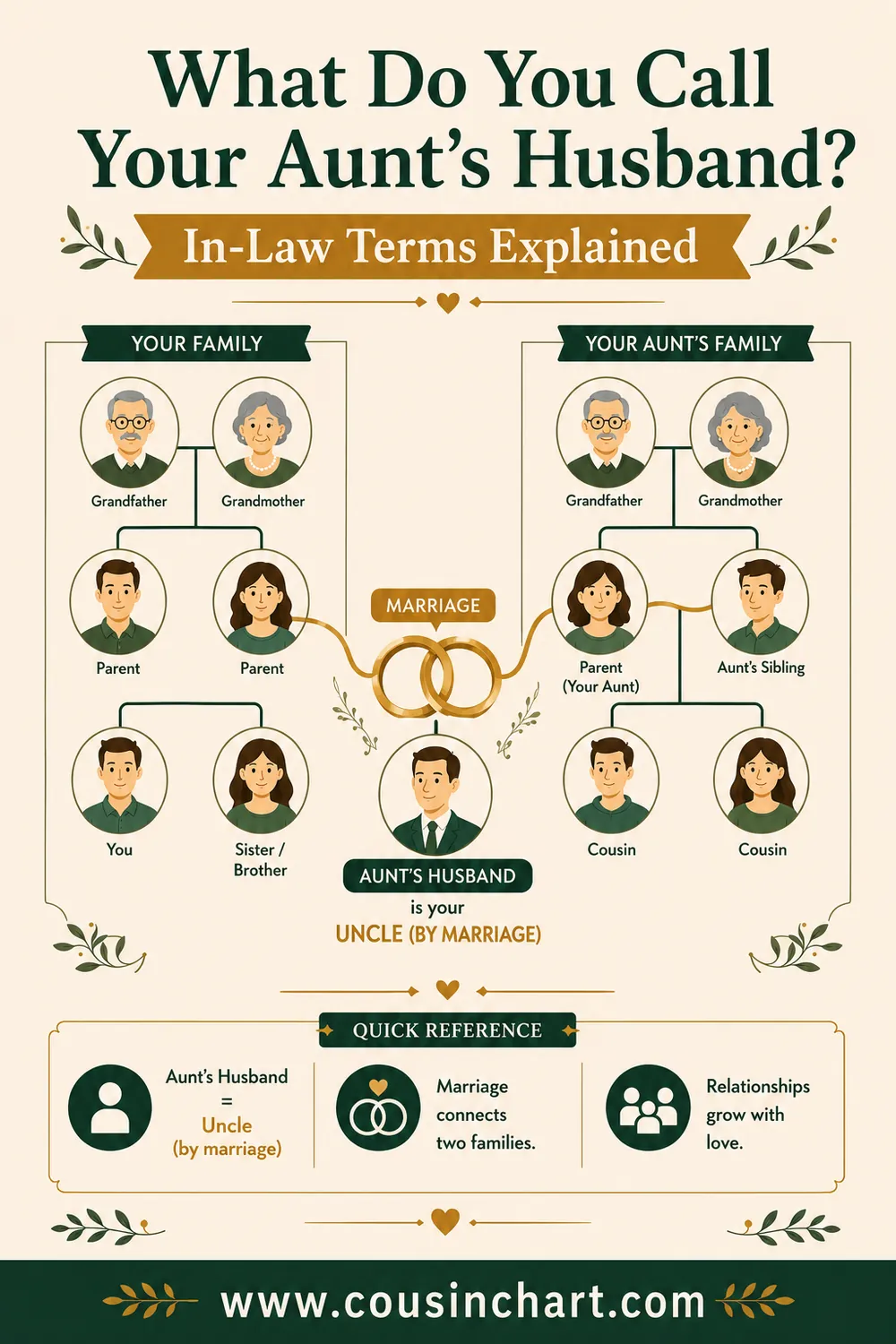
- The half carries down a generation — on paper. Your half sister's kids are technically your half nieces and nephews, and you're their half aunt or uncle. In everyday speech, everyone drops the "half": you're just their aunt. (Related titles like your aunt's husband work the same way — usage is simpler than the chart.)
- Half siblings' children are half first cousins. Your kids and your half brother's kids share one grandparent instead of two, and they'd share about 6.25% DNA instead of the usual 12.5%.
- You can have half siblings on both sides. Your mom's other kids and your dad's other kids are each your half siblings — but they're nothing to each other. That's the strange geometry of blended families: two people can each be your close relative and be complete strangers to each other.
The rare "three-quarter sibling"
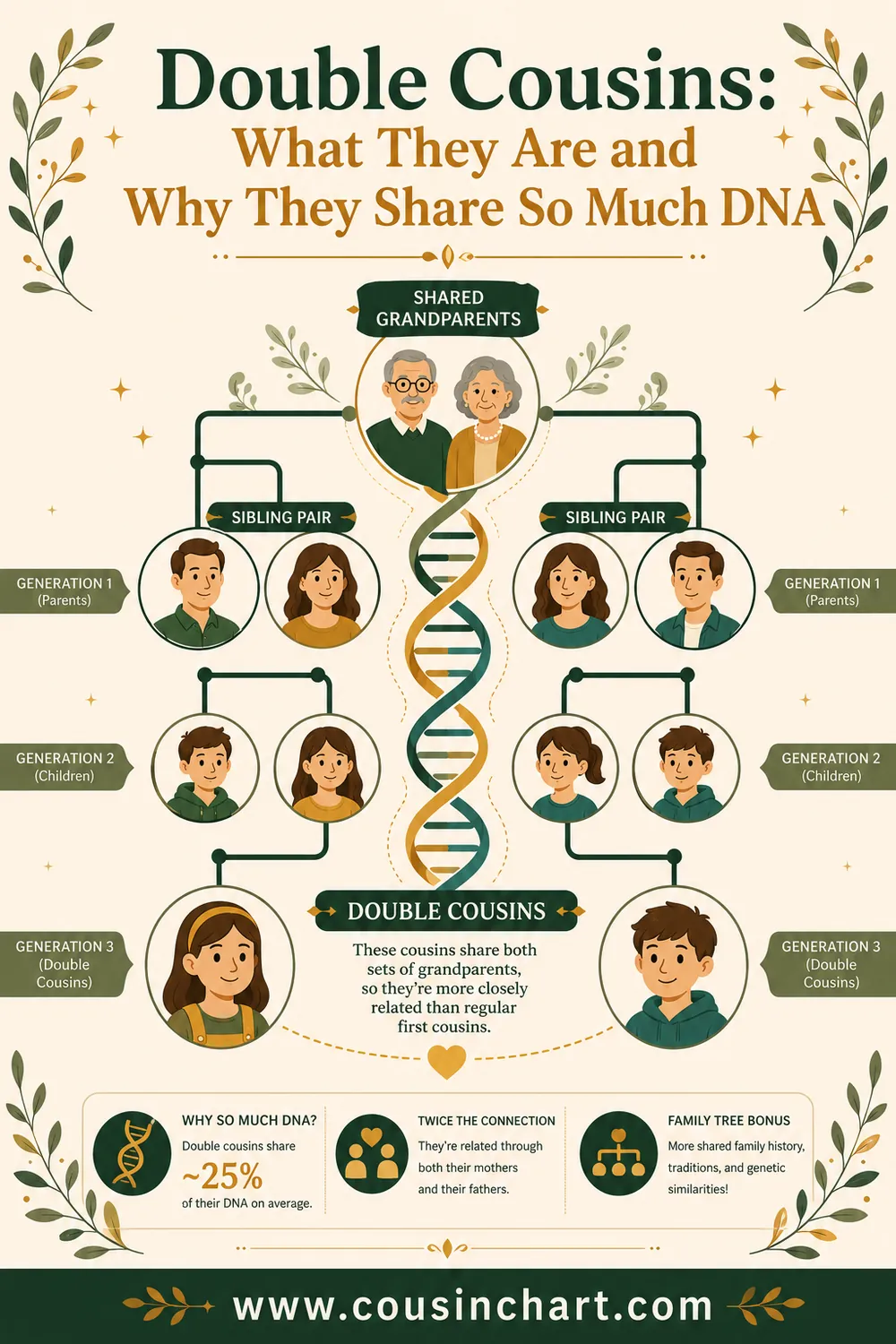
Genetics has one oddball category worth knowing: if two children share one parent, and their other parents are close relatives of each other (say, two brothers, or a mother and her sister), the kids are sometimes called three-quarter siblings. They share more DNA than half siblings (~37.5%) but less than full siblings. It's rare, but it happens — and it's a cousin of the double cousins phenomenon, where two siblings marry two siblings from another family.
Step siblings: connected by marriage, not blood
Step siblings become family through a wedding. Your parent marries someone who already has children; those children are your step siblings from the moment the marriage happens. You share no DNA, no common ancestors, and — in most places — no automatic legal relationship.
Key points:
- Step relationships depend on the marriage. In strict genealogical terms, if the marriage ends, the "step" tie ends with it. Real life is softer than that — people who grew up together often stay siblings in every way that matters — but the chart follows the marriage.
- Step siblings can become legal siblings through adoption. If your stepdad adopts you, his biological kids become your legal siblings, with the same inheritance status as blood siblings. Adoption rewires the legal tree completely.
- A new baby changes the map. When your parent and step-parent have a child together, that baby is a half sibling to both of you — one shared biological parent with each. It's the classic blended-family bridge: the baby is blood kin to everyone in the house, even though the older kids aren't blood kin to each other.
- No step-sibling marriage taboo in law. Because step siblings aren't blood relatives, they're not covered by consanguinity rules in most jurisdictions. (Culturally it raises eyebrows; legally it's generally not incest.)
Why the difference actually matters
Most days, it doesn't — family is family. But three situations make the distinction genuinely important:
- DNA tests. A half sibling appears as a very strong match (~1,750 centimorgans on average), which is how many people discover half siblings they never knew about. A step sibling shares 0 cM. If a DNA site labels someone "close family," half sibling is one of the standard explanations.
- Inheritance. If someone dies without a will, most US states treat half siblings the same as full siblings in the line of succession, though a few states reduce a half sibling's share — worth checking locally. Step siblings generally inherit nothing by default unless there's a will or an adoption. If your blended family cares about this, a will beats terminology every time.
- Medical history. A half sibling's health history is relevant to yours — you share a parent's genes. A step sibling's isn't. Doctors asking about "family history" mean blood relatives.
How to chart a blended family without losing your mind
On paper, blended families look chaotic. Three rules keep the tree readable:
- Draw marriage lines and bloodlines differently. Blood flows down from parent to child; marriages connect horizontally. A step sibling hangs from your step-parent's line, not your parent's.
- Track each child's two biological parents. Every "half" and "step" question resolves instantly once each child is attached to the correct pair.
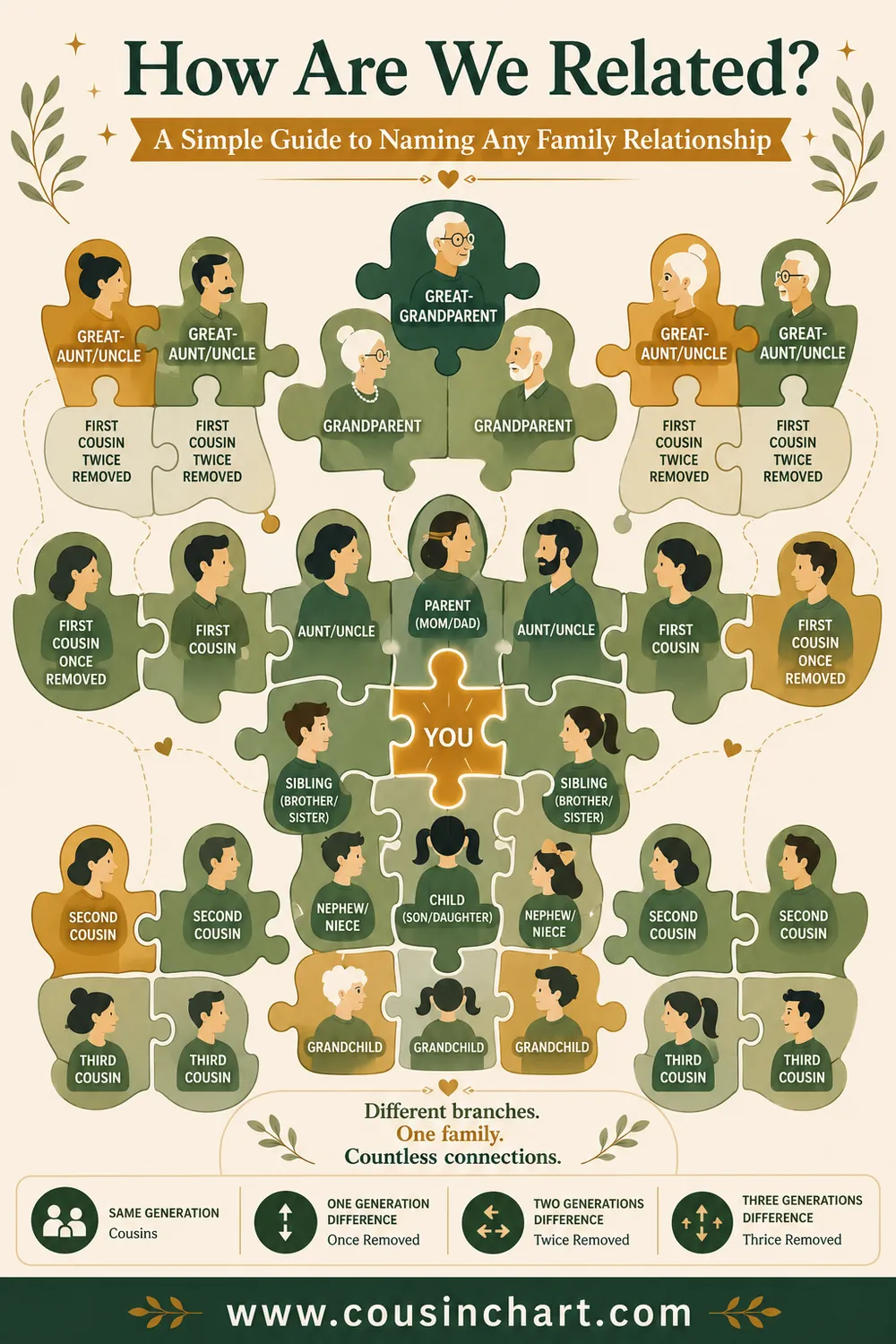
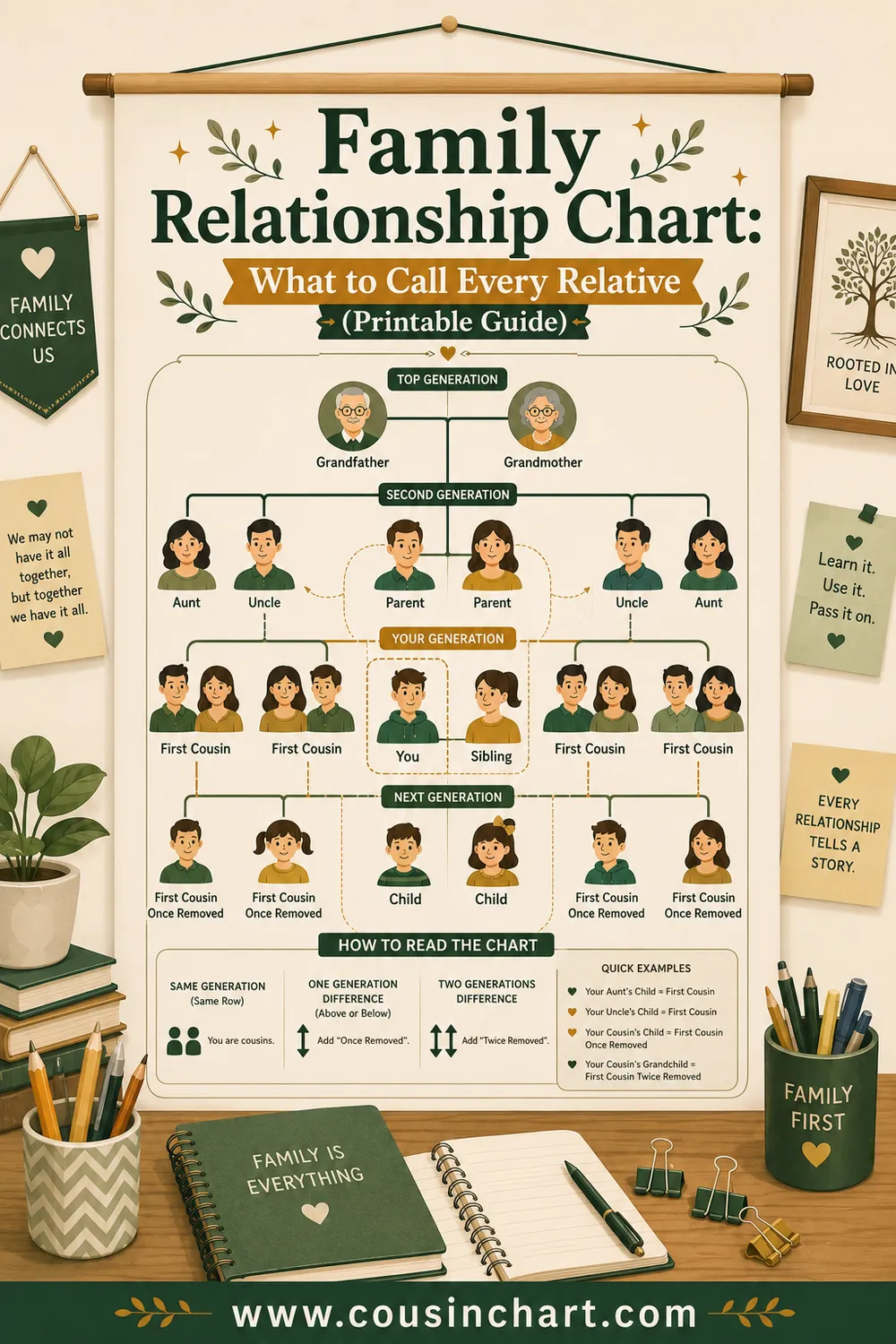
- Let the calculator do the naming. Type the path into the free CousinChart relationship calculator — "my mother" → "her husband" → "his son" — and it returns "stepbrother," with the reasoning. It handles half relationships, step relationships, and the downstream stuff (half nieces, step-cousins) that makes reunion conversations wobbly. Our how are we related guide shows the general method too.
FAQ
What's the main difference between a half sibling and a step sibling?
A half sibling shares one biological parent with you and about 25% of your DNA. A step sibling is your step-parent's child — you share no biological parent and no DNA. Half is a blood relationship; step is a marriage relationship.
Do step siblings become half siblings if our parents have a baby?
No — you and your step sibling stay step siblings. But the new baby is a half sibling to each of you, since the baby shares one biological parent with each of you. One child can absolutely have full, half, and step siblings all at once.
Is a half sibling a "real" sibling?
Yes. Half siblings are blood relatives who share a parent, and the law treats them as siblings (a few states adjust inheritance shares). Emotionally, "real" is up to the people involved — many half siblings never use the prefix at all.
Would a step sibling show up on my DNA test?
No. Step siblings share no DNA, so they won't appear as a match. A half sibling will show up as a very close match — around 25% shared DNA — often labeled "close family" by testing companies.
What is my step sibling's child to me?
Informally, your step-niece or step-nephew. There's no blood tie and usually no legal one, so it's a courtesy title. If adoption has joined the families legally, then it's a plain niece or nephew.
Can step siblings legally marry?
In most jurisdictions, yes — step siblings aren't blood relatives, so consanguinity laws don't apply to them. Rules vary by country, but the step relationship itself is not an incest relationship in law.
Sort out your own family tree
Half means one shared parent and shared blood; step means joined by marriage and nothing genetic. Once you've got that, the baby, the step-nephews, and the half cousins all fall into place. And for every connection that doesn't — your stepmom's sister's kids, your half brother's grandson — the free family relationship calculator at CousinChart untangles it in about ten seconds, no signup, with a plain-English explanation you can read out loud at dinner.