What Is Kinship Care? When Relatives Raise the Kids
Kinship care means a relative — or a close family friend the child already knows — raises a child when the parents can't. Grandparents do it most often, followed by aunts, uncles, and older siblings. It ranges from a completely private arrangement ("informal kinship care") to a licensed placement through the foster care system ("kinship foster care"), and by common estimates it's how millions of US children are being raised right now.
If you've just become — or might become — a kinship caregiver, the vocabulary arrives fast: formal vs informal, guardianship vs custody, fictive kin, grandfamilies. This guide walks through what each term means, what changes legally (and what doesn't), and how the family relationships themselves work. And when the paperwork asks exactly how you and the child are related — great-aunt? first cousin once removed? — the free family relationship calculator on our homepage gives you the precise answer in seconds.
Relationship quick-check. Tap a situation to see the correct family term:
The answer will appear here.
Kinship Care, Defined
At its heart, kinship care is the oldest childcare arrangement there is: when parents can't raise their children — because of illness, addiction, incarceration, deployment, death, or a child-welfare removal — family steps in. What's new is the label and the system built around it.
Child welfare agencies use "kinship care" to mean full-time care of a child by:
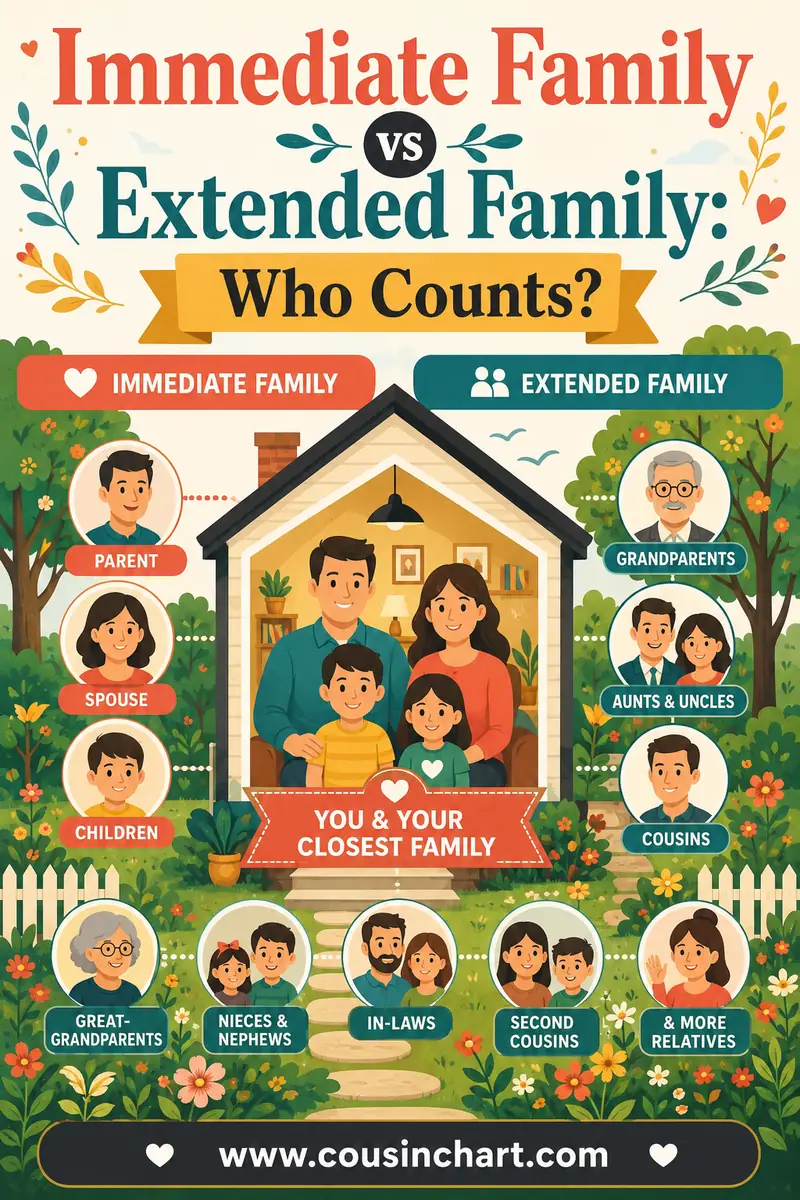
- Relatives by blood — grandparents, aunts, uncles, adult siblings, cousins
- Relatives by marriage — step-grandparents, an uncle's wife, and other affinal kin
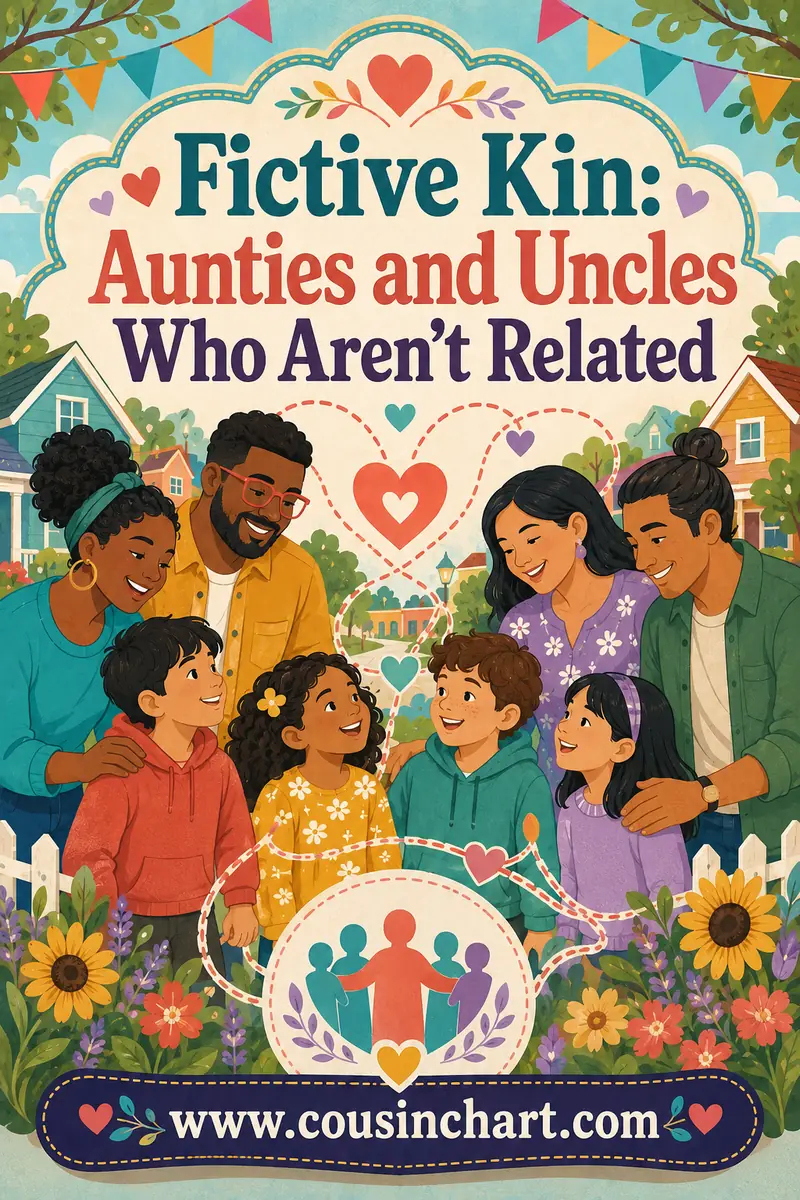
- Fictive kin — godparents, longtime family friends, anyone with a significant existing bond to the child
That last category surprises people, but it's deliberate: the point of kinship care is continuity. A child who can't stay with mom and dad does better staying with someone they already know and love — fictive kin included. Families where grandparents or other relatives head the household are often called grandfamilies or kinship families.
The Three Main Types of Kinship Care
The same grandmother rocking the same grandchild can sit in three very different legal situations. Here's the map:
| Type | How it starts | Who holds legal authority | Typical support |
|---|---|---|---|
| Informal kinship care | Private family arrangement — no court, no agency | Parents keep legal custody | Least; possibly child-only assistance grants |
| Formal (kinship foster care) | Child welfare agency removes the child and places them with kin | The state; caregiver may be licensed as a foster parent | Most; foster care payments and caseworker services |
| Legal-relationship care | Court grants the relative guardianship, custody, or adoption | The relative caregiver | Varies; guardianship subsidies exist in many states |
A few notes that save real confusion:
- Informal doesn't mean insecure emotionally — it means insecure legally. Without any court order, a caregiver can struggle to enroll the child in school or consent to medical care. Many states offer educational and healthcare consent affidavits to patch exactly this gap.
- Kinship foster care is foster care. The child is in state custody; the relative is the placement. Licensed kinship foster parents generally receive the same monthly payments as non-relative foster parents.
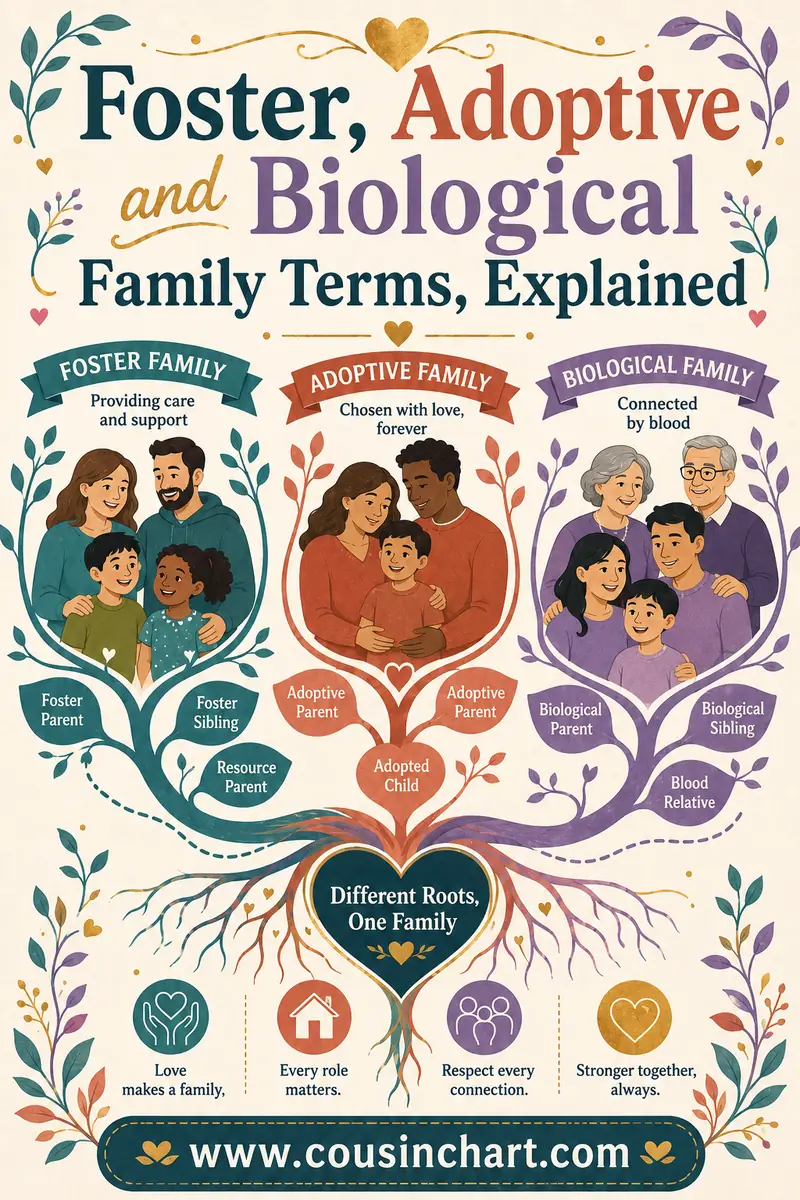
- These types are stages as often as categories. Families frequently start informal, move to guardianship for stability, and sometimes end in adoption. The foster, adoptive, and biological family terms all keep their ordinary meanings along the way.
Why Relatives Come First
Kinship placement isn't just tradition — it's policy. Federal law requires states to identify and notify a child's adult relatives when the child enters foster care, and to give preference to placing children with fit and willing kin. In recent years, roughly a third of US children in foster care have been living with relatives.
The reasoning is backed by research and common sense alike. Compared with placement among strangers, children in kinship care generally:
- Experience less trauma at the moment everything else is changing
- Keep their siblings, school, culture, and community more often
- Have more stable placements with fewer moves
- Maintain a realistic connection to their parents and their own story
None of this makes kinship care easy — it makes it worth supporting. A grandmother who planned a quiet retirement and got a toddler instead is doing heroic, exhausting work.
What Do You Call Each Other? (Roles vs. Relationships)
Here's the piece this site cares most about: kinship care changes roles, not relationship terms.
- A grandmother raising her grandson is doing a parent's job. She is still, genealogically, his grandmother — and he may call her Mom, Grandma, or both. What the child calls her is the family's choice; what she is on the family tree doesn't move.
- An aunt with guardianship is a guardian by role and an aunt by relationship. Both facts fit on the same person without conflict.
- A great-aunt — your grandparent's sister — stays a great-aunt even when she's the one signing permission slips.
The one event that genuinely rewrites the tree is adoption, because adoption creates a full legal parent-child relationship. If grandparents adopt their grandchild, the child legally becomes their child — which means, on paper, the child's birth parent becomes their legal sibling. Genealogists handle this by recording both lines: the biological line for ancestry and the legal line for the record. It sounds strange, but it's the system working as designed — adoption is total.
Blended kinship situations produce some genuinely tricky terms: a cousin's kids in your care are your first cousins once removed; the family friend everyone calls Auntie is fictive kin; the caregiver's own kids and the child they're raising aren't siblings by blood but often grow up as siblings in every practical sense. When a school form, benefits application, or court document wants the exact relationship, trace it with the relationship calculator rather than guessing — "removed" trips up nearly everyone.
Guardianship vs. Custody vs. Adoption
Three legal tools, three depths of change:
- Legal custody gives a caregiver day-to-day decision-making power — school, medical care, residence. Parents keep their parental rights, and custody orders can be modified as circumstances change.
- Guardianship goes further: a court appoints the relative as the child's legal decision-maker, usually until age 18. Parental rights are suspended in practice but not terminated — parents can typically petition the court later. Many kinship families choose guardianship precisely because it stabilizes the child without severing the parent legally.
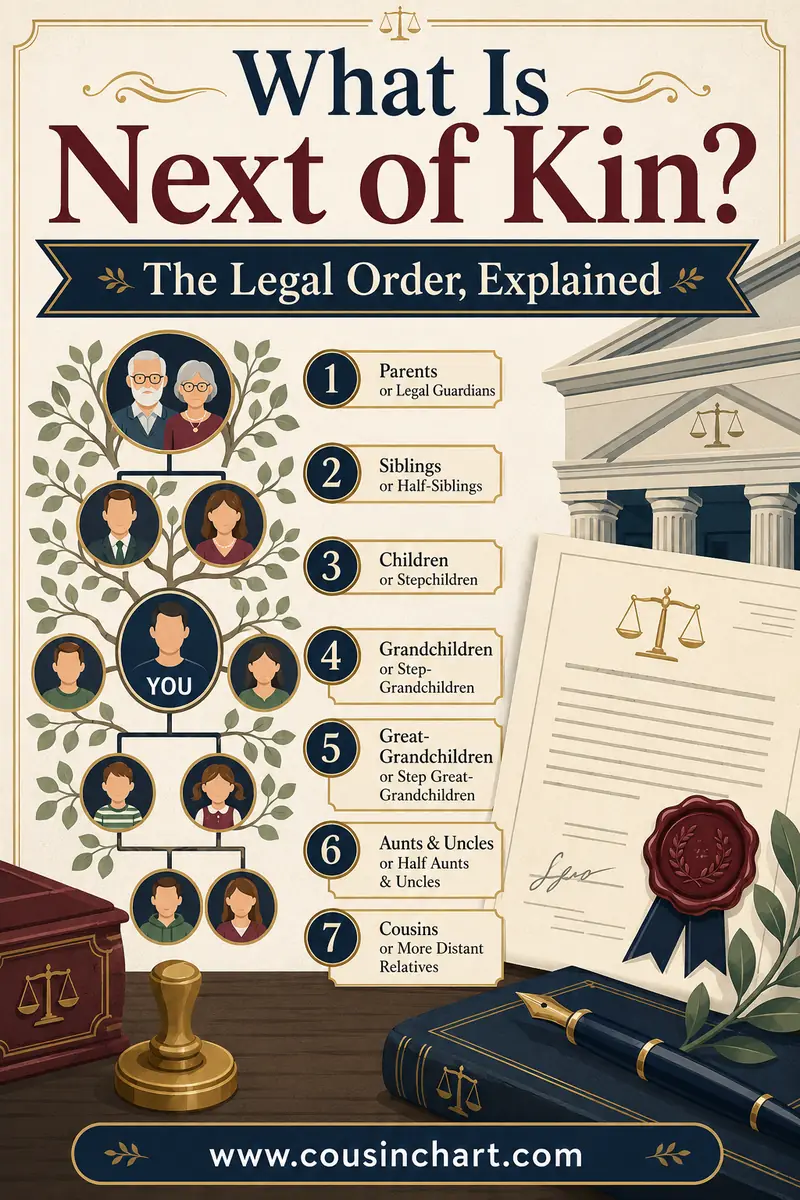
- Adoption is permanent: parental rights end, and the caregiver becomes the child's legal parent in every respect, including inheritance and next of kin status.
Which tool fits depends on the family's hopes: reunification someday, permanence now, or something in between. This is exactly the kind of decision worth a consultation with a family law attorney or a kinship navigator — the rules and even the vocabulary vary by state.
Support Kinship Caregivers Should Know About
Too many kinship caregivers assume help is only for "official" foster parents. In most states, there's more available than people claim:
- Kinship navigator programs — state or county services that walk caregivers through benefits, legal options, and local resources. Searching your state's name plus "kinship navigator" is the fastest starting point.
- Child-only assistance grants — in many states, caregivers can apply for aid based on the child's need alone, without the caregiver's income counting against it.
- Foster care payments — for licensed kinship foster parents caring for children in state custody.
- Guardianship assistance programs — many states subsidize relatives who take guardianship of children exiting foster care.
- Community support — support groups for grandparents raising grandchildren, respite care, school liaison programs, and nonprofits focused on grandfamilies.
Program names, eligibility, and amounts differ by state and change over time, so treat this list as a menu of things to ask about rather than a promise. Your extended family role may be informal; the support doesn't have to be.
The Honest Challenges
It would be unfair to end the overview without naming the hard parts, because kinship caregivers consistently report the same three:
- Money. Kinship caregivers are disproportionately older, single, and living on fixed incomes — and informal caregivers receive the least support of anyone in the system. Applying for child-only grants early makes a real difference.
- Paperwork limbo. Without a custody or guardianship order, everyday tasks — school enrollment, a dentist visit, adding the child to insurance — can stall. Consent affidavits and navigator programs exist precisely for this.
- Family dynamics. The caregiver is often the parent of the parent who's struggling. Loving a grandchild while grieving what's happening with your own child is a double weight, and support groups for grandfamilies are full of people carrying it. Nobody should do this without a community.
The encouraging flip side: children in kinship care keep their identity, their people, and their story — and caregivers who ask for help early usually find more of it than they expected.
FAQ
What does kinship care mean?
Kinship care means a child being raised full-time by a relative — most often a grandparent, aunt, uncle, or adult sibling — or by a close family friend, when the parents can't provide care. It can be a private family arrangement or a formal placement through the foster care system.
What is the difference between kinship care and foster care?
Foster care means the state has legal custody of the child. Kinship foster care is foster care where the placement happens to be a relative. Informal kinship care, by contrast, involves no agency at all — the family arranges it privately and the parents keep legal custody.
Do kinship caregivers get paid?
Licensed kinship foster parents generally receive the same monthly foster care payments as other foster parents. Informal caregivers may qualify for child-only assistance grants, and many states offer guardianship subsidies. Eligibility varies widely by state, so check with a kinship navigator program.
Who counts as kin in kinship care?
Relatives by blood (grandparents, aunts, uncles, siblings, cousins), relatives by marriage (like a step-grandparent), and in many states fictive kin — godparents or close family friends with an existing bond to the child.
Does kinship care change what the child calls the caregiver?
That's entirely the family's choice. Genealogically, the relationship never changes — a grandmother raising a grandchild is still his grandmother — but many children call their kinship caregiver Mom, Dad, or a blended name. Only adoption changes the legal relationship itself.
Is a grandparent raising a grandchild the legal parent?
Not automatically. Without a court order, the parents remain the legal parents. A grandparent becomes the legal decision-maker through custody or guardianship, and becomes the legal parent only through adoption.
Family Is Who Shows Up
Kinship care is what it looks like when the family tree bends to catch a child: grandparents becoming parents again, aunts adding a chair at the table, cousins growing up as siblings. The roles shift; the relationships stay beautifully, precisely what they are. Whenever you need to put an exact name on one of those relationships — for a form, a caseworker, or a curious kid asking "so what ARE you to me?" — the free family relationship calculator traces any connection and answers instantly.