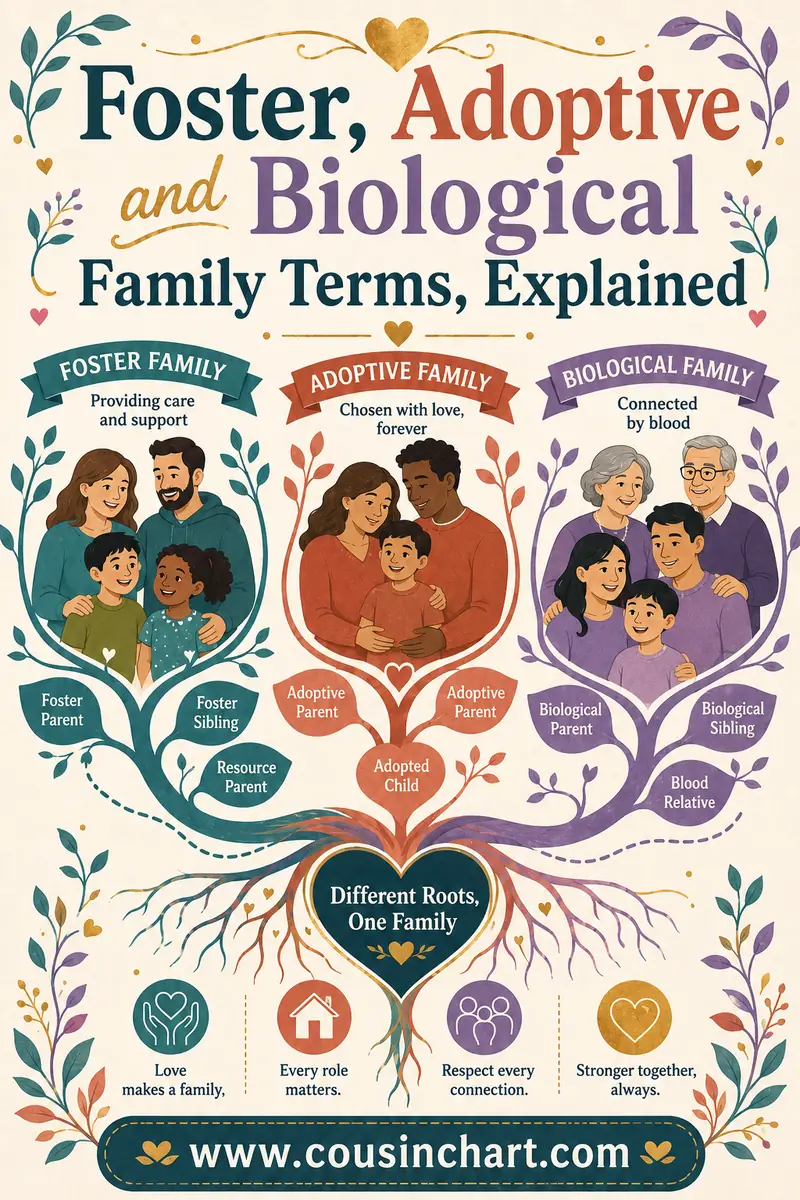
Foster, Adoptive and Biological Family Terms, Explained
The three word-families sort by how the tie is made: biological (birth) terms describe genetic relationships, adoptive terms describe permanent legal relationships created by a court, and foster terms describe temporary caregiving relationships created by placement. So a foster sibling is a child placed in your home who isn't your parent's child by birth or adoption; an adoptive sister is legally and permanently your sister, full stop; and a birth mother is the woman who bore a child who was then adopted.
Getting these terms right matters more here than almost anywhere in family vocabulary — they carry legal weight, and they land on real people's identities. This guide defines the full set, shows which ties are permanent, and explains how adoption redraws the family tree. For working out any specific relationship in your own family, the free family relationship calculator on our homepage names it in seconds.
Relationship quick-check. Tap a phrase to see the right term and what it means:
The answer will appear here.
The Three Systems at a Glance
| Biological | Adoptive | Foster | |
|---|---|---|---|
| Tie created by | Birth/genetics | Court order | Placement by an agency/court |
| Permanent? | Yes (genetically) | Yes — irrevocable like birth | No — lasts while the placement lasts |
| Inheritance rights | Yes (default) | Yes — identical to biological | No (unless a will provides) |
| Shows on family tree | Yes | Yes — full position | Recorded as household/event, not lineage |
| Example terms | Birth mother, biological father, half-sibling | Adoptive parent, adopted child | Foster parent, foster sibling, foster child |
Everything else in this guide unpacks that table.
Biological (Birth) Terms
- Biological parent — the genetic parent: the man and woman whose DNA the child carries. Neutral, factual, used in medicine and genealogy.
- Birth mother / birth father / birth parents — the preferred respectful terms for biological parents of a child who was adopted. "Birth mother" acknowledges the reality without negating the adoptive parents. (Adoption-community style guides suggest avoiding "real mother" — it implies the adoptive mother is somehow not.)
- Biological / full sibling — shares both parents; about 50% shared DNA.
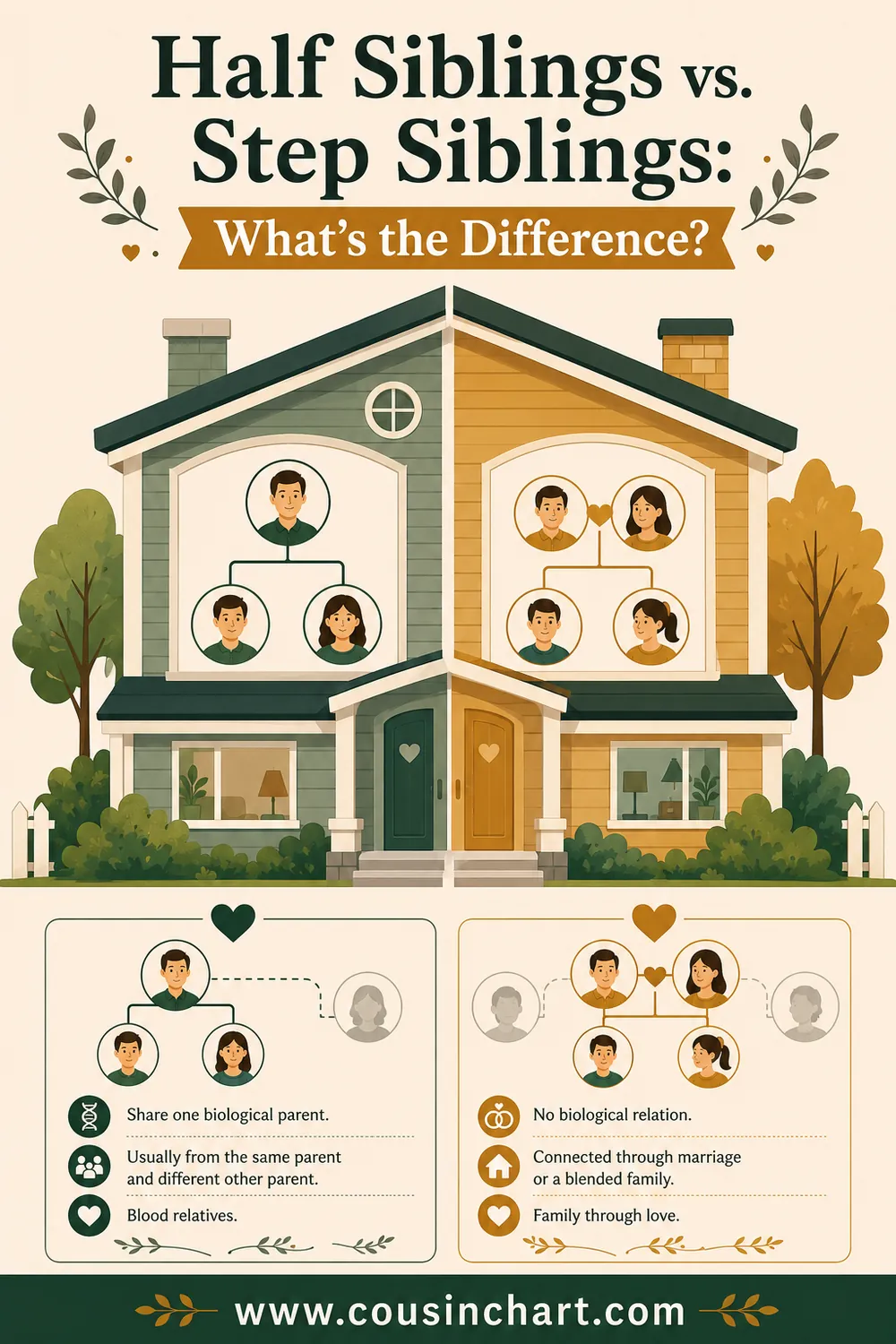
- Half-sibling — shares exactly one biological parent; about 25% shared DNA. A genetic relationship, fully chartable, and often confused with step-siblings — the difference is the subject of our half vs step siblings guide.
- Birth family / family of origin — the whole biological kin network of an adopted person.
Biology is the system DNA tests see. A biological tie can't be dissolved genetically — courts can end legal parenthood (termination of parental rights), but the DNA match will still appear.
Adoptive Terms
- Adoptive parent — a parent by court decree. After finalization, the law makes no distinction between adoptive and biological parenthood: same rights, same duties, permanent.
- Adopted child / adoptee — "adoptee" is common in adult adoption communities. Style note: "adopted" works as history ("she was adopted in 2015") better than as a permanent label ("their adopted daughter" in every sentence).
- Adoptive siblings — children connected through adoption, whether adoptee-to-biological-child or two adoptees. Legally: simply siblings.
- Second-parent / stepparent adoption — a spouse or partner adopts their partner's child, becoming a full legal parent. The most common adoption type in the U.S.
- Open vs closed adoption — describes contact with the birth family (ongoing contact vs sealed records), not the legal status, which is identical.
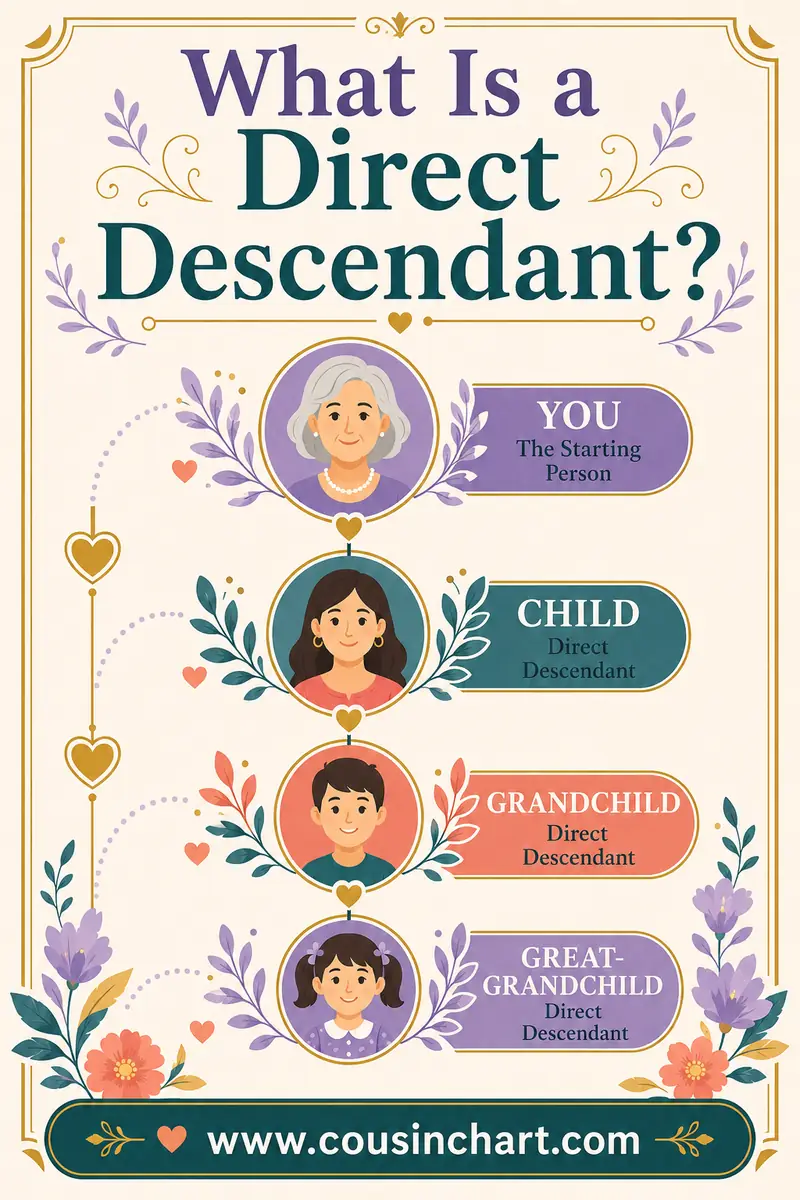
The key legal fact: adoption is total. An adopted child inherits from adoptive parents exactly as a biological child would, counts as their direct descendant for wills and lineage purposes, and — this surprises people — generally stops being the legal child of the birth parents, including for default inheritance (statutes vary on edge cases like stepparent adoption).
On the family tree, adoption extends through the whole structure: an adoptee's adoptive grandparents are their grandparents, adoptive cousins their cousins. Modern genealogy handles the dual reality gracefully — most software lets a person carry both an adoptive lineage and a biological lineage, and DNA-era adoptees often research both. Both trees are true; they answer different questions.
Foster Terms
- Foster parent — an adult licensed to care for a child placed by the child-welfare system. Foster parents have day-to-day caregiving responsibility, but legal custody stays with the state/agency, and the placement is designed to be temporary — reunification with parents is the usual first goal.
- Foster child — a child in that placement. Current usage prefers "child in foster care" (the situation) over "foster child" (a label).
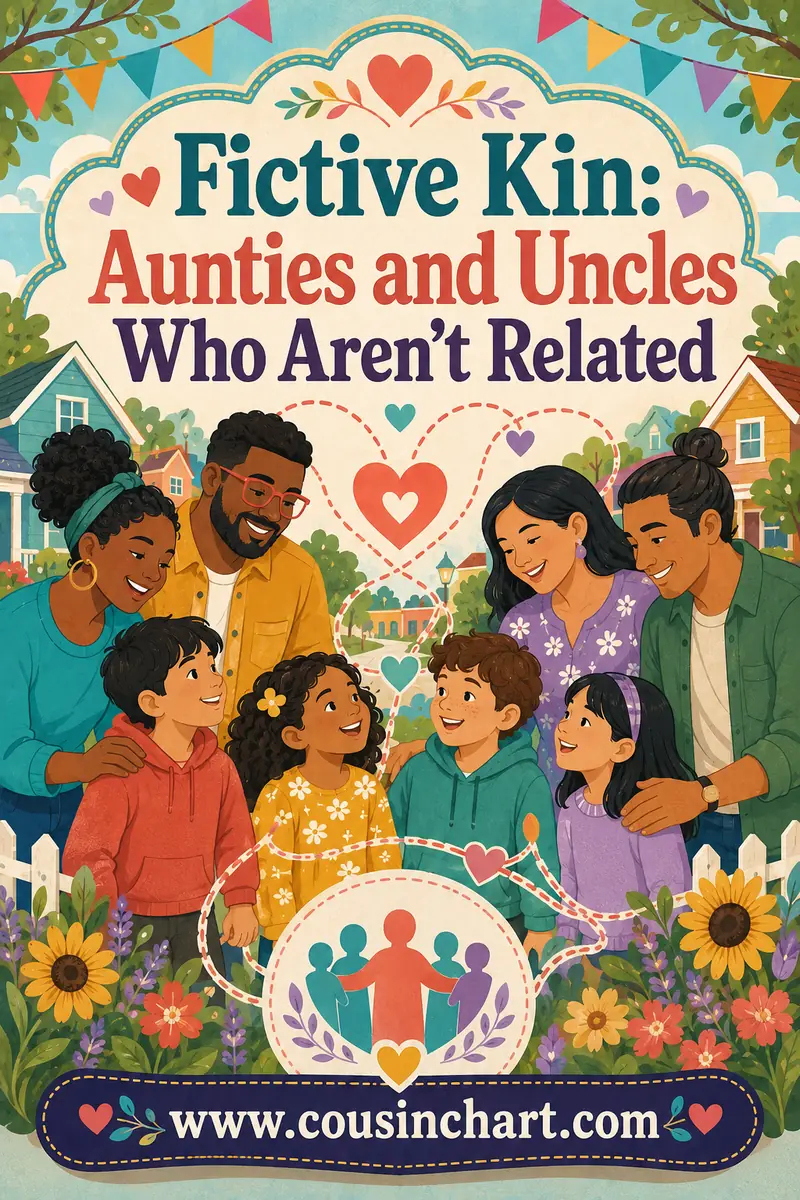
- Foster sibling — the term the keyword asks about, so precisely: a foster sibling is a child who lives with your family through a foster placement, or — from the foster child's side — the children of the family caring for them. No blood tie, no legal sibling status, no inheritance rights. What it does involve: shared bedrooms, shared holidays, and often profound, lifelong bonds. Many adults count former foster siblings as true siblings — socially real even after the legal arrangement ends, much like the fictive kin bonds anthropologists describe.
- Kinship foster care — placement with the child's own relatives (or close family friends). Grandma-raising-grandkids is the classic form; it's now the preferred placement in most states and has its own full guide here: what is kinship care.
- Foster-to-adopt — a placement made with adoption as the plan if reunification fails. The moment adoption finalizes, every "foster" term upgrades permanently: foster child → child, foster sibling → sibling.
Guardianship — the Fourth Word Family
One more system sits alongside the three above. A legal guardian is an adult granted court authority to raise a child (or manage an adult's affairs) — common when relatives step up, or when parents name a guardian in a will. Guardianship differs from adoption on the key dimension: it assigns parental responsibilities without rewriting parental identity. The child's legal parents remain their parents; guardianship usually ends at 18; and it doesn't by itself create inheritance rights. It's the tool courts reach for when permanence is needed but adoption isn't right — very often in kinship-care situations.
Using the Terms Kindly
Because these words describe people's actual families, a few conventions the adoption and foster communities widely endorse:
- A person's parents are their parents. Qualifiers ("adoptive," "foster," "biological") belong where precision is needed — legal documents, medical history, genealogy — not in everyday introductions.
- Say "birth mother," not "real mother." Both mothers are real; the words should let them be.
- "Was adopted," not "is adopted," when the history matters at all — adoption is an event, not an ongoing condition.
- Don't out someone's family structure. Whether a sibling joined by birth, adoption, or fostering is theirs to mention.
- For kids in care, people-first language: "a child in foster care," not "a foster kid."
FAQ
What does foster sibling mean?
A child who lives as part of your family through a foster-care placement — or, from the foster child's perspective, the children of the family fostering them. It's a household relationship, not a blood or legal one: no shared parents (usually), no inheritance rights, and it formally ends when the placement does. The personal bond often doesn't.
Is an adopted sibling a real sibling?
Yes — legally, completely, and permanently. Adoption gives the child the identical status a biological child holds: same parents, same inheritance rights, same place on the family tree. "Adopted" describes how the siblinghood began, not its degree of realness.
What's the difference between a foster parent and an adoptive parent?
Duration and legal status. A foster parent provides care while custody remains with the state, and the placement is intended as temporary. An adoptive parent is the child's full legal parent, permanently, by court decree — indistinguishable in law from a biological parent.
What is a birth mother?
The biological mother of a child who was adopted — the respectful standard term in the adoption community. "Biological mother" is the neutral clinical equivalent; "real mother" is discouraged because it diminishes the adoptive mother.
Do foster children inherit from foster parents?
Not by default — fostering creates no legal inheritance relationship. A foster parent can of course provide for a foster child in a will. Adopted children, by contrast, inherit exactly as biological children do.
How does adoption show up on a family tree?
As a full lineage: adoptive parents, grandparents, and cousins occupy the standard positions. Many adoptees also chart their biological lineage — especially in the DNA-testing era — and genealogy software supports recording both. Both trees are accurate answers to different questions ("who raised whom" vs "who descends from whom genetically").
Every Family Counts — Chart Yours
Biology, adoption, fostering, guardianship: four different machines for building the same thing — people responsible for each other. The vocabulary exists so that courts, doctors, and genealogists can be precise; around the dinner table, "my sister" and "my mom" need no footnotes.
When you do need the precise version — what your adoptive mom's brother's daughter is to you (your first cousin, as it happens), or where a half-sibling's kids land — the free family relationship calculator charts any connection instantly. Family trees have room for every way a branch gets grafted on.