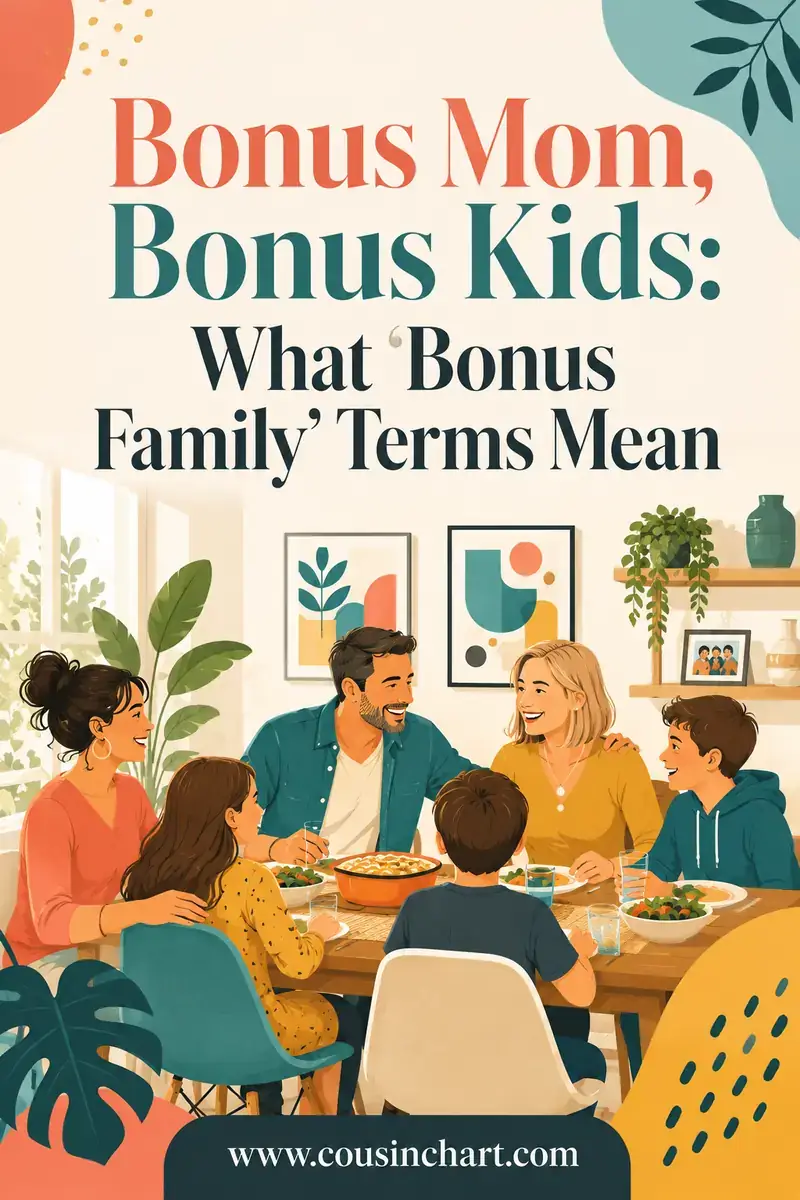
Bonus Mom, Bonus Kids: What "Bonus Family" Terms Mean
A "bonus mom" is a stepmom — the same relationship, just a warmer name. Families use "bonus" instead of "step" to signal that the relationship is a positive addition, not a replacement for a parent. The same swap gives you "bonus dad," "bonus kids," "bonus siblings," and "bonus grandparents."
That's the short version. The longer story is about why the word caught on, when it fits, and when plain "step" is still the better choice. Below you'll find each bonus term spelled out, plus honest notes on the feelings involved — because these words are really about relationships, not genealogy charts. If you're ever unsure how a blended-family member technically connects to you, the free relationship calculator on our homepage names it in seconds.
Relationship quick-check. Tap a phrase to see the term behind the "bonus" nickname:
The answer will appear here.
What "Bonus Mom" Actually Means
"Bonus mom" is another way of saying stepmom — your parent's spouse or partner who isn't your biological mother. Nothing about the legal or genealogical relationship changes when you switch the word. On a family tree, a bonus mom is still a step-relationship: connected to you by your parent's marriage, not by shared blood.
The word does real emotional work, though. "Step" carries centuries of fairy-tale baggage — think wicked stepmothers and Cinderella. "Bonus" flips the framing entirely: it says this person is extra love, not a substitute for anyone. Many blended families adopt it precisely to sidestep the loyalty tension a child can feel toward a birth parent.
The Full "Bonus Family" Glossary
Once one family member becomes a "bonus," the rest usually follow. Here's the whole set and the standard term each one replaces:
| Bonus term | Standard relationship | Who they are |
|---|---|---|
| Bonus mom | Stepmother | Your parent's female spouse/partner |
| Bonus dad | Stepfather | Your parent's male spouse/partner |
| Bonus kid | Stepchild | Your spouse's child from another relationship |
| Bonus sibling | Stepsibling | Your stepparent's child (no shared birth parent) |
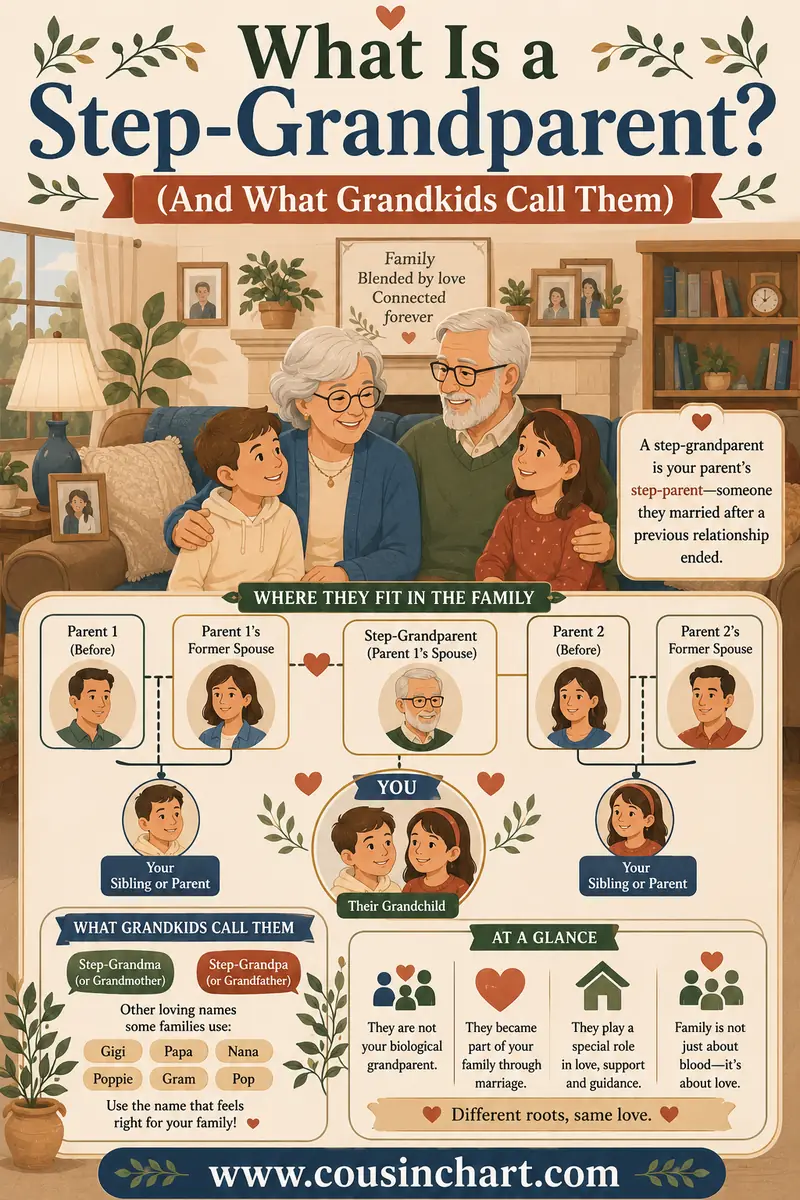
| Bonus grandma/grandpa | Step-grandparent | Your stepparent's parent, or a grandparent's new spouse |
| Bonus aunt/uncle | Step-aunt/uncle | Your stepparent's sibling |
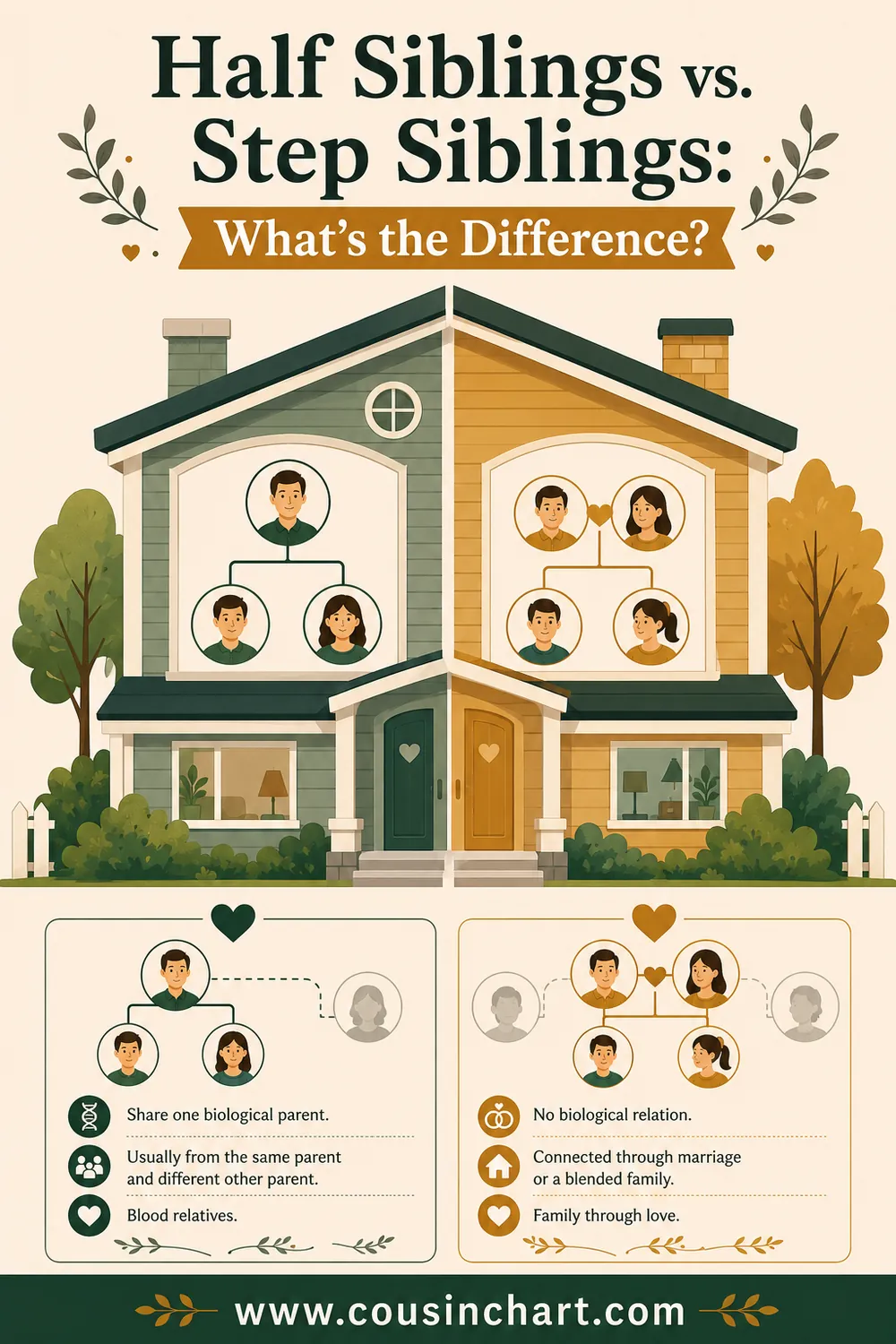
Notice that every "bonus" relationship is a relationship by marriage, not by descent. That's the dividing line worth remembering. If two people share a birth parent, they're half-siblings — a blood tie, not a bonus one. We break that exact distinction down in half-siblings vs step-siblings.
Bonus vs. Step vs. Half: The Difference That Matters
Blended-family words fall into three buckets, and mixing them up causes most of the confusion:
- Step (and its friendly twin, bonus) = connected by marriage. No shared DNA is implied. A stepmom, stepdad, stepsibling, or step-grandparent joined your family through a wedding.
- Half = connected by one shared biological parent. Half-siblings share a mom or a dad. This is a genuine blood relationship — half-siblings share about 25% of their DNA on average.
- Bonus = a tone, not a new category. It's simply a warmer label people paste over "step" relationships.
So when your dad remarries and he and your bonus mom have a baby, that baby is your half-sibling, not your bonus sibling — because you and the baby share a biological parent (your dad). The bonus mom is step; her new baby is half. Getting this right matters for everything from DNA tests to medical history.
When "Bonus" Fits — and When It Doesn't
"Bonus" is a gift a family gives itself, which means it works best when it's freely chosen rather than imposed.
It tends to fit when:
- The child and stepparent have built a warm, trusting bond over time.
- Everyone — including the birth parents — is comfortable with the word.
- The family wants a term that adds someone without erasing a birth parent.
It can fall flat when:
- The relationship is new or still guarded. Forcing "bonus" too early can feel like pressure.
- A child is grieving or misses a parent who has died or left. "Bonus" can sound dismissive of that loss.
- The context is legal or medical, where precise terms ("stepmother," "half-sibling") avoid confusion.
There's no rule that a family must use it. Plenty of loving blended families stick with "step," and plenty of kids just use first names. The healthiest choice is whatever the people involved actually like.
Where Bonus Family Sits on a Family Tree
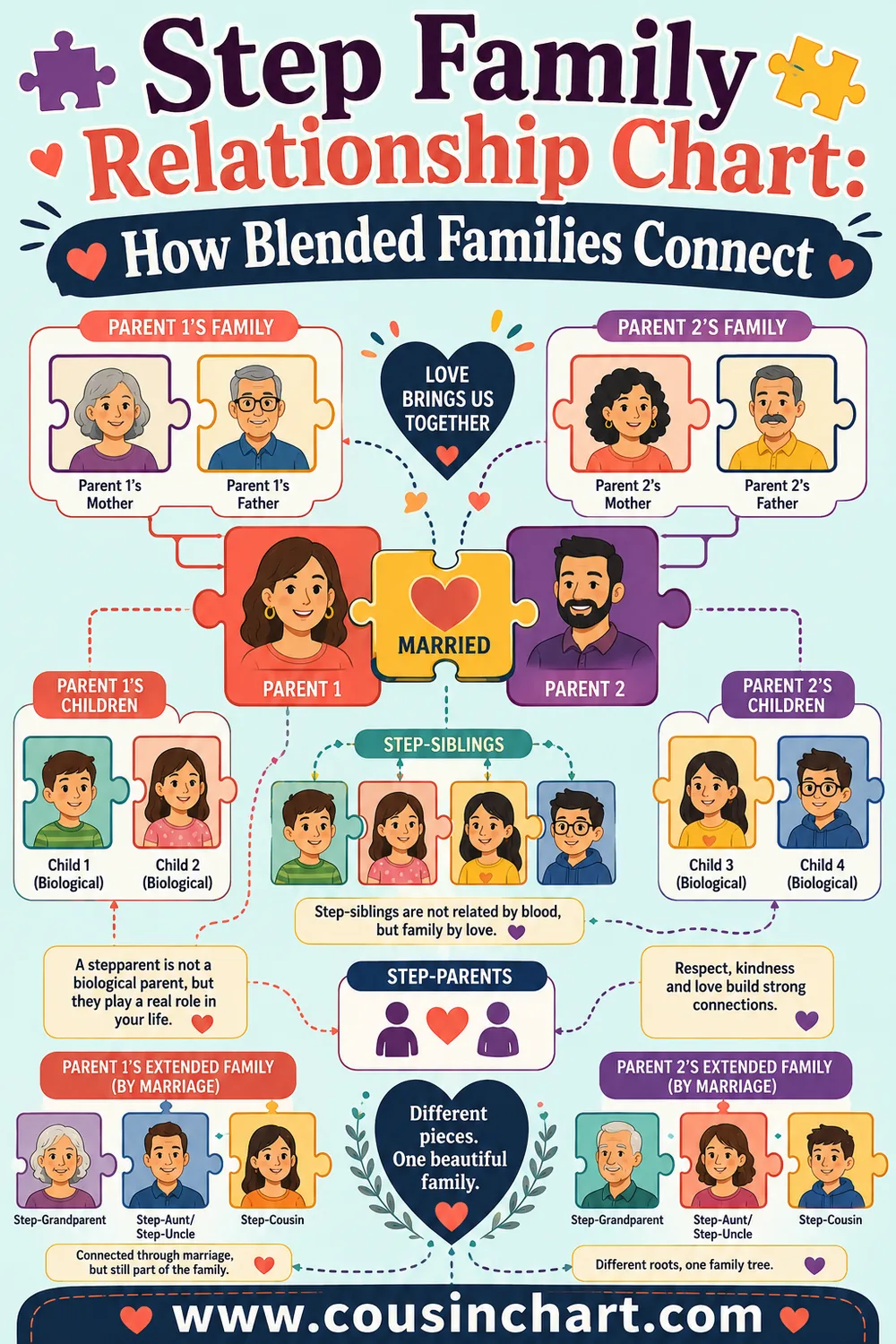
Genealogically, bonus relationships attach to the tree through a marriage line, not a descent line. Picture it this way:
- Your dad is a solid line down to you (biological).
- Your dad marries your bonus mom — that's a horizontal marriage line between them.
- Your bonus mom's own children hang below her, connected to her by blood but to you only across that marriage line.
That's why bonus/step relatives don't share DNA with you: there's always a marriage line, never an unbroken chain of parent-to-child links, between you and them. If your dad and bonus mom later have a child together, that child does connect to you by a descent line through your dad — which is exactly why they're a half-sibling. A step-family relationship chart lays these lines out visually, and the homepage calculator will trace any specific connection for you.
Talking to Kids About Bonus Family
Children usually care less about the vocabulary and more about the feeling behind it. A few things that help:
- Let the child lead on the label. Some love calling someone "bonus mom"; others prefer a first name or "step." All of these are fine.
- Never frame it as a replacement. "An extra person who loves you" lands far better than anything that competes with a birth parent.
- Be patient. Warm labels tend to arrive on their own once the relationship is real. Rushing the word rarely speeds up the bond.
If you're mapping out a blended family for a school project or a keepsake, our guide on step-grandparents covers the generation above, and the free tool can label each connection so a child sees how everyone fits.
A Quick Note on "Bonus Mom" Meaning In-Laws
One wrinkle: some people call their partner's mother a "bonus mom" too — meaning a mother-in-law they adore. That's a second, separate use of the phrase. Context clears it up instantly: a child talking about a "bonus mom" almost always means a stepmom, while an adult gushing about their spouse's mother means a beloved mother-in-law. Same warm word, two different family slots.
Where the Word Came From
"Bonus" family terms are a relatively modern development in English. For most of history, blended-family words leaned heavily on "step," which itself comes from an Old English root tied to loss and bereavement — originally describing a child orphaned and then taken in. That heritage is part of why "step" can feel cold: the word literally grew out of grief and replacement.
"Bonus" flips that origin story on its head. Instead of framing the new parent as a stand-in for someone lost, it frames them as extra — an addition to the child's circle of people who love them. The shift caught on as blended families became more common and more openly discussed, and as parents looked for language that didn't force a child to choose sides or feel their birth parent was being erased.
You'll also hear a few cousins of the term: some families use "my other mom" or "my second mom," and stepparents sometimes call themselves a "plus-one parent." None of these are official — they're affectionate inventions, and that's exactly the point. The best blended-family label is whatever the specific people involved feel warm about, invented on the spot or borrowed from another family. What matters isn't the vocabulary; it's that the words match the real relationship underneath them.
FAQ
Is a bonus mom the same as a stepmom?
Yes. "Bonus mom" is an affectionate nickname for a stepmother — your parent's spouse or partner who isn't your biological mom. The genealogical and legal relationship is identical; only the tone of the word changes.
Are bonus kids blood related to their bonus parent?
No. Bonus kids (stepchildren) are related to their bonus parent by marriage, not by blood. They share no DNA. If a bonus parent and birth parent later have a child together, that child is a half-sibling to the bonus kids — a blood relationship through the shared birth parent.
What's the difference between a bonus sibling and a half sibling?
A bonus sibling (stepsibling) shares no birth parent with you — you're connected only because your parents married. A half-sibling shares exactly one birth parent with you and is a true blood relative. Bonus is by marriage; half is by blood.
Should I make my stepchild call me bonus mom?
It's best not to force it. The warmest labels are chosen freely, usually after a real bond forms. Many kids land on "bonus mom" naturally, while others prefer a first name or "step" — and any of those is perfectly healthy.
Do bonus grandparents count as real grandparents?
Emotionally, absolutely — many step-grandparents are as loving and involved as biological ones. Genealogically, a bonus/step-grandparent connects through marriage rather than descent, so there's no shared DNA. The role can be every bit as real even without the blood link.
Family, With or Without the Blood
"Bonus" is one of the nicest quiet trends in family language — a small word swap that tells a child you're an addition, not a substitute. Whether you use bonus, step, or first names, the relationship is what counts. And if you ever need to know how a blended-family member technically connects — step, half, or in-law — the free family relationship calculator will name it in about five seconds, no signup required.