What Are My Child's In-Laws to Me? (Co-Parents-in-Law)
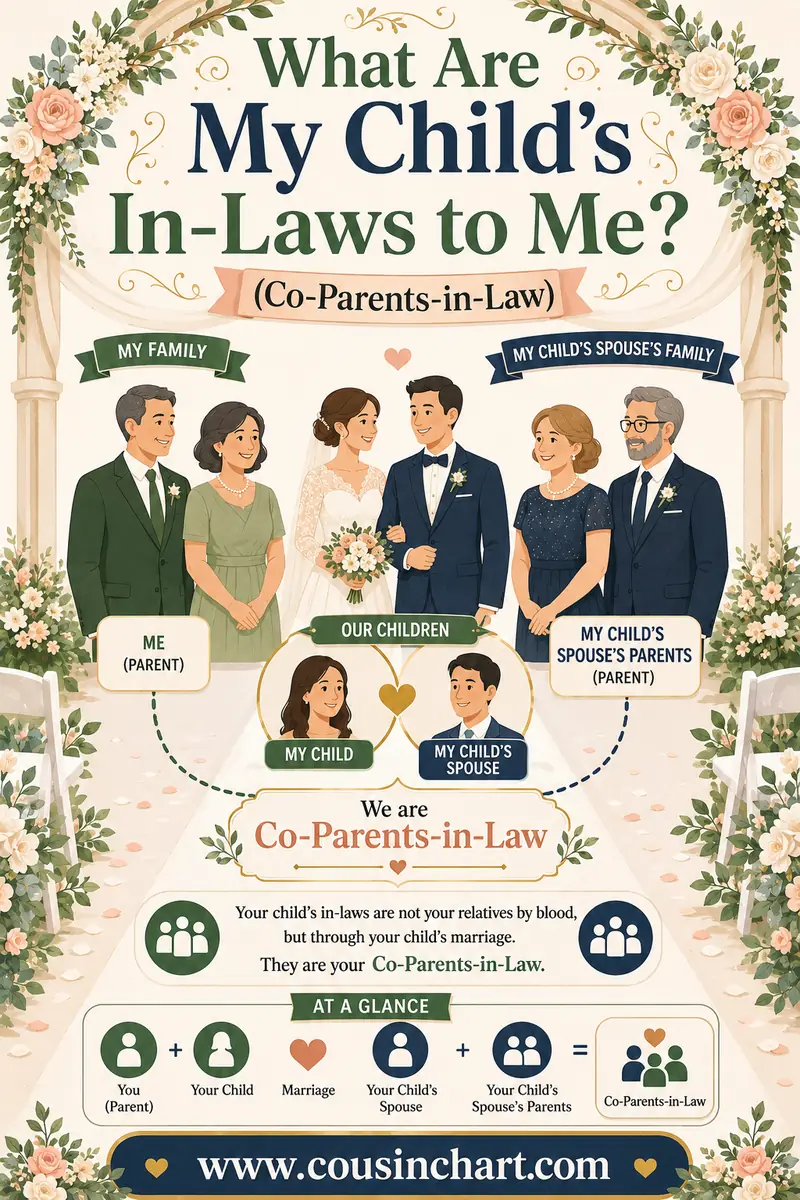
Your child's spouse's parents are your co-parents-in-law — the other mother- and father-in-law of the couple. English has no everyday word for them, but other languages do: they're your machatunim in Yiddish, your consuegros in Spanish. There's no blood between you and no legal relationship — just a marriage you both have a child in, and eventually, grandchildren you share.
That shared-grandchildren part is what makes this the most consequential "unnamed" relationship in the family. This guide covers what to call them, how the connection works, and where the rest of the two families land. For any relationship you can't put a term to, the free family relationship calculator on our homepage figures it out in seconds.
Relationship quick-check. Tap a phrase to see the correct term:
The answer will appear here.
The Term: Co-Parents-in-Law
Genealogists call this relationship co-parents-in-law: two couples (or single parents) whose children are married to each other. Individually, she's your co-mother-in-law and he's your co-father-in-law. The "co-" prefix means you hold parallel positions — you're both the parents-in-law of someone in the same marriage, standing on opposite sides of it.
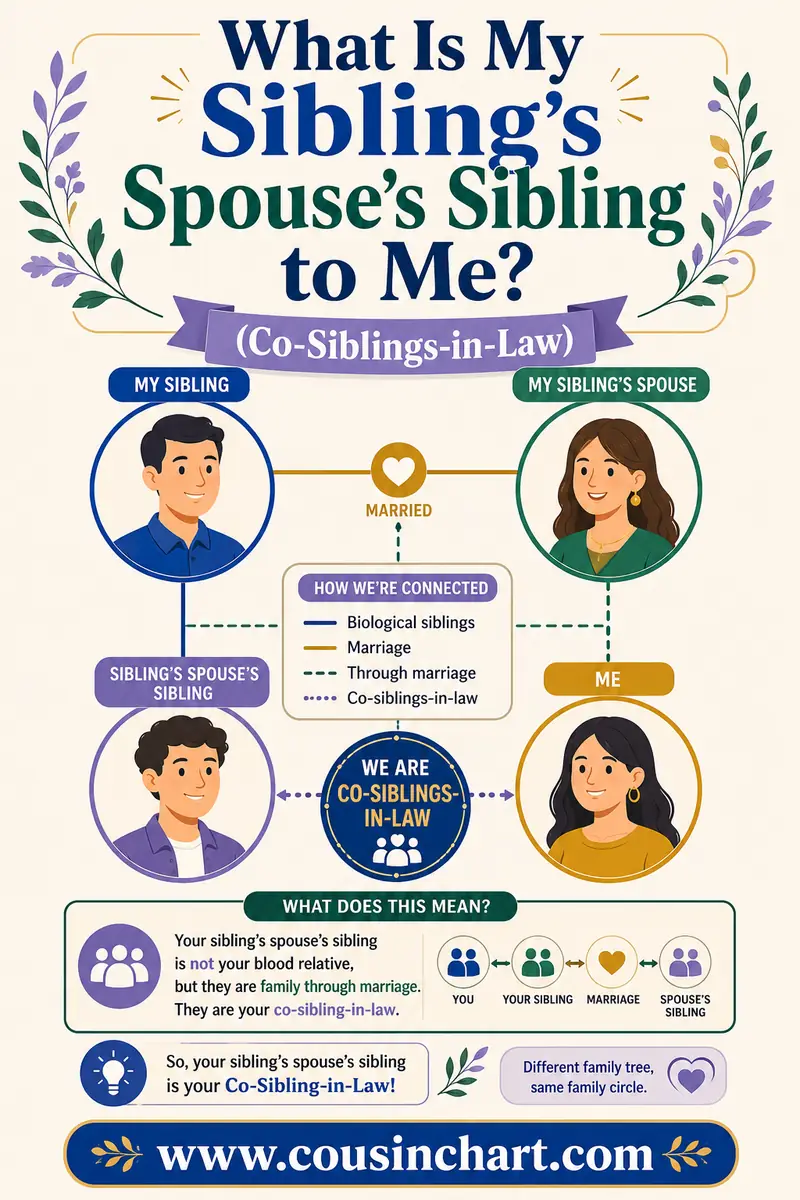
Note what the term is not saying. Your child's mother- and father-in-law are true in-laws to your child. To you, they're co-in-laws — one extra link down the chain, past where English's ordinary "-in-law" vocabulary stops. It's the same structural gap that leaves your sibling's spouse's siblings unnamed (the co-siblings-in-law problem, one generation down).
Machatunim, Consuegros, and Friends
Where English shrugs, other languages hand you a word — and the words are widely borrowed precisely because the relationship is so common:
| Language | Term | Notes |
|---|---|---|
| Yiddish | machatunim (מחותנים) | Singulars: mechutn (m), machateyneste (f); widely used in American English |
| Spanish | consuegros | Consuegro / consuegra; everyday vocabulary across the Spanish-speaking world |
| Italian | consuoceri | Same construction: "co-parents-in-law" |
| Portuguese | consogros | Ditto |
| Greek | symbetheroi (συμπέθεροι) | Covers the whole linked-family relationship |
| Hebrew | mechutanim (מחותנים) | Cognate of the Yiddish |
If your family has Jewish or Hispanic branches, you may already use machatunim or consuegros without thinking of them as loanwords. Many American families adopt one of the two just to escape saying "my daughter's husband's parents" for the next thirty years.
No Blood, No Legal Tie — So What Is It?
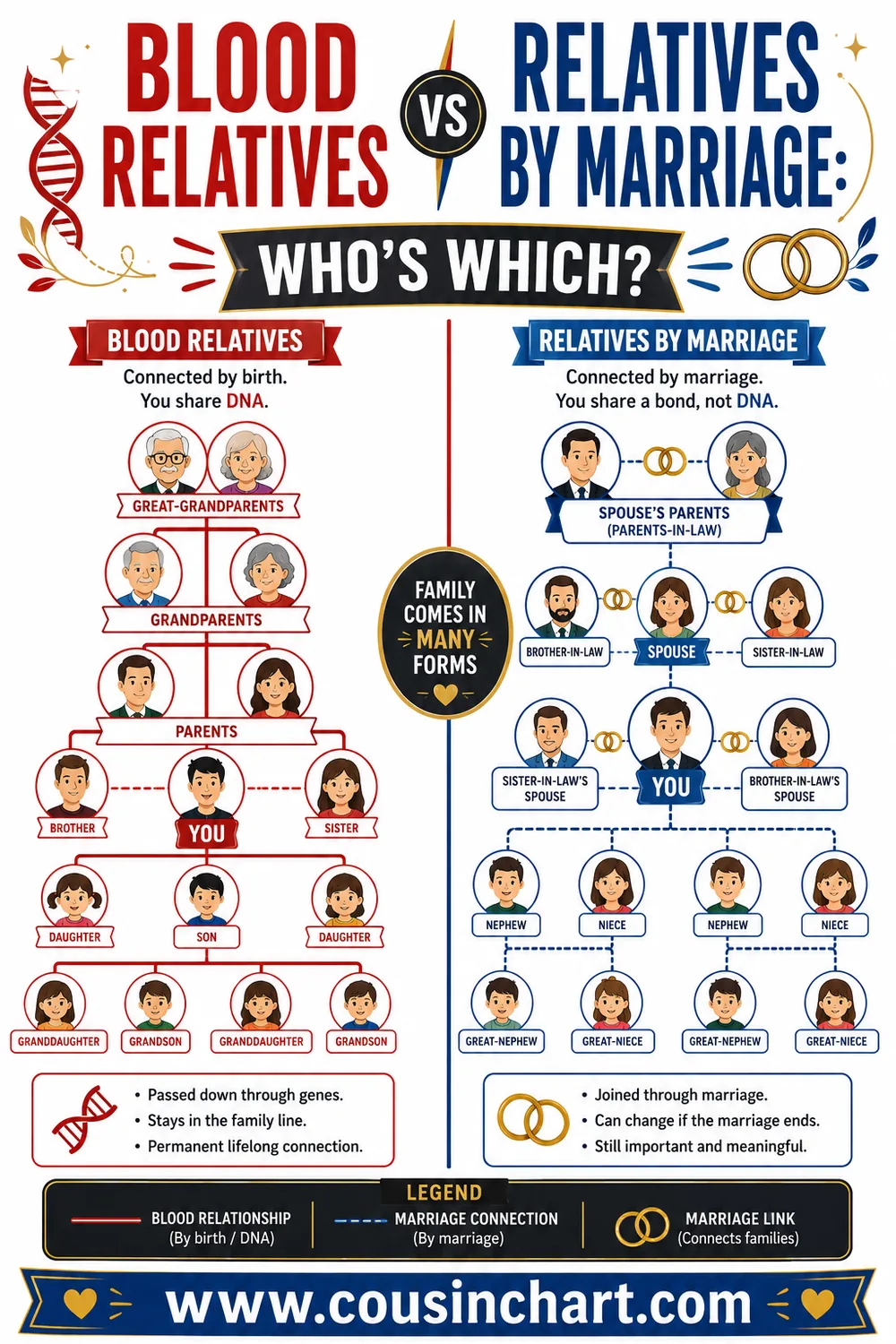
Strictly mapped, your co-parents-in-law are three links away: your child (blood), the marriage (affinity), their child (their blood). No shared ancestor, so:
- No shared DNA. A test would show nothing (small towns and tangled trees aside).
- No legal relationship. Inheritance law, next-of-kin rules, and family-leave policies don't recognize co-in-laws.
- No cousin arithmetic. Cousin numbers and "removed" belong to blood paths only.
And yet this is often one of the most active relationships on the whole chart. You'll share weddings, holidays, hospital waiting rooms, and — the big one — grandchildren. Sociologists note that co-parents-in-law relationships often function like extended siblinghood in cultures that name them. The tree says "no relation"; the calendar says otherwise.
The Grandchildren Change Everything
Here's the elegant twist: the moment your child and their spouse have a baby, you and your co-parents-in-law acquire your first shared blood relative — without becoming related to each other at all.
| Person | To you | To your co-parents-in-law |
|---|---|---|
| Your child | Child (blood) | Son- or daughter-in-law |
| Their child | Son- or daughter-in-law | Child (blood) |
| The grandchildren | Grandchildren (blood, ~25% DNA) | Grandchildren (blood, ~25% DNA) |
| You ↔ them | Co-parents-in-law | Co-parents-in-law |
You're now co-grandparents: four people with an identical 25%-average genetic stake in the same kids and zero genetic connection to each other. Each grandchild is the living intersection of your two trees. It's the same one-generation-down merge that makes co-siblings-in-law share nieces and nephews — scaled up to grandkids.
What Do You Actually Call Each Other?
In practice, American families land on one of these:
- First names — far and away the most common. You're peers, not authority figures to one another.
- "My son's in-laws" / "Emma's parents" — the descriptive route when talking to third parties.
- A borrowed term — machatunim or consuegros, adopted with or without the heritage to match.
- "Our co-grandparents" — increasingly popular once kids arrive, because it names the part that matters.
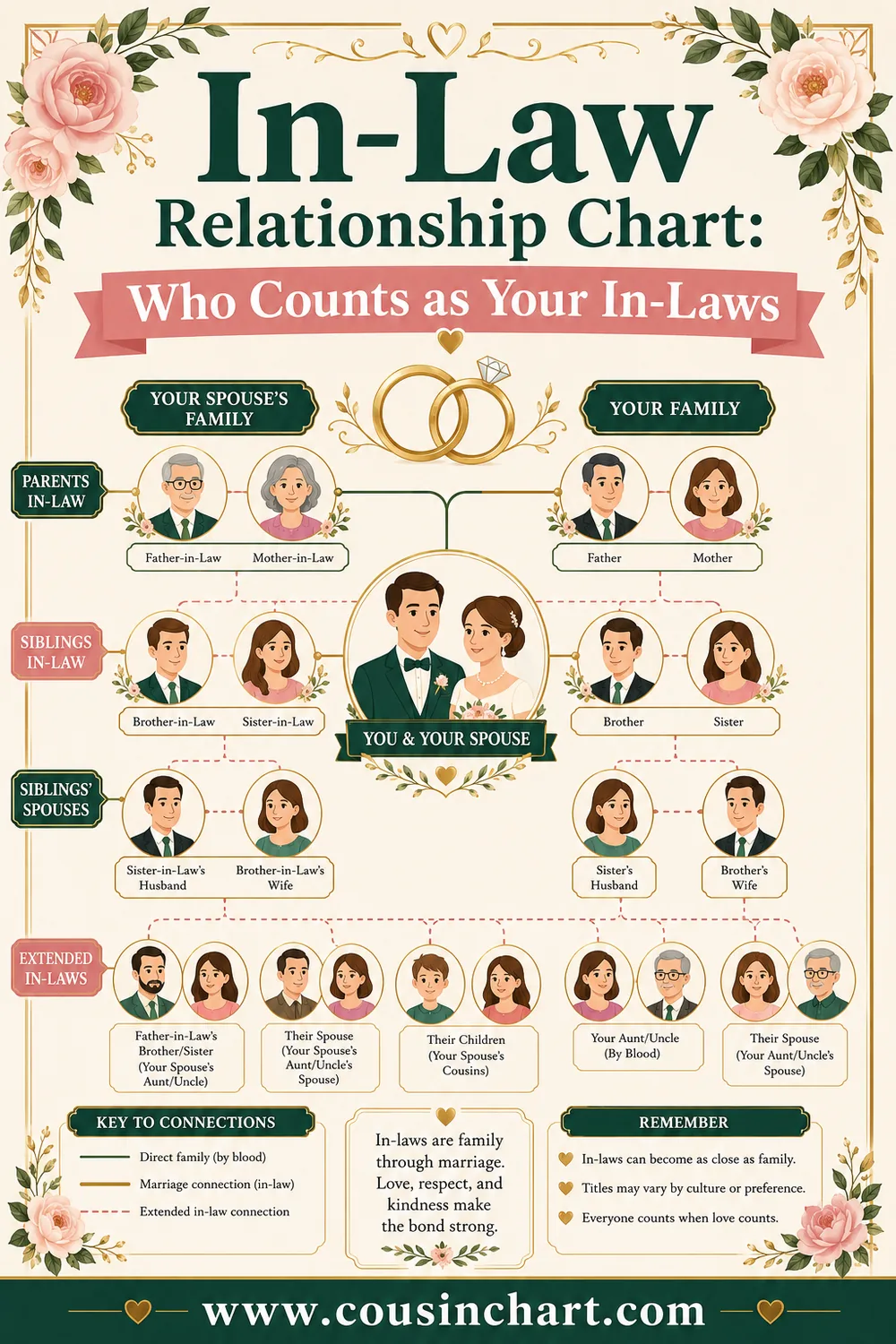
There's no etiquette standard, because English never built one. If you want a rule of thumb: use first names to their faces, and to everyone else use whichever description your listener will decode fastest. The in-law relationship chart sorts the entire marriage-side vocabulary if your family keeps score.
Divorce, Remarriage, and Other Plot Twists
Because the entire connection runs through one marriage, it moves when the marriage moves:
- If the couple divorces, you and the other parents stop being co-parents-in-law in any formal sense. If there are grandchildren, though, you remain co-grandparents of the same kids forever — many former co-in-laws stay coordinated for decades because of it.
- If your child remarries, the new spouse's parents become your co-parents-in-law. Having two sets across the years is ordinary; trees record history.
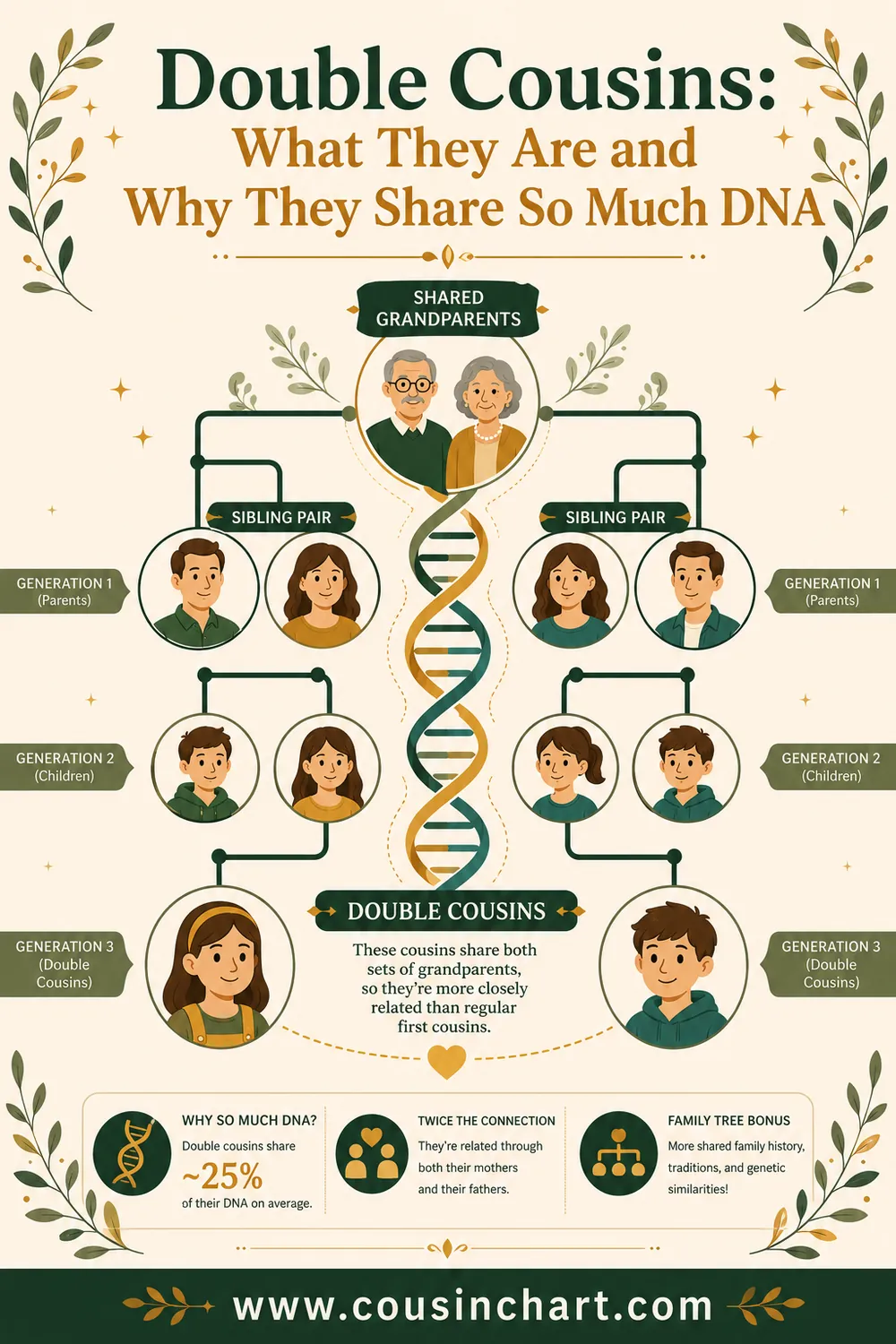
- **If both couples' other children also marry each other** (it happens!), the families double-link, and the resulting grandchildren-sets become double first cousins — the rare case where two trees genuinely fuse.
Through all of it, blood lines never budge: your grandchildren stay your grandchildren no matter what the adults rearrange.
Making the Co-Grandparent Partnership Work
Since the grandchildren are what turn this from trivia into a twenty-year working relationship, a few field notes from families who do it well:
- Sort the grandparent names early. Two grandmothers, one "Grandma" — this is the classic co-in-law negotiation, and it's easiest before the baby can talk. Most families give each couple a distinct pair (Grandma/Grandpa and Nana/Pop, or names from each side's heritage — Lola, Oma, Abuela, Mimi). There's no seniority rule; whoever cares more about a specific name should just say so out loud.
- Trade the family history while it's cheap. Your grandchildren descend from both trees equally. The other side's photos, recipes, and immigration stories are now part of your grandkids' inheritance — and you're one dinner away from the people who hold them. Genealogists routinely wish someone had done this a generation earlier.
- Assume goodwill on holidays. The couple in the middle is permanently double-booked, and every "whose Thanksgiving?" negotiation lands on them. Co-parents-in-law who coordinate directly — alternating years, merging tables, claiming different holidays — take real pressure off the marriage they both care about.
- Respect the asymmetry. You each get the relationship your child's marriage gives you, not the one you'd design. One set of co-in-laws may live nearby and babysit weekly while the other flies in twice a year; neither arrangement is a ranking.
None of this is genealogy, strictly — but it's what the machatunim words exist for. Languages name relationships that carry obligations, and this one quietly carries plenty.
Where They Land on Your Family Tree
A practical question for the record-keepers: do your co-parents-in-law even go on your tree? Yes — and the standard way is tidier than you'd expect:
- Enter them as the parents of your child's spouse. Genealogy software links them automatically once you record the marriage. They'll appear as a separate branch that touches yours at exactly one point — the wedding — which is the correct picture.
- Your descendants will thank you for their details. To you they're a side branch; to your grandchildren they're direct ancestors, as central as you are. Recording their full names, birthplaces, and parents now saves a grandchild a research project in 2075.
- Obituary convention keeps the one-link rule. A co-parent-in-law isn't traditionally listed among survivors — the connection is honored through the couple ("her son Marcus and his wife Elena"). Families who were genuinely close ignore this convention, and no one has ever been arrested for it.
- In DNA-match land, they're invisible — but their tree isn't. You share no DNA with them, but your grandchildren's matches will split roughly half-and-half between your tree and theirs. If you manage a grandchild's DNA results someday, the co-in-laws' surnames are half the answer key.
The theme, once again: "no relation" is a statement about ancestry, not about relevance. On your grandchildren's charts, the two of you are co-equal headwaters of the same river.
Practice: Place These Three
Cover the answers first:
- Your daughter's husband's mother. The parallel parent across the marriage: your co-mother-in-law (machateyneste, consuegra).
- Your son's wife's brother. One generation down from the title question, sibling edition: no standard English term — he's your son's brother-in-law; to your other kids he's their co-sibling-in-law.
- Your co-father-in-law's father. Three-plus links out: no relation, no term — "my daughter-in-law's grandfather" if you need words at the wedding.
FAQ
What do I call my son's wife's parents?
Formally, your co-parents-in-law. Many Americans borrow machatunim (Yiddish) or consuegros (Spanish). Day to day, first names win.
Are my child's in-laws related to me?
No — not by blood and not in law. The connection runs entirely through your children's marriage. Once grandchildren arrive, you share blood relatives (the grandkids) without being related to each other.
Is there an English word for co-parents-in-law?
"Co-parents-in-law" is the accepted genealogical term, but English has no everyday word the way Spanish (consuegros) or Yiddish (machatunim) does. That gap is exactly why the question is so common.
What is my relationship to my daughter-in-law's siblings?
No formal one — they're your son's siblings-in-law. To your other children they're co-siblings-in-law. Socially, they're usually just "the other side of the wedding party."
Do co-parents-in-law have any legal standing?
No. They don't appear in next-of-kin orders, inheritance defaults, or family-leave definitions. Any legal connection between the families runs through the married couple and, later, the grandchildren.
What are the two grandmothers of one baby to each other?
Co-grandmothers — and formally still co-mothers-in-law. They share a grandchild (each ~25% average shared DNA with the baby) while sharing none with each other.
Two Trees, One Wedding, Zero Scratch Paper
So: your child's in-laws are your co-parents-in-law — machatunim, consuegros, the other grandparents — no blood, no legal tie, and a front-row seat in your family's future anyway. Weddings splice trees together faster than anyone can diagram them, and someone at the reception will absolutely ask how the two families connect. When they do, the free family relationship calculator traces any path between two people and hands you the right term on the spot.