How to Clean a Gravestone Safely (And What Never to Use)
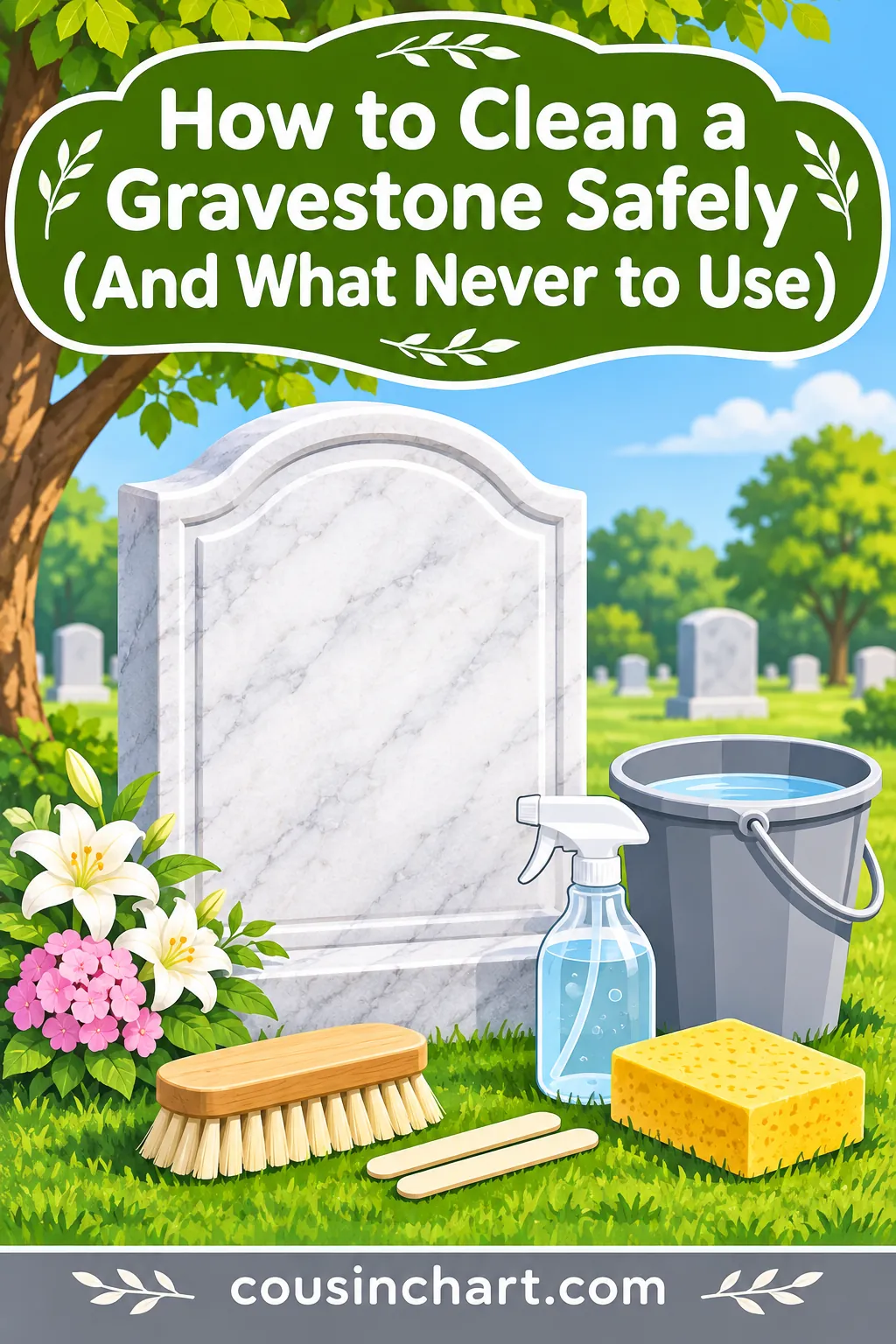
How to clean a gravestone safely comes down to three things: get permission, use only plain water and a soft natural-bristle brush, and work gently from the bottom up while keeping the stone wet. Never use bleach, household cleaners, wire brushes, pressure washers or anything harder than the stone itself.
Many families visit graves in late May for Memorial Day, which falls on the last Monday in May, and a clean stone is a lovely way to honor someone. But a well-meant scrub with the wrong product can do more harm in one afternoon than decades of weather. This guide walks you through the supplies, the method for each kind of stone, and the list of things to leave at home.
Before You Start: Three Quick Checks
1. Ask the cemetery first
Most cemeteries have rules about who may clean or touch a monument. Some only allow family members; some ask you to call ahead; a few don't allow cleaning at all. Historic and church cemeteries may have a volunteer group that handles care. A quick phone call or email to the office avoids problems and sometimes gets you helpful advice, such as where to find a water spigot.
If the grave isn't your relative's, get the family's blessing too when you can. Our Find a Grave search guide and free cemetery records guide can help you confirm who is buried where and which section to ask about.
2. Check that the stone is sound
Look closely before you touch anything. Don't clean a stone that:
- Is cracked, flaking, sugary to the touch or crumbling at the edges
- Leans, wobbles or has come loose from its base
- Has a surface layer peeling away (common on old sandstone and slate)
These stones need a trained conservator, not a brush. Even gentle scrubbing can knock loose pieces that can never be put back.
3. Decide whether it really needs cleaning
Some darkening is natural weathering and won't come off without harming the stone. A thin layer of lichen or a little dirt does no harm in the short term. If you can read the name and dates and the stone is stable, a light rinse may be all it needs. Less is more.
Supply Checklist
Everything on this list is gentle on stone. Pack it in a bucket and you're ready to go.
| Supply | Why you need it |
|---|---|
| Several gallons of clean water | The main cleaning tool; you'll use more than you think |
| Spray bottle | Keeps the stone wet while you work |
| Soft natural-bristle brushes (several sizes) | Softer than stone, so they lift dirt without scratching |
| Wooden craft sticks or plastic scrapers | Gently lift thick lichen or moss |
| Soft sponges | Rinse and wipe without abrasion |
| Cotton swabs | Clean inside carved letters and symbols |
| Bucket | Carry and hold rinse water |
| Gloves | Protect your hands |
| Kneeling pad | Saves your knees on uneven ground |
| Camera or phone | Photograph the stone before and after |
Optional: a biological cleaner made specifically for historic stone and masonry. These are designed to loosen lichen and algae gently and keep working for weeks after you rinse. If you use one, check that the label says it is safe for marble and historic stone, follow the directions exactly, and test it in a small hidden spot first. Plain water alone is still the safest choice.
What Never to Use
This is the part that matters most. Each of these can cause stains, pitting or loss of carved detail that cannot be repaired.
| Never use | What it does to stone |
|---|---|
| Bleach | Leaves salts inside the stone that crystallize and break it apart from within; can also stain |
| Household cleaners and dish soap | Many leave residue, salts or dyes that discolor stone over time |
| Vinegar, lemon juice or other acids | Dissolve marble and limestone, wiping out fine carving |
| Ammonia | Can discolor stone and harm nearby plants |
| Wire brushes or steel wool | Scratch the surface; steel can leave rust stains |
| Stiff plastic or nylon scrub brushes | Can scuff soft stones like marble |
| Pressure washers | Blast away the stone surface and push water deep inside |
| Sandpaper or power tools | Remove stone permanently |
| Shaving cream | Contains chemicals that can damage stone over time |
| Chalk, flour or crayons for reading letters | Stain the surface and wear down edges |
| Sealers or waxes | Trap moisture inside, causing flaking later |
If something says "tough on stains," it is too tough for an old gravestone.
Step-by-Step: The Gentle Method
This is how to clean a gravestone safely in most cases, and the basic method works for most stones. The stone-specific notes below tell you what to adjust.
- Photograph the stone. Take straight-on shots of the front, back and sides. Before-and-after photos are good to keep for your family records.
- Clear away loose debris. Pull grass clippings, leaves and twigs away from the base by hand.
- Soak the stone thoroughly. Wet the whole stone with your spray bottle or sponge. A wet stone is much less likely to be scratched, and soaking softens dirt and lichen.
- Start at the bottom. Work from the base upward. Water running down a dirty stone onto a wet, clean area is less likely to leave streaks than water running onto dry dirt.
- Brush in small circles. Use a soft brush and very light pressure. Keep spraying as you go so the stone never dries out.
- Lift lichen gently. For thick growth, soak it again, wait a few minutes, then ease it away with a wooden stick. If it doesn't lift easily, leave it. Lichen roots into the stone, and forcing it off can take the surface with it.
- Clean the carving last. Use cotton swabs and the smallest brush for letters, numbers and symbols.
- Rinse well. Pour clean water from the top down until the runoff is clear.
- Let it be. Many stones continue to brighten for weeks after a gentle cleaning as weather washes away loosened growth. Don't scrub harder trying to get it perfect in one visit.
Stone by Stone: What to Adjust
Different stones need different care. If you're not sure what a stone is made of, treat it like the most delicate option, which is marble.
Marble
White or gray marble was very popular in the 1800s. It is soft and reacts badly to acids, including those in many cleaners and even some tap water treatments.
- Use plain water and your softest brush only.
- Never use anything acidic.
- Watch for a sugary texture: crumbling grains mean the stone is weak. Stop if you see grains coming off on your brush.
Granite
Granite is hard and holds up well, which is why it became the most common material for modern headstones.
- Plain water and a soft brush handle most dirt.
- Polished granite faces show water spots, so rinse well and wipe gently with a soft, damp sponge.
- Even though granite is tough, skip the pressure washer and stiff brushes. They can damage the polish and the joints.
Slate
Slate was common in early New England burying grounds. It's dark, thin and often finely carved.
- Slate tends to split into layers. Look carefully for edges that are lifting.
- Rinse with water and brush lightly with the grain of the carving, not across it.
- If any layers are separating, do not clean the stone. Report it to the cemetery.
Sandstone and limestone
Both are soft and porous and wear easily.
- Use the lightest possible touch, or simply rinse.
- These stones are the most likely to flake, so check carefully before you begin.
Bronze markers
Flat bronze plaques are common in newer cemeteries.
- Rinse with water and wipe with a soft cloth.
- Don't polish away the dark surface finish. It protects the metal.
Mistakes to Avoid
Cleaning on a hot, sunny afternoon. Water dries too fast and leaves streaks. Choose a cool, overcast day or work in the shade early in the morning.
Cleaning in freezing weather. Water left in the stone can freeze and crack it. Wait until temperatures are well above freezing.
Trying to make an old stone look new. Old stones are supposed to look old. The goal is readability and removing growth, not a bright white finish.
Scrubbing too hard. If you hear grit scraping, stop. Rewet the stone and switch to a softer brush.
Cleaning too often. Once every few years is plenty for most stones. Frequent cleaning wears the surface.
Fixing broken stones yourself. Glues, cement and household repair products often make damage worse. Report broken stones to the cemetery office.
Caring for the Grave Between Cleanings
You don't need to clean the stone itself on every visit. These simple habits help it last:
- Trim grass by hand near the base. Mowers and string trimmers chip stone.
- Remove fallen leaves and debris that hold moisture against the stone.
- Choose flowers and decorations the cemetery allows, and take away wilted flowers.
- Avoid leaning heavy items against the stone.
- Take a new photo every visit or two so you can spot changes, like a new crack or a lean.
Make the Visit Part of Your Family Story
A cemetery visit is a natural time to record family details. While you're there, photograph neighboring stones of relatives, note the section and row, and jot down any inscriptions and carvings. If the stone has carvings you don't recognize, photograph them closely so you can look up their meanings later.
Add what you learn to your research notes. Our genealogy checklist gives you a place to track each grave, its photos and the records that go with it.
How to Clean a Gravestone Safely as a Group
Many families turn a cemetery visit into a group project, and volunteer groups often adopt an old family plot or a neglected burying ground. More hands make the work go faster, but they also mean more chances for someone to scrub too hard. Here's how to clean a gravestone safely when several people are helping:
- Assign one leader. That person checks each stone first and decides whether it's safe to clean.
- Show everyone the method. Spend five minutes demonstrating how wet the stone should be and how light the brushing pressure is.
- Hand out only the approved supplies. If nobody brings a stiff brush or a cleaner from home, nobody will use one.
- Give kids safe jobs. Children can carry water, pull leaves away from bases, photograph stones and record names and dates. Leave the brushing to adults.
- Keep a record. Write down which stones were cleaned and when in a simple research log, so the next group doesn't clean the same ones too soon.
When to Call a Professional
Some situations need a trained stone conservator instead of a family member with a brush. Call the cemetery office and ask for help if you find:
- A stone that is broken, leaning or loose on its base
- Old repairs with metal pins or cement that are failing
- Graffiti or paint
- Heavy staining from rust or tree sap
- A historic monument with fine carving that's already flaking
A conservator can tell what the stone is made of, test treatments safely and make repairs that last. Knowing how to clean a gravestone safely also means knowing when to stop and let someone else take over.
FAQ
What is the safest thing to clean a gravestone with?
Plain clean water and a soft natural-bristle brush. For heavy lichen, some people use a biological cleaner made specifically for historic stone, but it must be labeled safe for marble and tested in a hidden spot first.
Can I use bleach on a headstone?
No. Bleach leaves salts inside the stone that can crystallize and break it apart from within over time. It can also cause stains that won't come out.
Do I need permission to clean a family member's gravestone?
It's a good idea to check with the cemetery office first. Many cemeteries have rules about cleaning monuments, and some only allow certain methods or ask you to schedule a time.
How do you get black mold or lichen off a gravestone?
Soak the stone with water, wait a few minutes, and gently brush or ease the growth away with a wooden craft stick. If it doesn't lift easily, leave it rather than scraping, since forcing it can damage the surface.
Can you pressure wash a gravestone?
No. Pressure washers blast away the stone's surface and drive water deep inside, which can lead to cracking and flaking later.
How often should a gravestone be cleaned?
Every few years is usually enough. Light rinsing and removing debris on regular visits keeps the stone in good shape without wearing it down.
What should I do if a gravestone is cracked or leaning?
Don't clean it or try to fix it. Take photos and report it to the cemetery office, which can arrange for a trained conservator to assess it.