How the Royal Family Is Related (Cousins Marrying Cousins)
For most of European history, royals married other royals — and since the pool of royalty was small, that meant marrying cousins. Queen Victoria and Prince Albert were first cousins, and their children and grandchildren married into thrones across the continent, which is why the kings and queens who led Europe into World War I were nearly all cousins to one another. Cousin marriage wasn't scandalous among royalty; it was strategy.
This guide walks through how the tangle actually works — why royals married relatives, how Victoria became "the grandmother of Europe," and how today's British royal family still connects to other houses. It's genealogy at its most dramatic. And if you'd like to work out your own cousin connections while you're here, the free relationship calculator names any relationship in seconds.
Relationship quick-check. Tap a royal pairing to see the tie:
The answer will appear here.
Why Royals Married Their Cousins
Royal cousin marriage looks strange today, but for centuries it made perfect political sense. Three forces drove it:
- A tiny eligible pool. A prince was generally expected to marry someone of equal royal rank. Across Europe, that meant only a few dozen suitable families — and they were all already interrelated. Marry within your class and you were almost guaranteed to marry a cousin.
- Alliances. A marriage between two royal houses sealed a treaty in blood. Tie your family to a neighbor's throne and you gained an ally against rivals.
- Keeping the crown "pure." Royals worried about diluting their bloodline or letting power leak to lower-ranked families. Marrying relatives kept crowns, titles, and territory circulating within the same small circle.
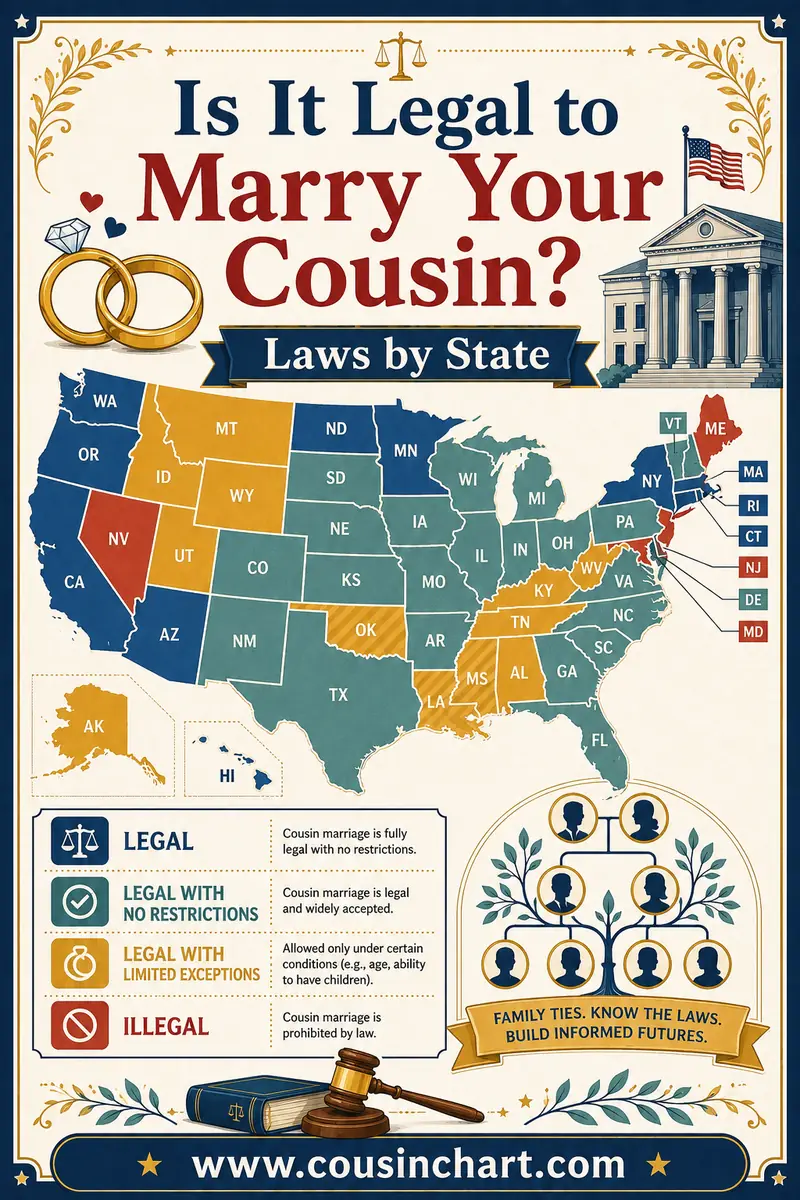
The result was a continent of monarchs who were, quite literally, one big extended family. Cousin marriage carried none of the taboo it sometimes does elsewhere — laws and attitudes on the subject vary widely by place and era, which we cover neutrally in cousin marriage laws.
Victoria and Albert: First Cousins Who Married
The most famous royal cousin marriage sits right at the center of the story. Queen Victoria and Prince Albert were first cousins. Victoria's mother and Albert's father were siblings, which made the pair grandchildren of the same couple — the textbook definition of first cousins.
Their marriage in 1840 was a love match as much as a dynastic one, and it produced nine children. Those nine were the key: Victoria and Albert deliberately married their children and grandchildren into the royal houses of Germany, Russia, Spain, Greece, Romania, and beyond. Within two generations, Victoria's descendants sat on or married into thrones all across Europe — which earned her the nickname "the grandmother of Europe."
The Cousins Who Led Europe Into WWI
Here's the detail that stuns people. The three monarchs whose nations plunged into World War I in 1914 were cousins who knew each other personally:
- King George V of Britain
- Kaiser Wilhelm II of Germany
- Tsar Nicholas II of Russia (through his wife, and by his own descent from other shared lines)
George V and Wilhelm II were first cousins — both grandsons of Queen Victoria. George V and Tsar Nicholas II were also first cousins, but through a different connection (their mothers were sisters, Danish princesses). And Nicholas's wife, Tsarina Alexandra, was another of Victoria's granddaughters, making her George V's first cousin too. Photographs of George V and Nicholas II show two men who looked almost like twins.
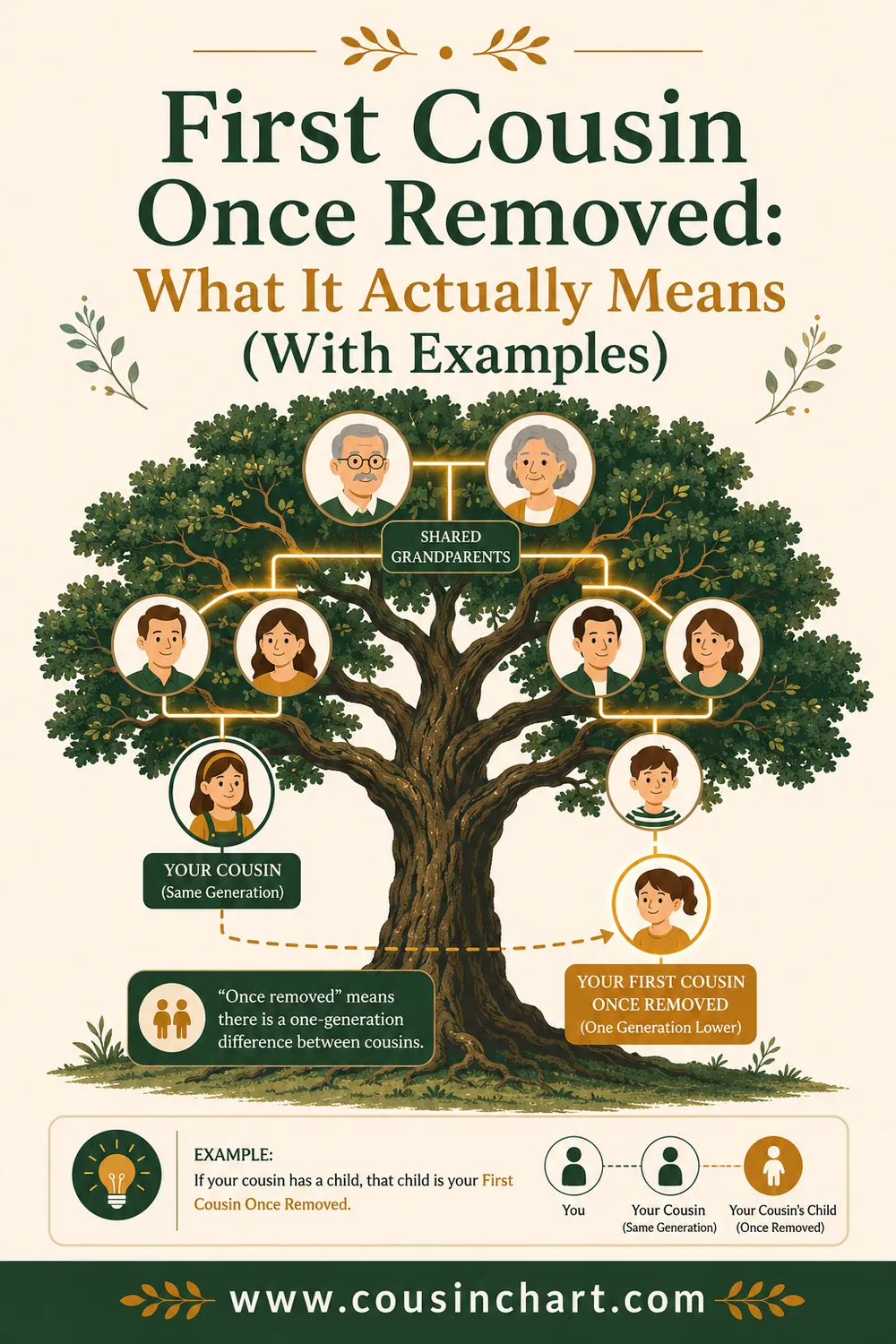
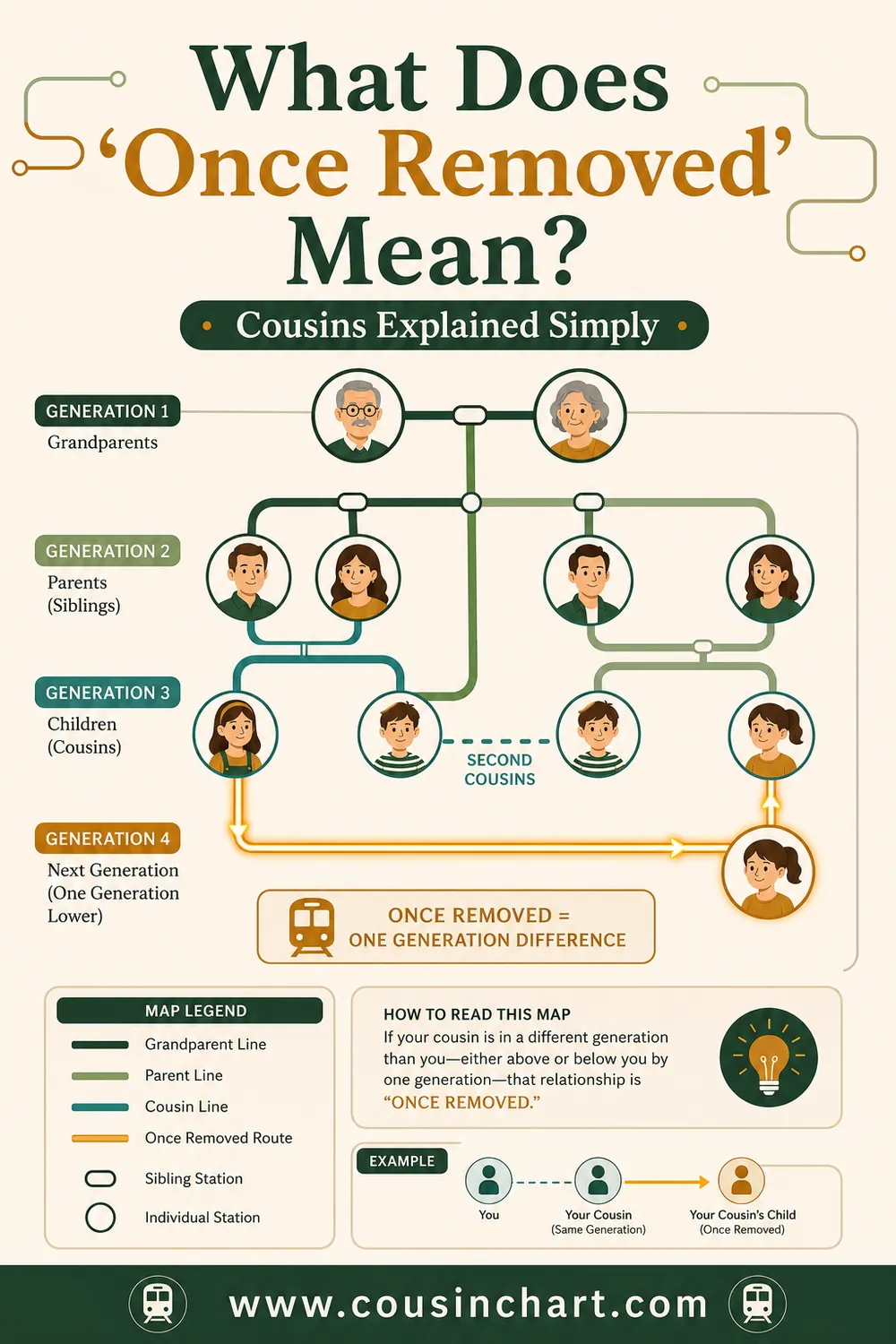
So the leaders of the warring empires were sitting at what amounted to a family reunion gone catastrophically wrong. It's one of history's darkest ironies: a war among cousins. For a refresher on what "first cousin" precisely means in cases like these, see first cousin once removed, which unpacks the whole cousin-and-removed system.
Elizabeth II and Prince Philip: Third Cousins
The pattern continued into modern times, if more distantly. Queen Elizabeth II and Prince Philip were third cousins — both were great-great-grandchildren of Queen Victoria, descending through different children of hers. Third cousins share great-great-grandparents, and in their case that shared couple was Victoria and Albert themselves.
They were also related through King Christian IX of Denmark (another prolific royal ancestor nicknamed "the father-in-law of Europe"), making them second cousins once removed by that second path. That's a hallmark of royal genealogy: two people are often cousins by several different routes at once, because the same ancestors keep reappearing in every branch.
Pedigree Collapse in the Palace
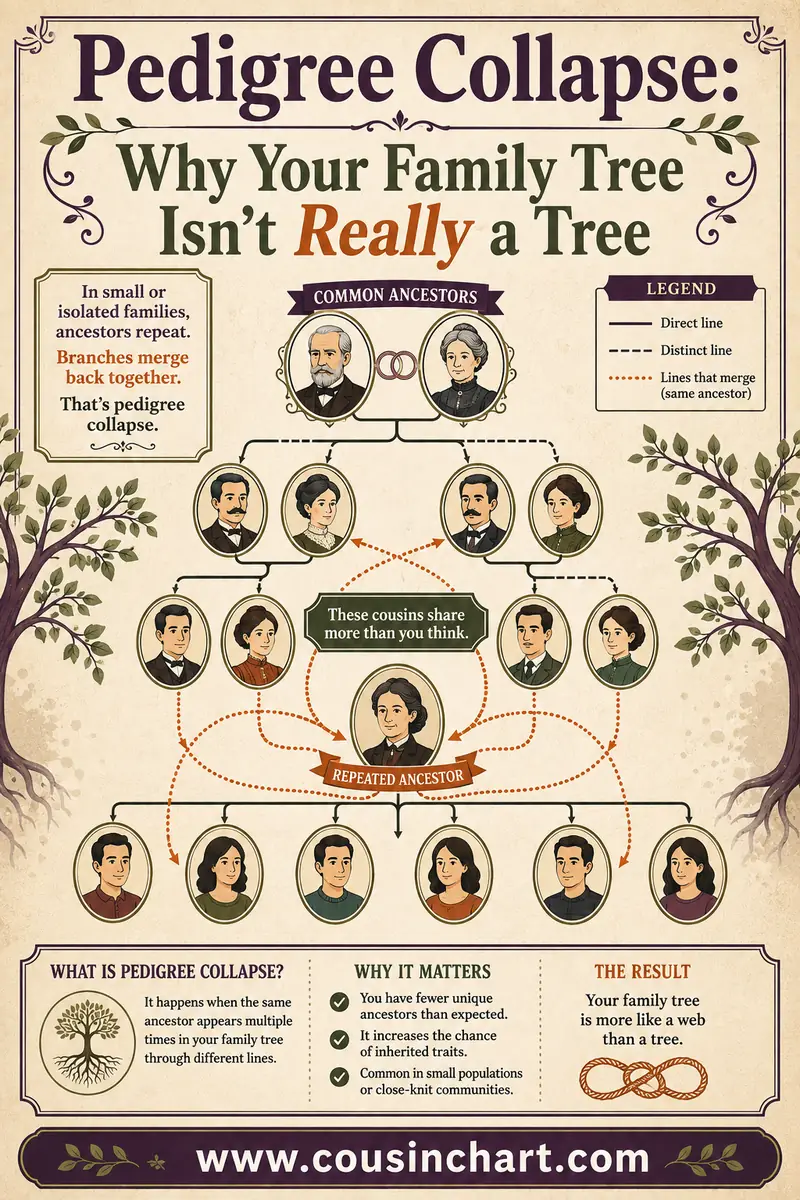
When cousins marry cousins for generations, a striking thing happens to the family tree: it stops looking like a tree and starts looking like a web. The same ancestors show up over and over in different branches, because the branches keep merging back together. Genealogists call this pedigree collapse.
Royal families are the most extreme example. A modern royal might descend from Queen Victoria through four or five separate lines simultaneously. Instead of having, say, 16 distinct great-great-grandparents, a heavily intermarried royal might have the same few individuals filling several of those slots. It's the same math that quietly affects every family the further back you go — we explain the general phenomenon in pedigree collapse explained. Royalty just made it visible by marrying close, on purpose, for centuries.
Are Today's Royals Still All Related?
Largely, yes — though the picture is loosening. The current British royal family still connects to the reigning houses of Norway, Denmark, Sweden, Spain, and the Netherlands, mostly through Victoria and Christian IX. King Charles III is a cousin (of varying degrees) to most of Europe's remaining monarchs.
But modern royals increasingly marry outside royalty altogether — commoners, in the old language. That trend steadily widens the gene pool and loosens the old web. The cousins-marrying-cousins era has largely ended; its genealogical fingerprints, though, will echo through royal trees for centuries to come.
The Two Grandparents of Europe: Victoria and Christian IX
Victoria gets the famous nickname, but she had a rival matchmaker working the same decades. King Christian IX of Denmark earned the title "the father-in-law of Europe" by placing his own children on or beside thrones across the continent. Between the two of them, Victoria and Christian IX seeded nearly every modern European royal house.
| Ancestor | Nickname | Descendants sat on the thrones of |
|---|---|---|
| Queen Victoria | Grandmother of Europe | Britain, Germany, Russia (by marriage), Spain, Greece, Romania |
| King Christian IX | Father-in-law of Europe | Denmark, Britain (by marriage), Russia, Greece, Norway |
The reason so many royals are cousins "several times over" is precisely this double-seeding. Trace any two European royals upward and their lines tend to converge on both of these figures through different children — two separate cousin relationships stacked on the same pair of people. Queen Elizabeth II and Prince Philip are the textbook case: third cousins through Victoria and separately linked through Christian IX.
A Cheat Sheet of Famous Royal Cousin Ties
Because the same handful of ancestors keeps reappearing, a few relationships come up again and again in histories and documentaries. Here they are in one place:
| Pair | Relationship | Shared ancestor |
|---|---|---|
| Victoria & Albert | First cousins (married) | Their grandparents (Francis, Duke of Saxe-Coburg-Saalfeld) |
| George V & Kaiser Wilhelm II | First cousins | Queen Victoria |
| George V & Tsar Nicholas II | First cousins | Christian IX (their mothers were sisters) |
| George V & Tsarina Alexandra | First cousins | Queen Victoria |
| Elizabeth II & Philip | Third cousins | Queen Victoria |
| Elizabeth II & Harald V of Norway | Second cousins | Edward VII / Christian IX lines |
Notice how George V alone is a first cousin to the German Kaiser, the Russian Tsar, and the Tsarina — each by a different route. That single fact captures the whole era: one British king, at the center of a family that happened to rule most of a continent.
The Hidden Cost: Hemophilia in the Bloodline
Royal cousin marriage had a darker genetic footnote. Queen Victoria was a carrier of hemophilia B, a blood-clotting disorder passed down the X chromosome. Because her descendants married so tightly within the same royal circle, the gene traveled straight into the ruling houses of Spain, Germany, and Russia rather than being diluted out.
The most historically consequential case was Tsarevich Alexei, heir to the Russian throne and a great-grandson of Victoria, whose hemophilia drew the mystic Rasputin into the imperial court — a thread many historians tie to the unraveling of the Romanov dynasty. It's a sobering illustration of a general genetic point: marrying close relatives raises the odds that a recessive trait carried by a shared ancestor surfaces in the children. The royal houses put that principle on display across an entire continent.
How to Trace a Royal Connection Yourself
Royal trees look intimidating, but the same three-step method that works on any family applies:
- Pick the shared ancestor. For most modern European royals, start by asking whether they both descend from Victoria, from Christian IX, or from both.
- Count the generations down to each person from that ancestor. Equal counts mean plain cousins; unequal counts add "removed."
- Apply the minus-one rule. Two great-great-grandchildren of Victoria are third cousins (four generations up, minus one). A great-grandchild and a great-great-grandchild are second cousins once removed.
The only thing that makes royalty harder than an ordinary family is that you often get more than one answer — two people can be third cousins by one line and fourth cousins by another. Both are correct; genealogists usually cite the closest one. Your own tree rarely has that complication, and the homepage calculator handles the counting either way.
FAQ
Were Queen Victoria and Prince Albert really cousins?
Yes, first cousins. Victoria's mother and Albert's father were brother and sister, making Victoria and Albert grandchildren of the same couple. Their marriage in 1840 was both a love match and a dynastic one, and their descendants spread across Europe's thrones.
How were the WWI monarchs related?
King George V of Britain and Kaiser Wilhelm II of Germany were first cousins, both grandsons of Queen Victoria. George V and Tsar Nicholas II of Russia were also first cousins, through their mothers. The war's leading rulers were, in effect, feuding members of one extended family.
How were Queen Elizabeth II and Prince Philip related?
They were third cousins, both great-great-grandchildren of Queen Victoria through different lines. They were also connected through King Christian IX of Denmark by a separate path, making them related more than one way — a common feature of royal genealogy.
Why did royal families marry cousins?
The pool of equally ranked royals was tiny and already interrelated, so eligible partners were nearly always cousins. Cousin marriages also sealed alliances between kingdoms and kept crowns, titles, and land within the same royal circle rather than passing to lower-ranked families.
Who was the "father-in-law of Europe"?
King Christian IX of Denmark. Through strategic marriages, his children became a queen of Britain, a tsarina of Russia, a king of Greece, and more, seeding thrones across the continent. Together with Queen Victoria, he is why nearly every modern European royal descends from one of two people.
Did cousin marriage cause health problems for royals?
It could. Queen Victoria carried the gene for hemophilia, and because her descendants married within a small royal circle, the disorder passed into the Spanish, German, and Russian royal houses rather than being diluted out. Marrying close relatives raises the odds that a recessive trait from a shared ancestor appears in the children.
Are all European royals related to each other?
Nearly all of them, and usually by several paths at once, thanks to centuries of intermarriage centered on ancestors like Queen Victoria and King Christian IX. Modern royals increasingly marry outside royalty, which is gradually widening the family and loosening the old connections.
Work Out Your Own Royal-Style Tangle
The royal family is genealogy turned up to full volume: cousins marrying cousins until the family tree folds back on itself and the same ancestors appear again and again. Your own tree is tamer — but it can still hold surprises. When you want to untangle exactly how two relatives connect, whether they're royalty or not, the free family relationship calculator names the relationship and shows the ancestor they share, no counting required.