Dutch Uncles and Kissing Kin: Family Relationship Idioms
A "Dutch uncle" is someone who gives you blunt, honest, no-nonsense advice — a stern but caring adviser, not an actual uncle. English is full of these family-flavored idioms, from "kissing cousins" (people close and familiar, or distant relatives friendly enough to greet with a kiss) to "blood is thicker than water" and "the black sheep of the family." Most of them borrow family words to describe relationships rather than actual genealogy.
This guide walks through the most common family relationship idioms — what each really means, where it came from, and how it's used. It's a tour of language, not lineage. And when you want to sort a literal family relationship from a figurative one, the free relationship calculator tells you exactly who's who by blood.
Idiom quick-check. Tap a family expression to see what it actually means:
The answer will appear here.
"Dutch Uncle": The Blunt Adviser
Start with the headliner. A Dutch uncle is a person who offers frank, firm, sometimes harsh advice — but out of genuine care. To "talk to someone like a Dutch uncle" means to level with them honestly, holding nothing back, the way a straight-talking relative might. It's the opposite of an indulgent, easygoing uncle who lets you off the hook.
The "Dutch" part reflects an old English habit of attaching "Dutch" to phrases as a mild dig (as in "Dutch courage" or "going Dutch") — a linguistic quirk from centuries of Anglo-Dutch rivalry. The uncle in question isn't Dutch and isn't your uncle; the phrase just paints a picture of a plain-spoken family figure who tells you what you need to hear rather than what you want to hear.
"Kissing Cousins": Close, or Just Friendly?
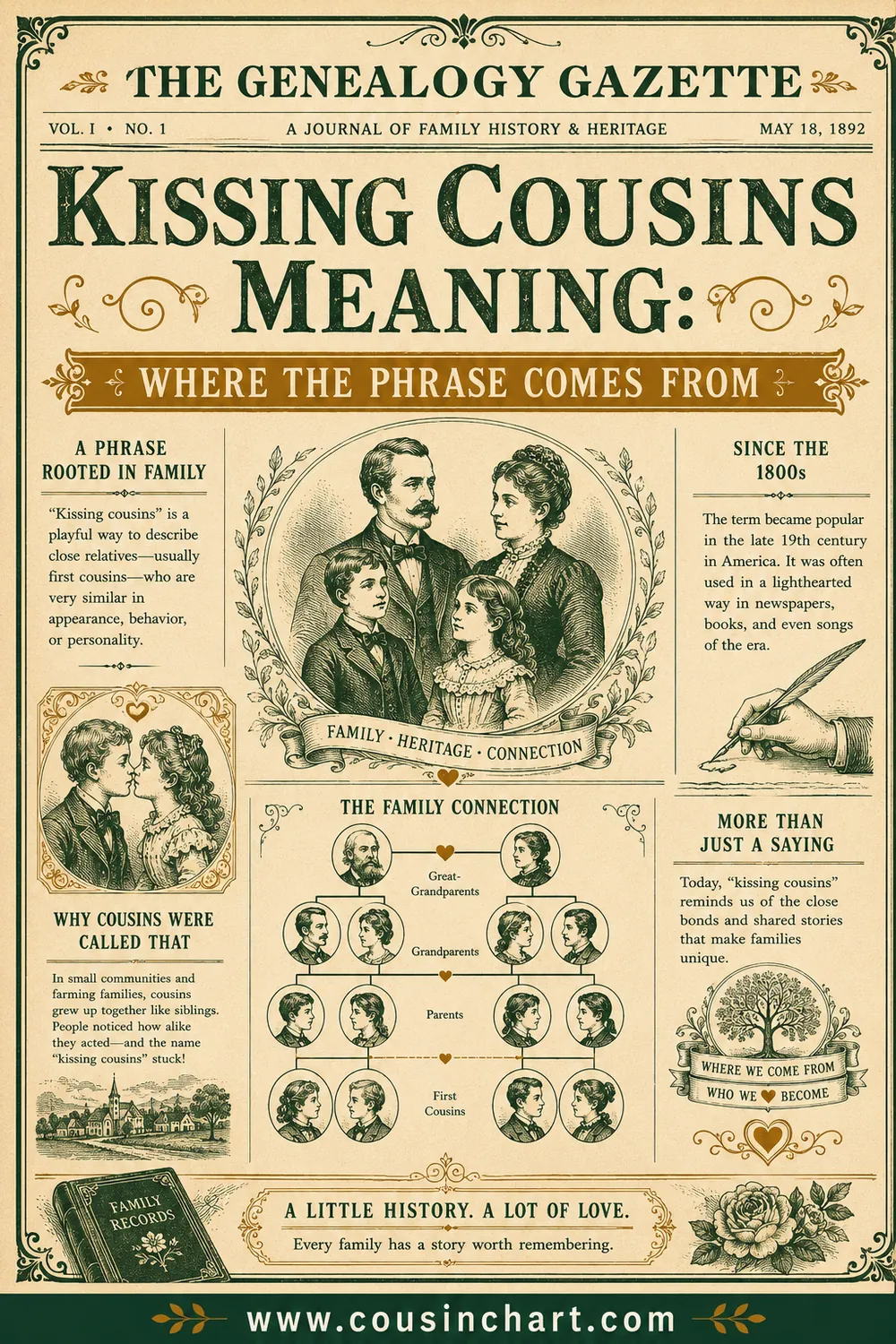
Kissing cousins has two overlapping meanings, and both are about closeness rather than romance:
- Distant relatives you know well enough to greet with a kiss — cousins familiar enough for affection, but not immediate family.
- Two things so similar they're practically related — "these two phone models are kissing cousins."
The phrase is warm and casual, and it does not imply anything improper. It simply marks people (or things) as close and familiar. We give the expression its own full treatment in kissing cousins meaning, including how it's traveled through songs and pop culture.
"Blood Is Thicker Than Water"
This proverb means family loyalty outweighs other relationships — that the bonds of kin are stronger than bonds of friendship or convenience. It's one of the most quoted family sayings in English.
There's a popular claim that the "original" version meant the opposite (something about the blood of covenant versus the water of the womb), but that reading is historically shaky and not well supported. In everyday use, the meaning has been consistent for centuries: your family ties run deep. Whether or not you agree with the sentiment, that's what people mean when they say it.
"The Black Sheep of the Family"
The black sheep is the family member who stands apart — the misfit, the rebel, or the one seen as a disappointment or oddity. The image comes from livestock: in a flock of white sheep, a black one stands out, and its wool was historically less valuable, so a black sheep was the odd, less-prized member.
Applied to families, it's the relative who doesn't fit the mold — sometimes affectionately, sometimes critically. Many people wear the label with pride, reclaiming it as a badge of individuality rather than shame.
Resemblance Idioms: Parents and Children
A whole cluster of idioms says the same thing: kids turn out like their parents.
- "Like father, like son" (and "like mother, like daughter") — a child mirrors a parent's traits, habits, or fate.
- "The apple doesn't fall far from the tree" — children resemble their parents in character or behavior, usually said when a similarity is obvious.
- "A chip off the old block" — someone strongly resembling a parent, often approvingly.
- "It runs in the family" — a trait, talent, or tendency shared across relatives.
These sayings are about inherited resemblance, real or perceived. They reach for family relationships to make a point about how much we take after the people who raised us.
Idioms That Only Sound Like Family
Some expressions borrow a family word but have nothing to do with actual relatives:
- "Big Brother" — a controlling, all-watching authority, from George Orwell's 1984, not a sibling.
- "Mother hen" — a fussily protective person who hovers over others.
- "Uncle Sam" — a personification of the United States government.
- "Motherland" / "fatherland" — one's native country, cast in family terms.
- "Sister city" — a town paired with another abroad for cultural ties.
The family vocabulary here is doing metaphorical work — evoking the warmth, authority, or belonging we associate with relatives — without pointing to anyone's actual kin. It's a testament to how central family is that we reach for its words to describe governments, countries, and companions.
"Honorary" Family: When Idiom Becomes Relationship
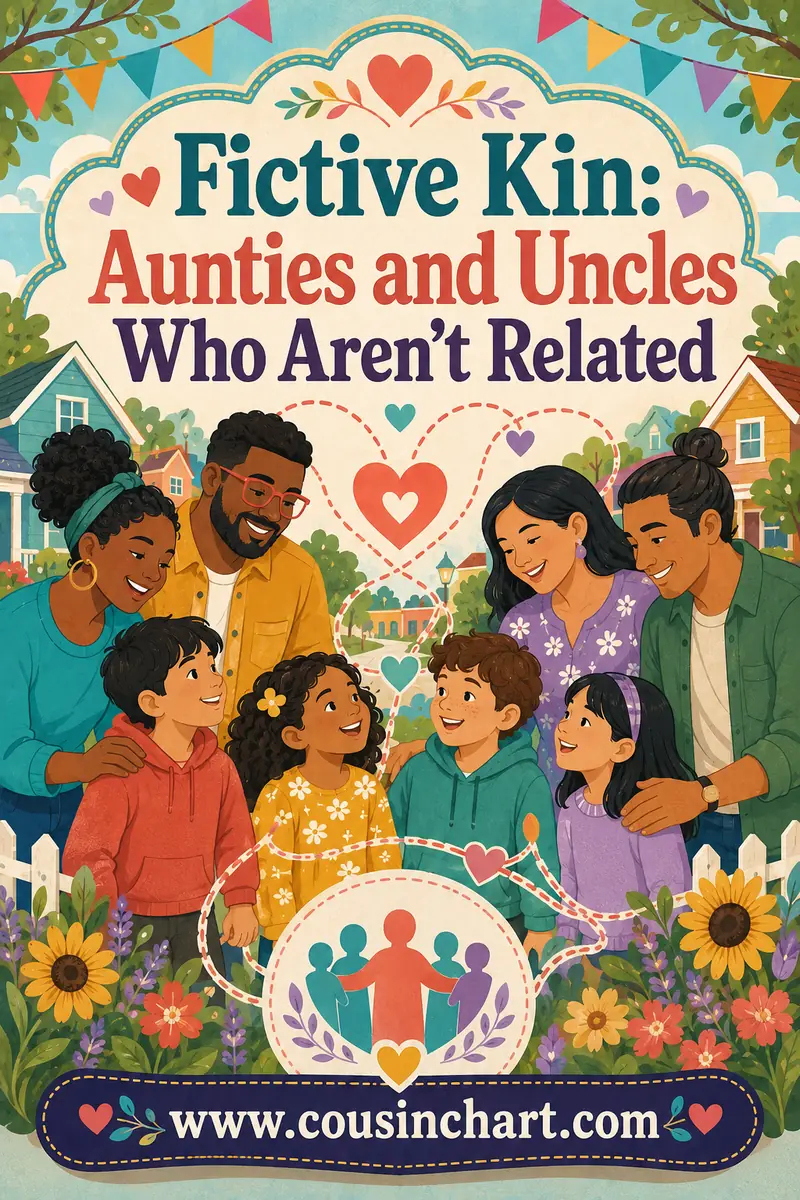
One more category sits right on the border between figure of speech and real relationship: the honorary "aunt," "uncle," or "cousin" who isn't related at all. A close family friend your parents told you to call "Auntie Jean," a neighbor who's practically a grandfather — these people occupy real family roles without any blood tie.
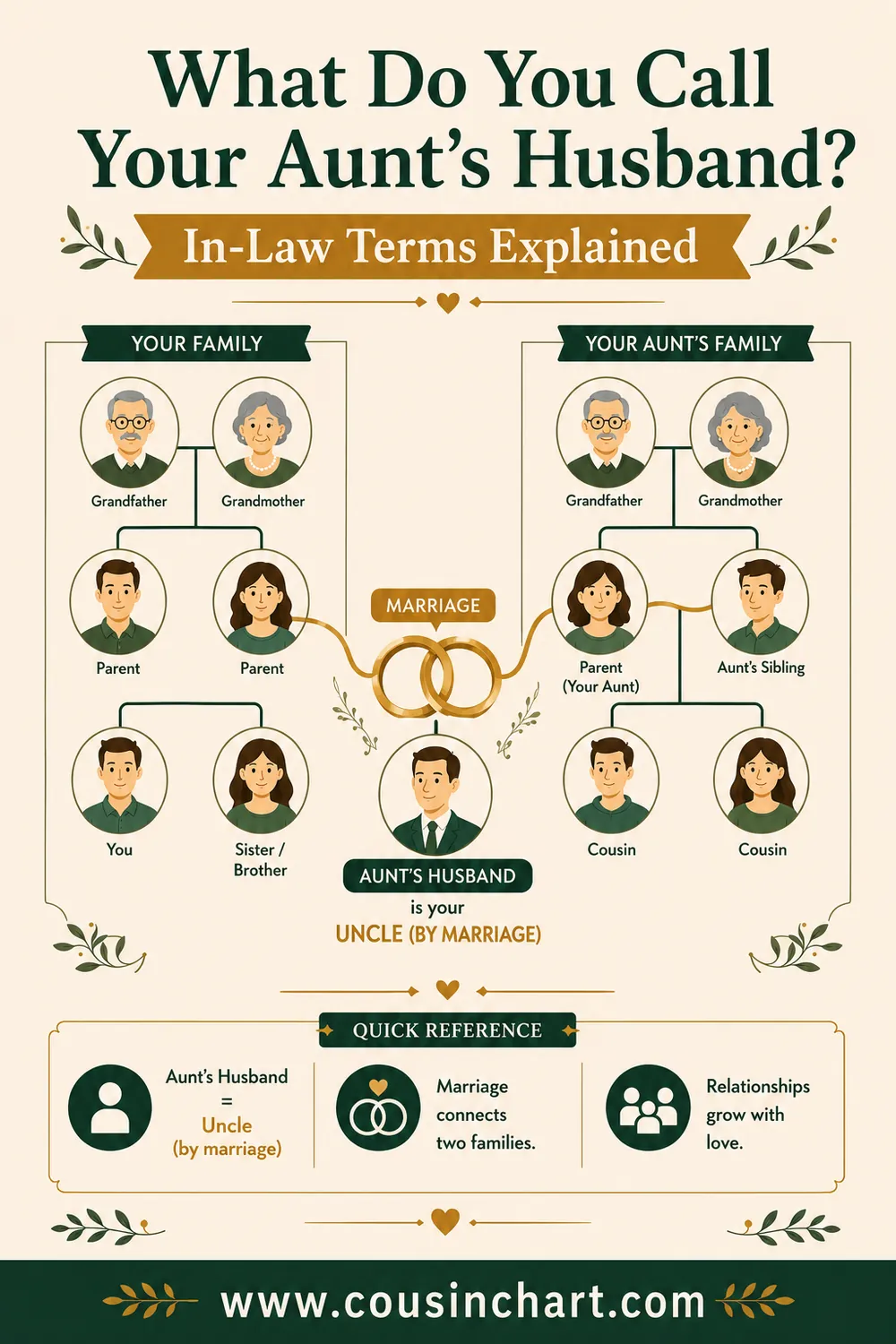
Anthropologists call this fictive kin: relationships that function like family and use family labels, but aren't based on descent or marriage. It's not quite an idiom and not quite genealogy — it's the place where affectionate language turns into a genuine bond. We explore it fully in fictive kin explained. And for the real in-law titles that sometimes get treated as honorary, what do you call your aunt's husband sorts out who's an uncle by marriage and who's just "Uncle" by affection.
More Family Idioms Worth Knowing
The expressions above are the headliners, but English hides dozens more family-flavored phrases. A quick field guide to some you'll hear:
| Idiom | What it really means |
|---|---|
| "Mother tongue" | Your first or native language |
| "Sister act" / "brothers in arms" | People bonded by a shared cause or trade, not blood |
| "Old wives' tale" | A traditional belief or superstition, often unproven |
| "Robbing Peter to pay Paul" | Solving one debt by creating another (no family link at all) |
| "Every mother's son" | Absolutely everyone, without exception |
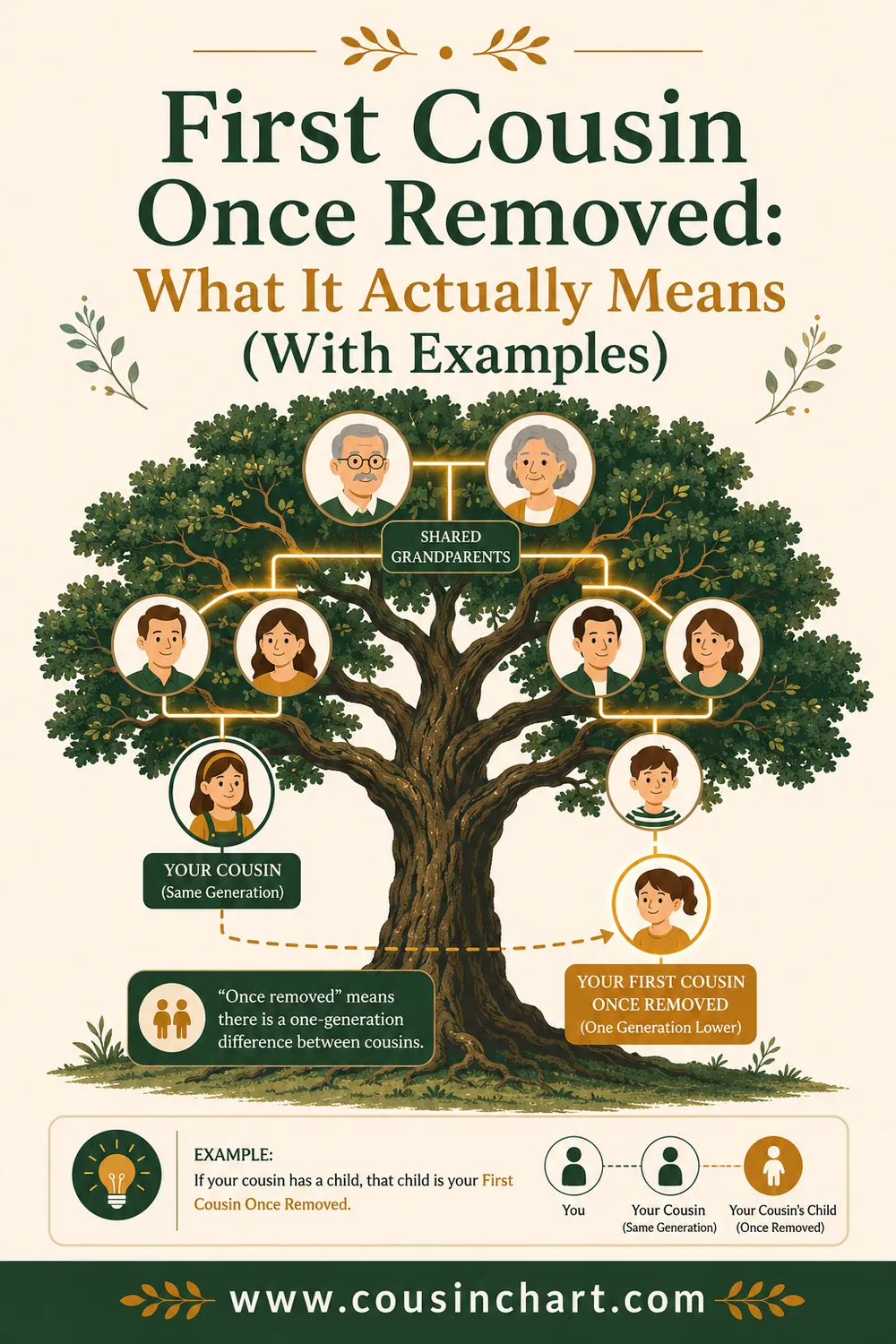
| "Second cousin, twice removed" (jokingly) | A deliberately vague way to say "barely related" |
| "Cousin it" / "kissing kin" | Playful shorthand for distant or loose relations |
| "The old country" | An immigrant family's ancestral homeland |
Notice how many of these lean on the feelings attached to family — belonging, obligation, origin — rather than any real genealogical fact. That's the whole engine of family idiom: kinship words carry so much emotional weight that English keeps borrowing them to describe anything warm, binding, or foundational.
Why Family Words Make Such Good Metaphors
There's a reason "motherland," "brotherhood," and "big brother" all land instantly, in almost every language. Family relationships are the first relationships anyone learns — before nations, jobs, or institutions, a child understands parent, sibling, and the pecking order of a household. So family words come pre-loaded with meaning everyone shares:
- "Parent" words (mother, father) evoke origin, authority, and protection — which is why countries and languages get them.
- "Sibling" words (brother, sister) evoke equality and shared loyalty — hence "brothers in arms" and "sister cities."
- "Uncle/aunt" words evoke a trusted-but-not-in-charge figure — the friendly authority of a "Dutch uncle" or an honorary "auntie."
When a language wants to make an abstract bond feel immediate and human, reaching for a family term is the shortest path. The metaphor does its work before you've finished hearing it.
Family Idioms Across Other Languages
English is far from alone in mining family for metaphor — the habit is close to universal, which is itself a clue to how fundamental kinship is to human thought. A few examples that travel well:
- Spanish uses "primo" (cousin) as slang for someone naive or easily fooled — "hacer el primo" means to be taken for a sucker, much like an English "distant cousin" wave-off.
- French "mon vieux" (literally "my old one") is an affectionate term for a close friend, borrowing the intimacy of long family ties.
- Many languages, from Chinese to Swahili, extend "aunt," "uncle," "brother," and "sister" to non-relatives as a marker of respect or closeness — the same honorary-kin instinct behind an English-speaking child's "Auntie Jean."
The lesson is that no culture keeps family words strictly for family. Everywhere, kinship terms leak outward to describe respect, affection, and belonging — because everywhere, family is the model relationship people reach for first.
Idiom or Real Relationship? A Quick Test
Because family idioms and real kinship use the exact same words, it helps to have a fast way to tell them apart. Ask three questions:
- Is there a traceable blood or marriage link? If you can draw a line through births and weddings, it's a real relationship. If not, it's figurative or honorary.
- Would it survive a family tree? "My cousin Dave" appears on a chart; "these two car models are kissing cousins" does not.
- Is the family word doing emotional work? "Motherland" and "mother hen" borrow the feeling of family without the fact — a reliable sign you're in idiom territory.
Run any confusing case through those three and you'll rarely mistake a turn of phrase for an actual relative. And for the genuine ties, the homepage calculator names the exact blood or in-law relationship so you never have to guess whether "Uncle" is literal.
FAQ
What does "Dutch uncle" mean?
A Dutch uncle is someone who gives you blunt, honest, firm advice out of genuine concern — not an actual uncle. To be "talked to like a Dutch uncle" means being told frank truths you may not want to hear. The "Dutch" comes from an old English habit of using the word in mildly critical phrases.
Does "kissing cousins" mean something romantic?
No. "Kissing cousins" means people (or things) close and familiar enough to greet warmly, or distant relatives on friendly terms. It can also describe two things that are very similar. The phrase implies closeness and familiarity, not romance.
What does "black sheep of the family" mean?
It refers to the family member who stands out as different — the misfit, rebel, or one seen as an oddity or disappointment. The image comes from a black sheep standing out in a white flock. Many people embrace the label as a mark of individuality.
Is "blood is thicker than water" about real blood?
It's a metaphor meaning family bonds are stronger than other ties. Despite a popular claim that it originally meant the reverse, that alternate history is not well supported. In standard use, the saying has long expressed the strength of family loyalty.
Why do so many idioms use family words?
Because family relationships are the first ones everyone learns, so family words come loaded with shared meaning. "Parent" words evoke origin and authority (motherland, fatherland), "sibling" words evoke equality and loyalty (brothers in arms, sister cities), and "uncle/aunt" words evoke a trusted but non-authoritative figure. Reaching for a family term is the fastest way to make an abstract bond feel human and immediate.
Are honorary aunts and uncles considered family?
Emotionally, often yes — but they're not relatives by blood or marriage. Anthropologists call these bonds "fictive kin": people who fill family roles and use family titles without an actual family tie. A beloved "Auntie" who's really a family friend is a classic example.
Language vs. Lineage
Family idioms show how deeply kinship shapes the way we talk — we borrow uncles, cousins, brothers, and mothers to describe advisers, look-alikes, and whole nations. But when you need to separate the figurative from the factual — is this person really my cousin, or just a "kissing cousin"? — the free family relationship calculator settles it, naming the true blood relationship in seconds so you know exactly where language ends and lineage begins.