Cross Cousins vs Parallel Cousins: The Anthropology of Cousinhood
Parallel cousins are the children of two same-sex siblings — your father's brother's kids, or your mother's sister's kids. Cross cousins are the children of two opposite-sex siblings — your father's sister's kids, or your mother's brother's kids. In the modern West they're all just "first cousins," but many cultures treat these two types completely differently.
If that sounds like a technicality, stick around — it's one of the most fascinating distinctions in anthropology, and it explains everything from ancient marriage rules to why some languages have separate words for each cousin type. This guide breaks it down with clear examples, no jargon. And whenever you want the plain-English label for any relative, the free relationship calculator names it in seconds.
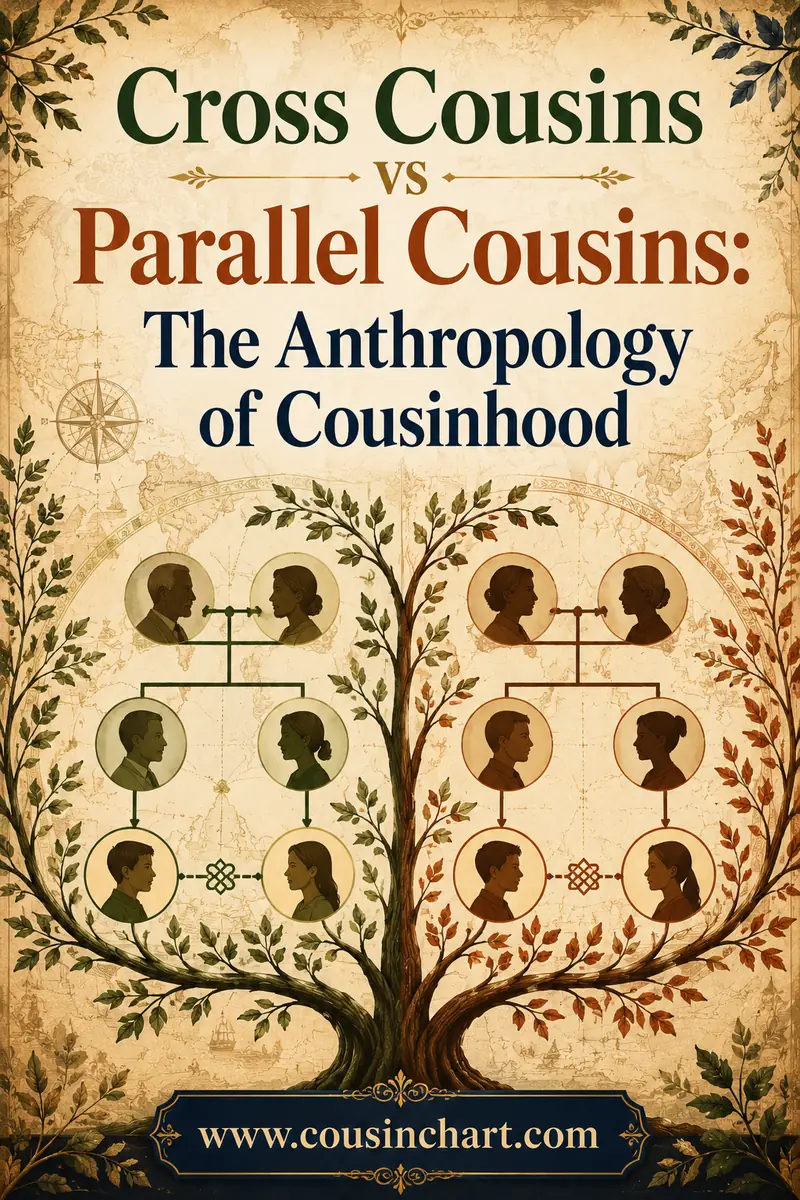
Relationship quick-check. Tap a relative to see whether they’re a cross or parallel cousin:
The answer will appear here.
The One Rule That Sorts Every Cousin
Whether a first cousin is "parallel" or "cross" depends entirely on the two siblings in the parent generation who link you together:
- Parallel cousins — the linking siblings are the same sex (two brothers, or two sisters). Your dad and his brother; your mom and her sister.
- Cross cousins — the linking siblings are opposite sexes (a brother and a sister). Your dad and his sister; your mom and her brother.
The genders of the cousins themselves don't matter at all — only the genders of the two siblings a generation up. A quick mental check: trace up to the two siblings who are your parent and your cousin's parent. Same sex? Parallel. Opposite sex? Cross.
Four Cousins, Two Types
Every person has, in principle, four flavors of aunt/uncle who can produce first cousins. Here's how each maps:
| The link runs through... | Sibling pair | Cousin type |
|---|---|---|
| Father's brother | Two brothers | Parallel |
| Mother's sister | Two sisters | Parallel |
| Father's sister | Brother & sister | Cross |
| Mother's brother | Sister & brother | Cross |
So your father's brother's children and your mother's sister's children are parallel cousins, while your father's sister's children and your mother's brother's children are cross cousins. All four are plain "first cousins" in English — but the anthropological split is right there in the pattern.
Why on Earth Does This Matter?
In the modern West, it doesn't — we lump all four types under "first cousin." But across a huge number of human societies, the cross/parallel distinction has been one of the most important facts about a person's family. Two big reasons:
1. Kinship terms
Many languages give parallel and cross cousins entirely different names. In numerous kinship systems, your parallel cousins are called by the same words as your siblings — because your father's brother is treated as a kind of second father, and his children as brothers and sisters. Cross cousins, meanwhile, get a distinct term marking them as a different category of relative altogether. This isn't rare or exotic; it's one of the most common patterns in the anthropological record.
2. Marriage rules
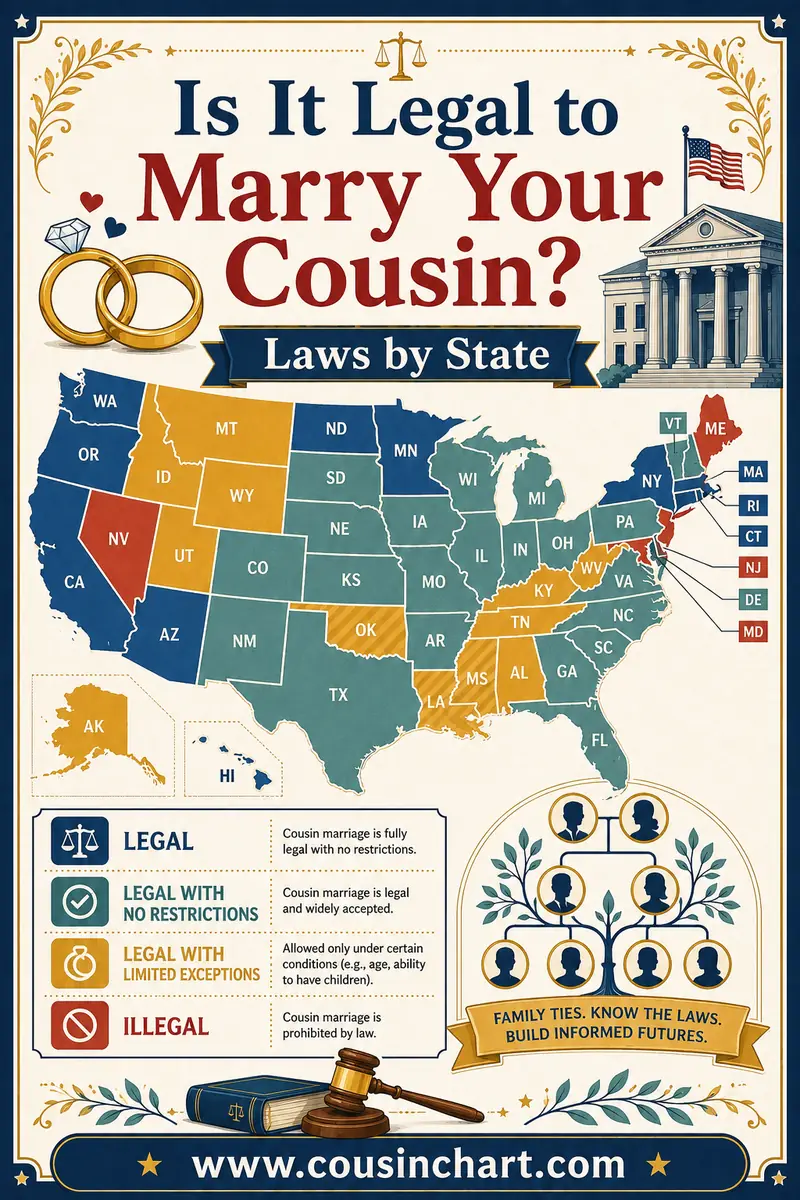
Here's the striking part. In many traditional societies, cross cousins were preferred or even ideal marriage partners, while parallel cousins were forbidden as too close — essentially treated like siblings. The logic follows the kinship terms: if your parallel cousins are "brothers and sisters," marrying them is unthinkable, but cross cousins are a different category and often the expected match. Cross-cousin marriage helped bind two family lines together across generations. (Laws around any cousin marriage vary widely by country and US state today — see our neutral rundown in cousin marriage laws.)
The Genetics Footnote
Here's what often surprises people: cross and parallel cousins are genetically identical in closeness. All first cousins — cross or parallel — share about 12.5% of their DNA on average, because they share the same set of grandparents. The cross/parallel distinction is entirely social and cultural, not biological. Two brothers' kids and a brother-and-sister's kids are equally related by blood.
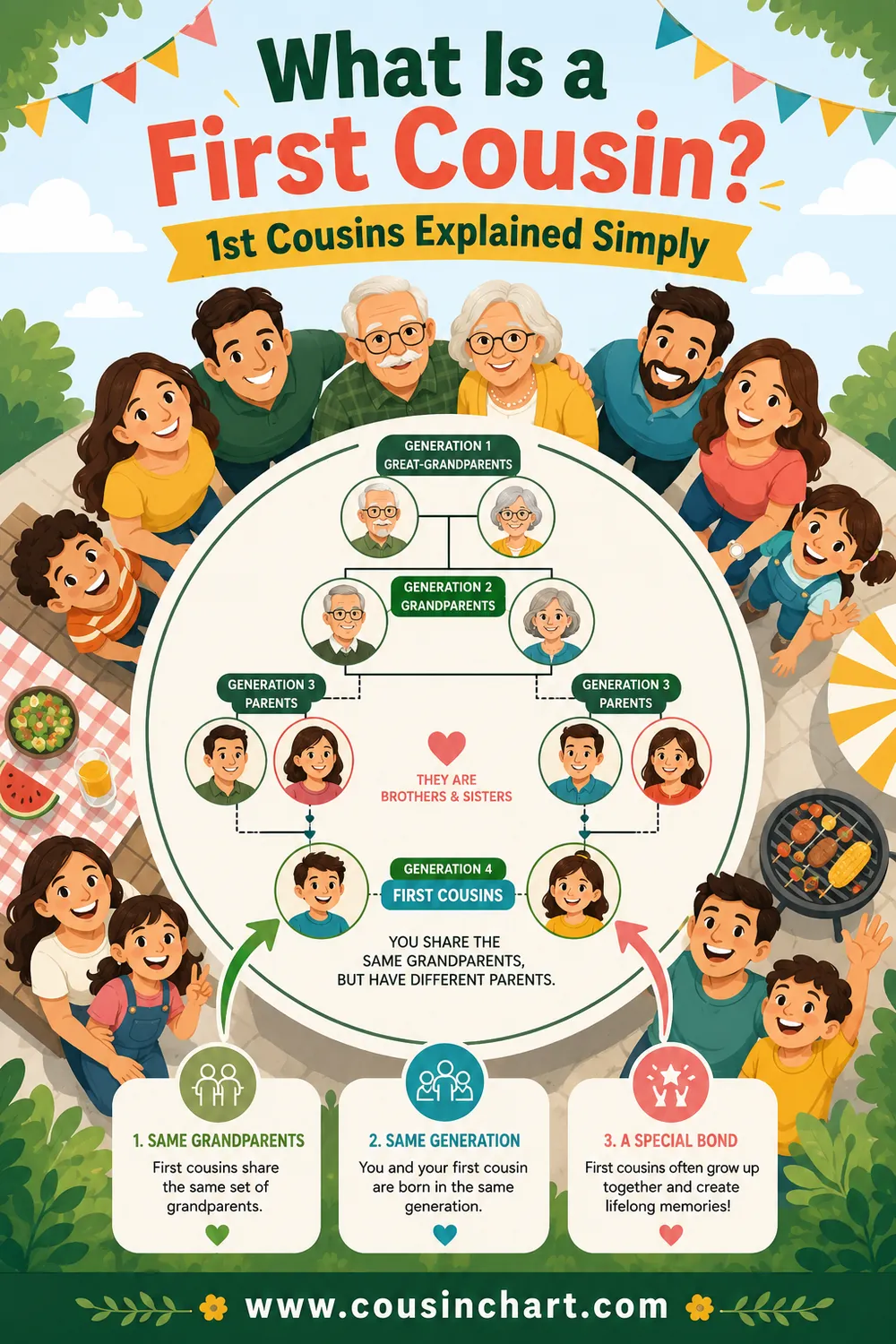
The one wrinkle is a special case called double cousins, where two siblings from one family marry two siblings from another — those cousins can share around 25% of their DNA, closer to half-siblings. But that's a separate phenomenon from the cross/parallel split. If the genetics side fascinates you, what is a first cousin lays out the standard numbers.
Where the Terms Come From
Anthropologists formalized "cross" and "parallel" cousins in the 1800s and 1900s while mapping kinship systems around the world. Scholars like Lewis Henry Morgan noticed that the family words used in many cultures made no sense under Western assumptions — until you split cousins by the cross/parallel line. The vocabulary let researchers describe, in a compact way, systems where "cousin," "sibling," and "spouse" categories overlap in patterns unfamiliar to English speakers.
The terms are still standard in anthropology today. You'll meet them in any discussion of kinship structures, descent systems, and marriage customs across cultures — a reminder that the tidy Western "first cousin" is just one way humans have chosen to slice up the family.
A Simple Way to Remember It
If the words ever blur together, lean on the imagery:
- Parallel = the lines run the same direction. Two brothers, or two sisters — same-sex siblings, like two parallel lines.
- Cross = the lines cross over between the sexes. A brother and a sister — the link crosses the gender divide.
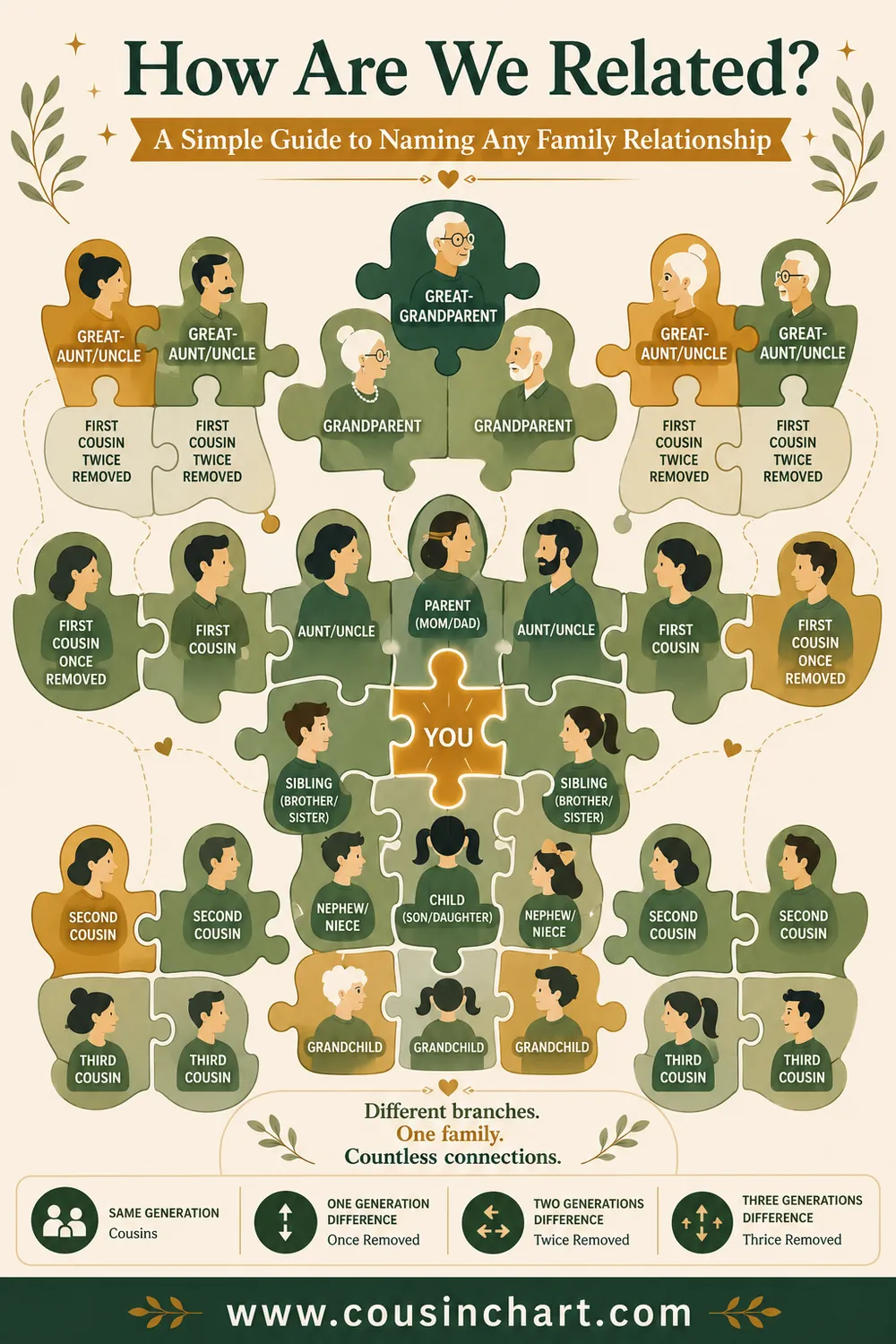
Then just trace up to the sibling pair that connects you and your cousin, check their genders, and you've got it. For any relationship that isn't a plain first cousin, or when you just want the everyday English label, how are we related and the homepage calculator will walk it out for you.
Bifurcate Merging: The System Behind the Terms
The cross/parallel split isn't just trivia — it's the backbone of a whole family of kinship systems anthropologists call bifurcate merging. The name sounds intimidating but describes something simple: these systems merge some relatives under one term while bifurcating (splitting) others apart.
Here's how it plays out. In a bifurcate merging system:
- Your father and your father's brother are called by the same term — both are "father," because they're same-sex siblings on your father's side.
- Your mother and your mother's sister are likewise both "mother."
- But your father's sister and mother's brother get different, distinct terms — they're the "cross" aunt and uncle.
Follow that logic down a generation and the cousin rule falls right out of it: the children of your "other fathers" and "other mothers" (parallel aunts/uncles) are your brothers and sisters, while the children of your cross aunts/uncles are a separate category — cross cousins. The terms aren't arbitrary; they're the natural consequence of how the parent generation is labeled.
Why the West Lost the Distinction
If so many societies track cross versus parallel cousins, why doesn't English? English uses what anthropologists call an Eskimo kinship system (also called a lineal system), which emphasizes the immediate family and lumps all cousins together under one word, regardless of which side or which type. Your mother's sister and your father's sister are both just "aunt"; all their kids are just "cousins."
This flat, everyone-in-one-bucket approach tends to appear in societies where the small nuclear family — parents and children — is the main economic and social unit, rather than large extended kin groups. As Western societies organized more around nuclear households, the fine distinctions between cousin types simply stopped mattering for daily life, and the vocabulary faded. The cross/parallel split still exists in your family; English just gave up naming it.
FAQ
What is the difference between cross cousins and parallel cousins?
Parallel cousins are the children of two same-sex siblings (two brothers or two sisters). Cross cousins are the children of two opposite-sex siblings (a brother and a sister). Only the genders of the linking siblings a generation up matter — not the cousins' own genders.
Are parallel and cross cousins both first cousins?
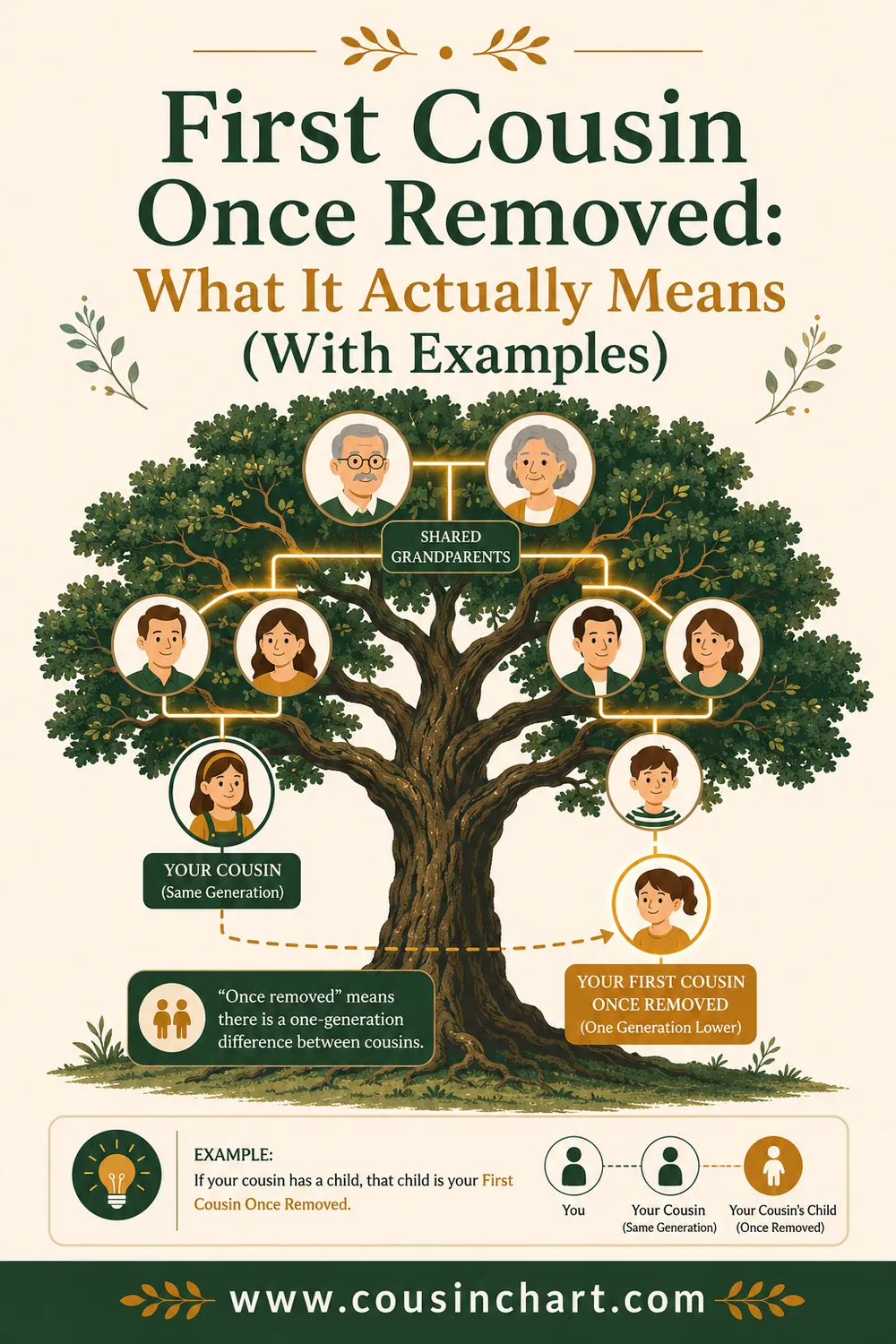
Yes. In standard Western English, all four types — father's brother's kids, mother's sister's kids, father's sister's kids, and mother's brother's kids — are simply first cousins. The cross/parallel split is an anthropological distinction, not a change in the basic cousin relationship.
Do cross cousins share more DNA than parallel cousins?
No. Both cross and parallel first cousins share about 12.5% of their DNA on average, because they share the same grandparents. The distinction is purely social and cultural, with no genetic difference in how closely related they are.
Why were cross cousins allowed to marry but not parallel cousins?
In many traditional kinship systems, parallel cousins were classed alongside siblings — making marriage taboo — while cross cousins were a separate category and often the preferred match. Cross-cousin marriage helped link two family lines. Modern marriage laws don't use this distinction and vary by country and state.
Is my mom's brother's child a cross or parallel cousin?
A cross cousin. Your mother and her brother are opposite-sex siblings, and cousins linked through an opposite-sex sibling pair are "cross." If it were your mother's sister's child, they'd be a parallel cousin instead.
Name Any Cousin in Seconds
The cross/parallel split is one of anthropology's quiet marvels — proof that "first cousin" means very different things depending on where and when you live. In everyday English you'll rarely need the terms, but knowing them makes the whole logic of kinship click. And whenever you need the plain label for a relative near or far, the free family relationship calculator works it out instantly, cross cousins and parallel cousins alike.