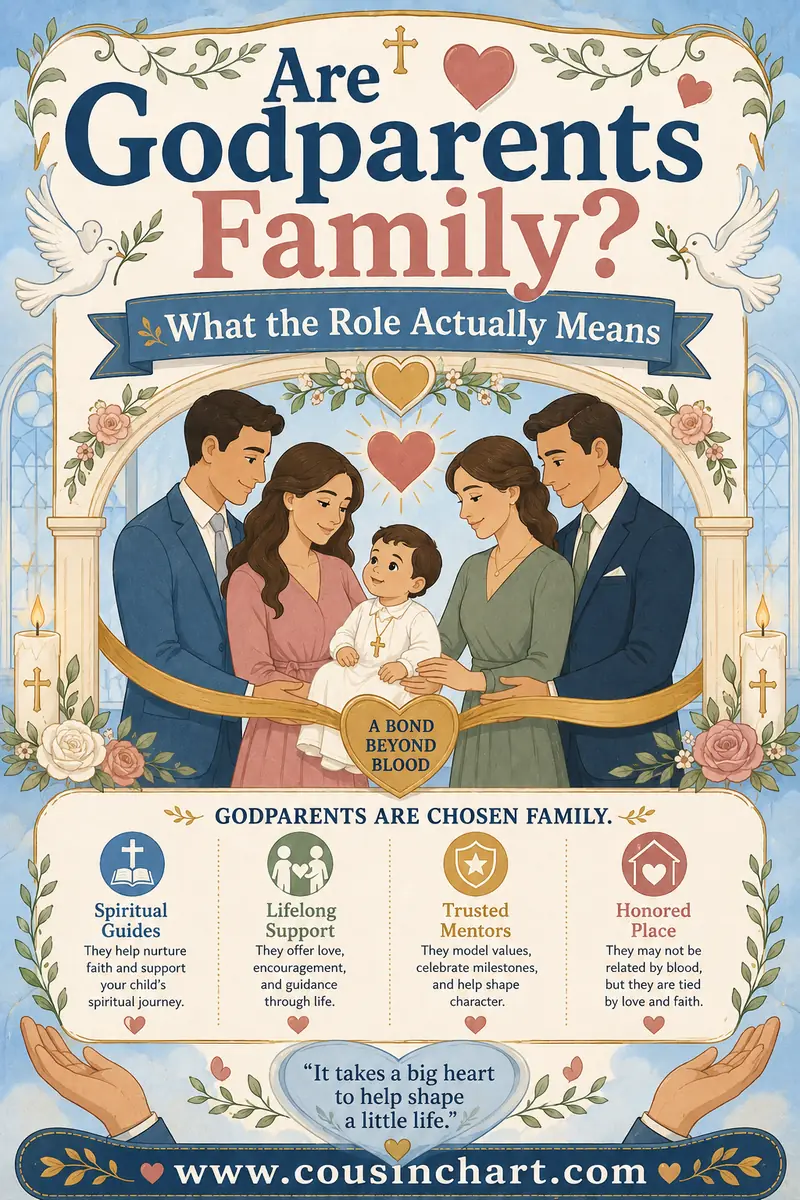
Are Godparents Family? What the Role Actually Means
Godparents are family in every sense except the two people usually mean: they are not blood relatives, and the role creates no legal relationship. A godparent is a spiritual and social appointment — traditionally a sponsor at a child's baptism — not a branch on the family tree. Unless your godmother happens to also be your aunt (very common), she appears nowhere on your genealogy chart, shares no default inheritance rights, and — the big misconception — does not automatically become your guardian if your parents die.
None of which makes the bond less real; it's one of the oldest and most honored "chosen family" roles in Western culture. This guide covers what godparents actually are, the legal facts every parent should know, how different traditions handle the role, and where godparents sit on (or off) the family tree. For mapping the relatives who do chart, the free family relationship calculator on our homepage names any blood or marriage relationship instantly.
Relationship quick-check. Tap a person — family tree, or family of the heart?
The answer will appear here.
What a Godparent Actually Is
The role is ancient — documented in the Christian church by the 2nd century, when sponsors vouched for adult converts, and evolving by the early medieval period into the familiar form: adults who present an infant for baptism and take responsibility for the child's religious upbringing.
Formally, in the traditions that define the role:
- Catholic: at least one godparent (sponsor) is required for baptism; canon law requires that person be a confirmed, practicing Catholic aged 16+, and not the child's parent. A baptized non-Catholic Christian may stand alongside as a "Christian witness." The godparent's stated job is helping the baptized child live a Christian life.
- Orthodox: the godparent (often called koumbaros/koumbara in Greek tradition) holds an especially weighty place, historically creating a spiritual kinship so seriously regarded that the church restricted marriages between godfamilies.
- Anglican/Lutheran and other Protestant traditions: godparents or sponsors make baptismal promises; requirements are looser and vary by denomination. Some traditions use "sponsor" exclusively.
- Secular versions: many families now appoint "guideparents," "odd-parents," or simply honorary godparents with no religious ceremony at all — mentors by family declaration.
Notice what's absent from every version: any change to the family tree. The church created a spiritual kinship — medieval canon law literally called it cognatio spiritualis — precisely because it wasn't a natural one.
The Legal Reality (Read This Part, Parents)
Three facts that surprise a lot of people:
- Godparent status carries zero legal weight in the United States (and in most countries). It confers no custody rights, no inheritance rights, no decision-making authority, nothing a court recognizes.
- Godparents do not automatically get guardianship if the parents die. Guardianship is decided by the parents' will (and confirmed by a court) or, absent a will, by a judge applying state law — which prioritizes relatives. An unrelated godparent with no will naming them may not even be a candidate the court considers first.
- If you want your child's godparent to be their guardian, you must name them as guardian in your will. The two roles are separate appointments; many families deliberately choose the same person for both, but the paperwork is what makes it real.
Here's the whole picture at a glance — what a godparent title does and doesn't get you:
| Right or role | Does a godparent have it automatically? | What actually grants it |
|---|---|---|
| Custody / guardianship if parents die | No | Being named guardian in the parents' will (court-confirmed) |
| Inheritance from the godchild's family | No | Being named in a will |
| Medical or legal decision-making | No | Legal documents (power of attorney, guardianship) |
| Say in the child's upbringing | Only what the parents choose to give | A private family understanding, not law |
| Spiritual / mentor role | Yes — this is the real job | The christening or naming ceremony itself |
| Recognition as legal "family" | No | Blood, marriage, or adoption |
The takeaway: a godparent is family in the ways that matter to a child's heart, but legally invisible unless the parents put their intentions in writing.
The reverse is also worth saying: courts can and do place children with capable unrelated adults when it serves the child, and when relatives or close family friends step up to raise a child, that arrangement has its own name and support system — covered in our kinship care guide. But that's a court-and-caregiving pathway, not something the baptism certificate accomplished.
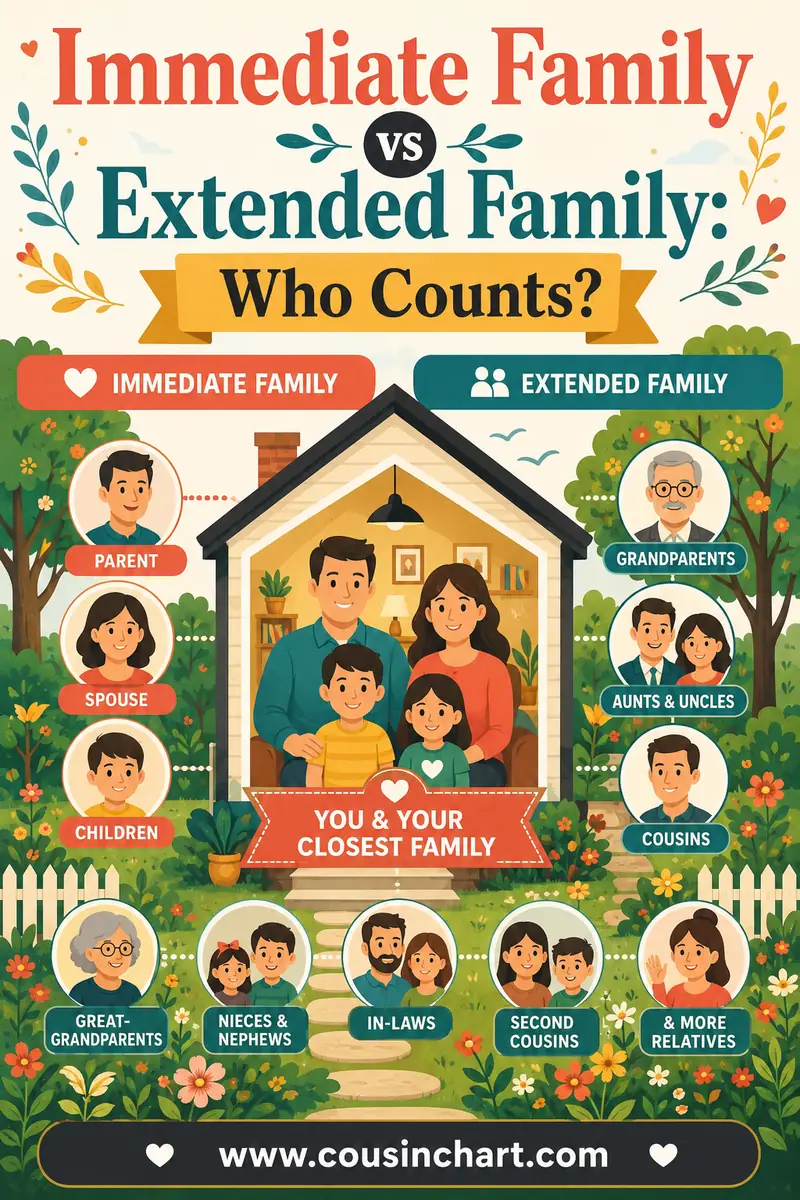
Similarly for money: a godchild inherits from a godparent only if the will says so. No will, no default share — the intestacy ladder runs through spouses and blood relatives (the "who counts" rules are laid out in our immediate vs extended family explainer).
Godparents Around the World: Sometimes It Really Is Family
The "just symbolic" framing undersells how much weight some cultures give the role:
- Compadrazgo (Latin America, Spain, the Philippines). Choosing godparents (padrinos) creates a formal bond between the adults: the parents and godparents become compadres and comadres — co-parents — expected to support each other for life. The network extends through weddings and quinceañeras, each adding sponsors. Functionally, compadrazgo builds real extended family out of chosen people.
- Greek Orthodox koumbaroi. The wedding sponsor and baptismal godparent roles interlock across generations — traditionally your koumbaros baptizes your children, and the families are permanently linked.
- Italian comparaggio, the historical root of "godfather" culture, with similar co-parent bonds.
- Historical Europe: godparents commonly doubled as the safety net — the expected caretakers if parents died, in eras before formal guardianship law. The modern guardianship confusion is partly a memory of when it was true.
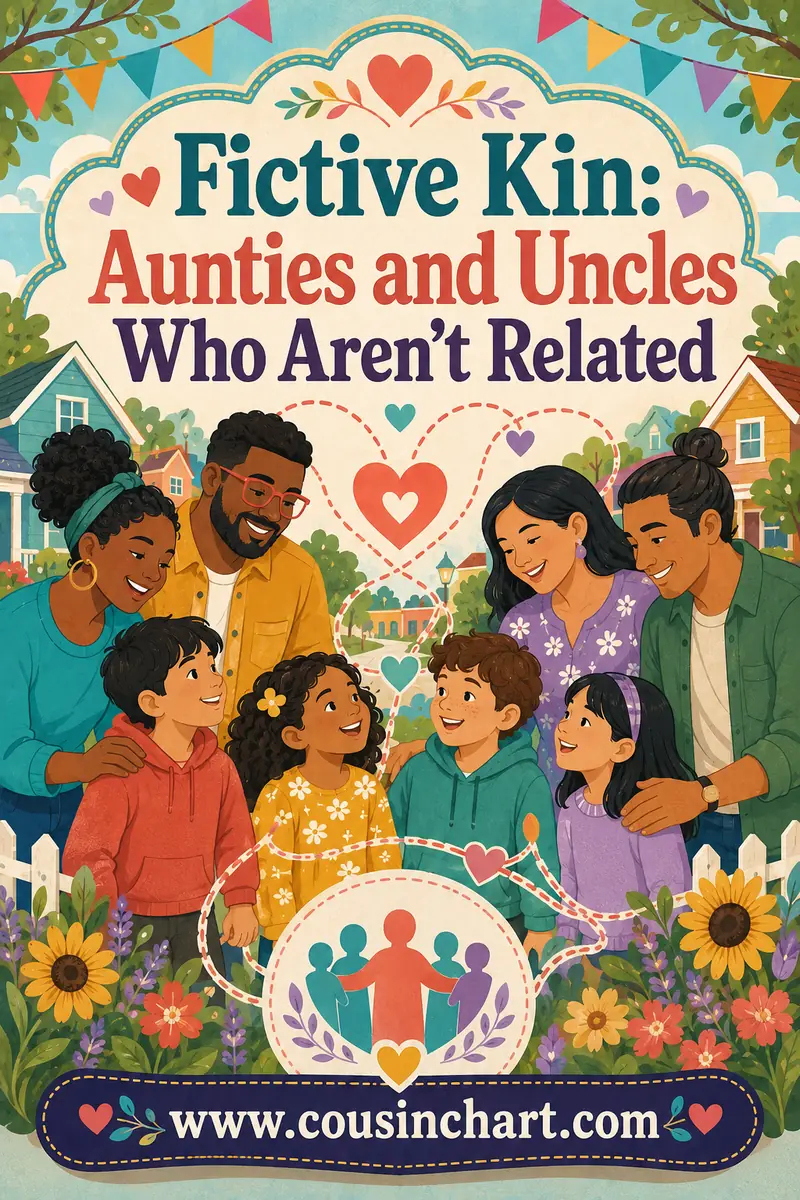
Anthropologists group all of this under fictive kin — kinship created by social agreement rather than blood or marriage. It's one of the most universal human institutions, and our fictive kin guide tours the whole landscape, from play cousins to honorary aunties.
So Where Do Godparents Go on the Family Tree?
Genealogically, godparents occupy a curious position: not on the tree, but all over the records.
- On the chart itself: no line connects a godparent to a godchild. Standard genealogy software has no godparent relationship type on the pedigree — though most programs let you record them as an event detail or associated person on the baptism.
- In the records: godparents are genealogy gold. Church baptismal registers name them, and because families overwhelmingly chose relatives — grandparents, aunts, uncles, cousins — a godparent's name in a 1780 parish register is often the clue that identifies the mother's maiden family or proves a sibling relationship. Experienced researchers read sponsor names as a map of the family's inner circle.
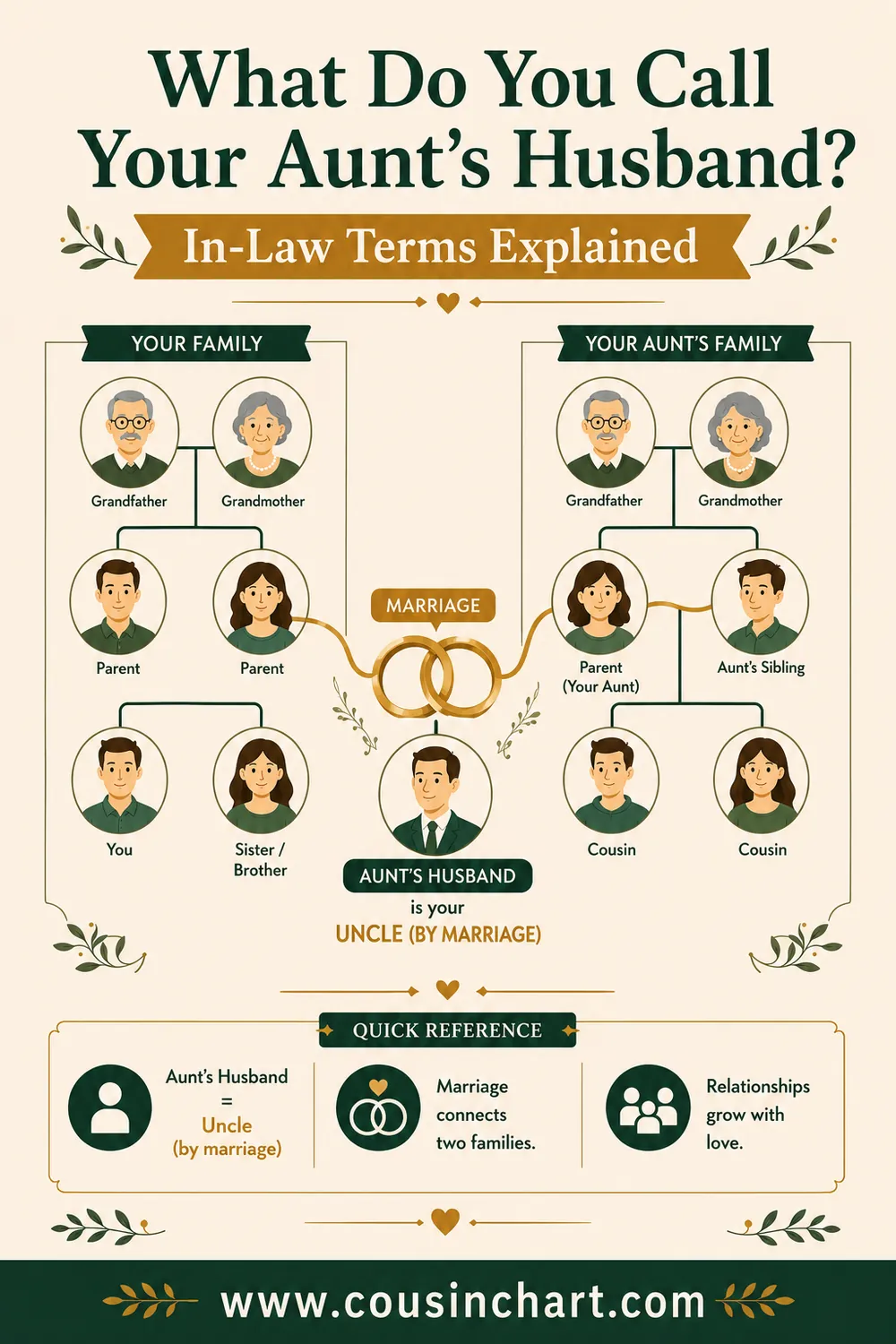
Which points at the practical truth: most godparents are also relatives. Surveys and parish records alike show aunts and uncles as the most common choice. In those cases the person absolutely belongs on your chart — as your aunt, your uncle, your cousin — with "godmother" as a title layered on top. If you're unsure what the underlying relationship is ("my godmother is my dad's cousin — so what's she to me?"), the relationship calculator sorts it instantly. (Dad's cousin = your first cousin once removed.)
Choosing Godparents: What the Role Can Realistically Be
For parents weighing the decision, the honest job description:
- A spiritual/values mentor, if you're baptizing within a tradition — that's the formal core.
- A guaranteed extra adult in your child's corner: the birthday-rememberer, the safe confidant at 15, the reference at 22.
- Not automatically the guardian — name your guardian in a will, whether or not it's the same person.
- Not a financial obligation — gifts and school fees are folklore in some families, but nothing about the role requires it.
- Revocable in practice, awkward in fact — no formal mechanism "removes" a godparent; the relationship simply is what the people make of it.
Choose someone likely to still be showing up in twenty years. The genealogy chart won't record them — but the child will.
FAQ
Are godparents considered family?
Socially, often deeply so; legally and genealogically, no. Godparenthood is a spiritual and honorary role that creates no blood or legal relationship. Many godparents are also family because parents frequently pick aunts, uncles, or cousins for the role.
Do godparents get custody if the parents die?
Not automatically — this is the most common misconception about the role. Guardianship is determined by the parents' will and the courts, which prioritize legal relatives absent a will. Parents who want a godparent to be guardian must name them as guardian in a will.
Are godparents legally responsible for their godchild?
No. Godparent status carries no legal rights or duties in the U.S. — no custody, no financial obligation, no inheritance in either direction unless a will creates it.
What is a godparent's actual role?
Traditionally, sponsoring a child at baptism and supporting their religious upbringing — in Catholic practice, a confirmed Catholic aged 16 or older. Socially, the role has broadened into lifelong mentor and honorary family member, and some families appoint secular "guideparents" with no ceremony at all.
What are compadres?
In Latin American, Spanish, and Filipino tradition, the parents and godparents of a child become compadres/comadres — "co-parents" — a formal, mutual bond between the adults that functions as real extended family. It's among the strongest versions of godparenthood anywhere.
Do godparents appear on a family tree?
Not on the pedigree chart itself — no genealogical line connects them. But historical baptism records naming godparents are prized by genealogists, because sponsors were usually drawn from the family's relatives and can prove connections the tree was missing.
Family Is Two Lists — Godparents Made the Second One First
Every family runs on two rosters: the chartable one (blood, marriage, adoption — the tree) and the chosen one (godparents, honorary aunties, lifelong friends). Godparents are the oldest institutional entry on the chosen list — a thousand-year-old formal way of saying this person is ours now.
Keep both lists, and know which is which: guardianship and inheritance follow the paperwork, not the christening photos. And for everyone on the chartable list — including that godmother who's also somehow your grandpa's cousin's daughter — the free family relationship calculator will tell you exactly what they are to you, one click and zero theology required.