How to Prove Native American Ancestry (It's Not a DNA Test)
Proof, in this context, has a specific and unglamorous meaning: an unbroken chain of dated documents linking you to a named ancestor who appears on a recognized tribal roll. Not a percentage. Not a family story. Not a certificate bought from an organization with a website. Every federally recognized nation determines its own citizenship from documented lineal descent, and every one of them will ask you for birth, marriage and death records rather than a laboratory report. The good news is that most of the records you need are indexed and free, and the research method is the same one used for any other ancestor — which is where the cousin calculator earns its keep as you map who connects to whom.
Where are you stuck? Tap the closest match.
Tap an option above. The rule throughout: name the ancestor, then document every link.
What counts as proof, and what doesn't?
The bar is documentary, and it is applied strictly.
Proof is a chain, not a single item. You need a record for every link: you to your parent, that parent to their parent, and so on back to the person on the roll. One missing marriage certificate breaks the chain regardless of how strong the rest is.
A DNA percentage is not proof of anything here. Consumer tests report broad Indigenous American ancestry at best, cannot identify a nation, and are not accepted by any enrolment office. The full explanation of why sits in the guide to Native American DNA testing.
A family story is a lead, not evidence. Treat it as a hypothesis to test. Write down exactly what was said and by whom, then go looking for the records that would confirm or refute it.
A certificate from a self-described group proves nothing. Organizations selling "tribal membership cards" or heritage certificates have no legal standing and no relationship to federal recognition. Money changing hands is a reliable warning sign.
Federal recognition and state recognition are different things. Some communities are recognized by a state but not federally, and neither status is conferred by genetics or purchased.
What order should you research in?
Backwards, from yourself, one generation at a time. There is no shortcut that survives contact with an enrolment clerk.
Start with what you can hold. Your own birth certificate, your parents' certificates, their marriage record. This sounds too basic to mention, and it is where most applications actually stall.
Interview the oldest people in the family now. Names, nicknames, towns, church affiliations, whether anyone ever mentioned a roll number or an allotment. Record it. People die and the details go with them.
Then move to the vital records offices. Each US state holds its own births, marriages and deaths, with different opening dates and different access rules; the guide to what vital records are explains how to request them.
Never skip a generation to chase the exciting one. Jumping straight to the 1900 census for a great-great-grandmother, without documenting the three generations in between, produces a tree that nobody will accept.
Which records carry the most weight?
| Record type | What it establishes | Where to find it | Typical cost |
|---|---|---|---|
| Birth, marriage, death certificates | The direct parent-child links in your chain | State vital records offices | Small fee per copy |
| Federal census, 1850–1950 | Household composition, race column, residence | National Archives, FamilySearch, Ancestry | Free to search |
| Indian Census Rolls, 1885–1940 | Annual agency lists of people under BIA jurisdiction | National Archives microfilm, indexed online | Free |
| Dawes Rolls, 1898–1907 | Base roll for citizenship in the Five Tribes | National Archives, FamilySearch | Free |
| Guion Miller applications, 1906–1909 | Claimed Eastern Cherokee descent, in the applicant's own words | National Archives, FamilySearch | Free |
| Baker Roll, 1924 | Base roll for the Eastern Band of Cherokee Indians | National Archives | Free |
| Allotment and land records | Which parcel was assigned to which enrolled person | Bureau of Land Management, National Archives | Free to search |
| Church and mission registers | Baptisms and marriages where civil records are missing | Denominational archives, FamilySearch | Varies |
The census is the workhorse. It is free, it covers every decade you need, and it places a household in a county on a specific day.
The application files beat the roll entries. A one-line roll entry gives a name and a number. An application file gives parents, grandparents, birthplaces and a sworn statement — even when the application was rejected.
Land records are underused. Allotment paperwork ties a named individual to a parcel and a date, and it survives well.
How do you use the census to reach the rolls?
This is the practical bridge between "my grandmother said" and "here is the roll number".
Work decade by decade without gaps. Find your known relative in 1950, then 1940, then 1930, and keep going. Confirm each jump by matching the whole household, not just one name; the mechanics are covered in the walkthrough on searching census records.
Read the race column, but don't over-read it. Enumerators recorded what they assumed or were told, and the same family can be recorded differently in different decades. A change from one census to the next is information, not a contradiction.
Look for the special schedules. Several censuses included separate Indian population schedules with extra columns — tribe, agency, whether the person lived in a fixed dwelling. These sit apart from the general population schedules and are easy to miss.
Watch the geography. Indian Territory, the Qualla Boundary in North Carolina, agency jurisdictions in the Plains and Southwest — reaching one of these places in the records is usually the moment the tribal rolls become searchable by a name you can trust.
What are the major rolls, and which nation uses which?
Different nations use different base rolls, and a name on the wrong roll does not help you.
The Dawes Rolls enrolled members of the Cherokee, Choctaw, Chickasaw, Creek and Seminole nations in Indian Territory between 1898 and 1907. Cherokee Nation citizenship today requires documented descent from a person listed there, with the detail set out in the Cherokee DNA and enrolment guide.
The Guion Miller Roll came from an Eastern Cherokee settlement claim and drew tens of thousands of applications between 1906 and 1909, most of which were rejected. It is not a citizenship roll — but as a genealogical source it is outstanding.
The Baker Roll of 1924 is the base roll for the Eastern Band of Cherokee Indians.
The annual Indian Census Rolls, 1885–1940, were compiled by BIA agents across many agencies and often show a family year after year, which makes them excellent for confirming a household over time.
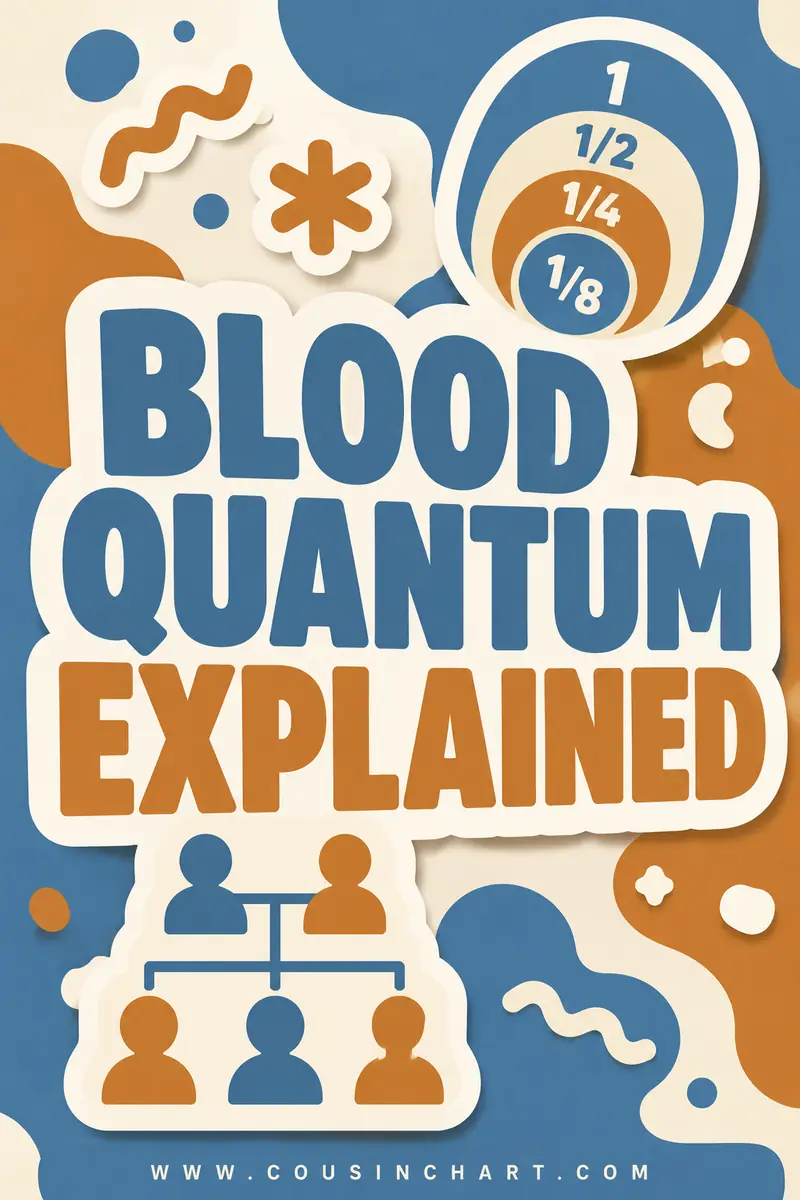
Every other nation has its own. There are more than 500 federally recognized tribes, each with its own base roll and its own criteria, including whether a minimum degree applies at all — a question covered in the guide to how blood quantum is calculated.
What if the trail stops before you reach a roll?
It often does, and there is a difference between a wall and a dead end.
Check whether you have actually exhausted the records. Most walls come from searching one surname spelling in one database. Vary spellings, search by first name and county, search the neighbors, and search the siblings of your direct ancestor. The brick wall guide covers the standard escapes.
Accept the honest outcomes. Sometimes the ancestor was Indigenous but from a community that was never federally enrolled. Sometimes the story attached to the wrong branch. Sometimes there was no Indigenous ancestor and the story explained something else entirely. All three are real findings.
Removal, boarding schools and records loss are genuine obstacles. Names were changed, families were separated, and some agency records simply do not survive. A gap can reflect that history rather than a mistake in your research.
Do not fill the gap with a claim. Describing yourself as a citizen of a nation you cannot document takes something from the people who can, in scholarships, arts markets and legal protections created specifically for them.
Where does DNA genuinely help?
In exactly one place: finding living people.
Matching is the measured part of a test. Shared centimorgans between you and another tester are counted, not estimated. That figure supports a range of possible relationships, which is what the DNA match calculator is built to interpret.
Cousins hold records you will never find in an archive. The photograph with a name on the back, the old CDIB, the family Bible page, the allotment paperwork in someone's attic. Testing surfaces the people; the people surface the documents.
A negative result disproves nothing. Autosomal DNA from a single ancestor halves each generation and is randomly inherited, so beyond about five or six generations you may carry nothing measurable from that person. Two siblings can differ.
Test the oldest generation first. An living aunt or great-uncle carries more of the relevant DNA than you do, and their match list will be richer. This is the single highest-value testing decision in any search.
What does proof actually get you?
Less than people expect, and also something worth having.
Documented descent is not automatic citizenship. Meeting the descent requirement lets you apply. Each nation decides, under its own law, and some have closed enrolment periods or additional criteria.
A CDIB is a separate federal document. The Bureau of Indian Affairs issues a Certificate of Degree of Indian Blood based on documented descent from an approved base roll. It is not membership in any nation.
Nothing here is decided by a company. Enrolment offices, not laboratories or genealogy websites, are the authority. Contact the specific nation directly and ask what they require, because tribal law can be amended.
And the research stands on its own. Even if no application follows, you will have replaced a rumor with named ancestors, dated records and a tree you can defend — which is what most people actually wanted from the search.
FAQ
Can a DNA test prove Native American ancestry?
No. Consumer DNA tests report broad Indigenous American ancestry at best, cannot identify a specific tribe, and are not accepted as evidence by any tribal enrolment office or the Bureau of Indian Affairs. Proof means documented lineal descent from a named ancestor on a recognized tribal roll.
What documents do I need to prove Native American ancestry?
Birth, marriage and death certificates linking every generation from you back to an ancestor listed on the relevant base roll, plus that roll entry itself. Census records, Indian Census Rolls, allotment files and church registers support the chain where civil records are missing or unreadable.
What is the Dawes Roll and who is on it?
The Dawes Rolls list people enrolled as citizens or Freedmen of the Cherokee, Choctaw, Chickasaw, Creek and Seminole nations in Indian Territory between 1898 and 1907. They are the base roll for Cherokee Nation citizenship today and are free to search through the National Archives and FamilySearch.
Is a Certificate of Degree of Indian Blood the same as tribal membership?
No. A CDIB is a federal document issued by the Bureau of Indian Affairs recording documented degree of descent. Tribal citizenship is granted only by the tribe under its own law. Some nations require a CDIB within an application, but holding one confers no membership.
My ancestor's Guion Miller application was rejected. Is it useless?
Not at all. Rejected applications are among the richest genealogical sources available, because each file names parents, grandparents, birthplaces and residences in the applicant's own words. The rejection reflects the settlement's eligibility rules, not the accuracy of the family detail recorded.
Can I buy tribal membership or a heritage certificate?
No. Federally recognized nations do not sell citizenship, and certificates offered for a fee by self-described groups carry no legal standing. Money changing hands is the clearest warning sign that an organization is not a recognized tribal government.
Name the ancestor, then document the links
The whole task reduces to two steps repeated patiently. Identify the specific person on the roll — by name, roll number and date — then prove, with dated civil records, each generation between that person and you. Everything else is method: the census bridges you to the rolls, application files fill in what the roll entries leave out, and land and church records cover the gaps. A DNA kit sits outside the proof entirely, though it is genuinely good at finding living cousins who hold documents no archive has. When one of them appears in your match list, the cousin calculator will show you exactly where they belong in the tree.