Orphanage and Orphan Train Records
Between 1854 and 1929, roughly 200,000 children were put on trains in eastern US cities and placed with families in the Midwest, South and West. The single most important thing to know about them is that most were not orphans. A large share had at least one living parent — widowed, ill, destitute, newly arrived and unable to cope — and the child was surrendered in a crisis rather than left by a death. If you have been searching for a dead mother who never died, that is why. Records survive, but they sit with the placing agencies rather than in any public archive, and each has its own rules. When a placement finally connects you to a birth family, the cousin calculator will sort out what the new relatives are to you.
What do you actually have to go on? Tap the closest match.
Tap an option above. Most riders had a living parent, so the birth family is usually findable.
What the orphan trains actually were
The scheme has a founder, a date and a clear logic, and knowing it tells you where to look.
Charles Loring Brace founded the Children's Aid Society in New York in 1853. He believed children living rough in the city would do better in farming families, and the first placing-out train ran west in 1854. The idea spread to other cities and other charities and ran until about 1929.
"Placing out" meant exactly that. Children traveled in groups with an agent, stopped at advertised towns, and were looked over by local families at a hall or a station platform. A local committee of respectable men was supposed to vet the applicants.
Placements were indentures, not adoptions. In most cases the receiving family agreed to house, feed, clothe and school the child until 18 or 21, sometimes with a payment or a set of clothes at the end. Legal adoption, where it happened, came later and separately.
Agents were meant to follow up. The better agencies recorded visits and letters for years afterwards, which is why some case files run to dozens of pages while others hold a single line.
Outcomes varied enormously and honesty matters here. Many riders were raised with real affection and stayed in touch with their placing families for life. Others were treated as unpaid farm labor, moved between homes, or ran. Both are in the records, and you should be ready for either.
Most riders were not orphans
This is the fact that unlocks the search, so it is worth stating plainly.
Half-orphans were the largest group. One parent had died, usually the father, and a widow with several children and no income could not keep them all. Surrendering one or two was a survival decision.
Some children were surrendered temporarily. Parents intended to reclaim them once they recovered from illness, found work or remarried. Agencies did not always make that possible, and a great many never did come back.
Some were found by the police or the courts. A child living rough or begging could be committed to an institution by a magistrate, and the parents were sometimes never traced.
Immigrant families were heavily represented. An epidemic, an industrial accident or a death in a tenement could dismantle a household within a week.
So the birth family usually exists in the records. There is normally a surrender document, a mother's name, an address, and often a stated reason. That is a far better starting position than most people assume when they hear the word orphan.
Signs your ancestor rode an orphan train
If nobody in the family ever said so, the clues sit in the census.
A child with an eastern birthplace in a Midwestern household. New York, Massachusetts or Pennsylvania as birthplace, in an Iowa, Kansas, Missouri, Nebraska or Indiana family with no eastern connection.
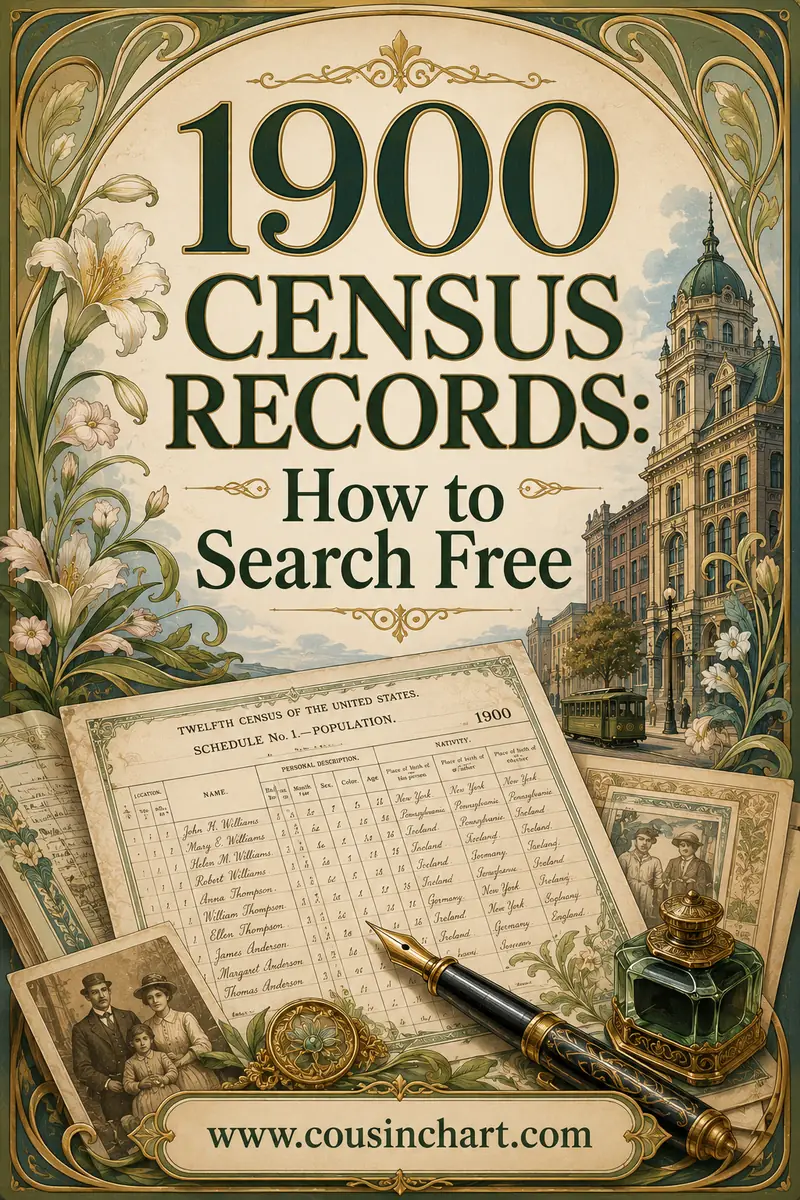
A relationship that is not "son" or "daughter". Ward, boarder, servant, adopted son, or simply "boy". Check the relationship column carefully in the 1900 census and the ones either side, because it changes between years as the placement settled.
A surname that changes. Some children kept their birth surname, some took the family's, and some appear under one in 1900 and the other in 1910.
A gap in the earlier record. No birth registration, no earlier census with the family, and a stated age that shifts by two or three years between records.
A family story with a train in it. "He came out on a train from New York" survives in a surprising number of families as a half-remembered detail rather than a full account. Take it seriously — it is usually true.
A newspaper notice in the local paper. Committees advertised arrivals in advance and papers reported them afterwards, sometimes naming the receiving families. Search the town's paper for the year in free old newspaper archives.
Who holds the records
| Holder | Covers | What survives | Access |
|---|---|---|---|
| Children's Aid Society (New York) | The largest share of riders, 1854–1929 | Case files, indenture agreements, agent follow-up letters | Written request to its records office; proof the rider has died is normally required |
| New York Foundling Hospital | Infants and young children, largely Catholic, from 1869 | Surrender papers, placement records with pre-arranged families | Direct request to the hospital's records department |
| New-York Historical Society | Children's Aid Society historical material | Administrative records, registers, annual reports | Public research access on site |
| National Orphan Train Complex, Concordia, Kansas | Riders from all agencies | Rider files compiled from family submissions, research help, a searchable rider index | Open to researchers; contributions from descendants welcomed |
| Other city charities | Boston, Philadelphia, Chicago and elsewhere | Registers held by successor agencies or state archives | Varies; start with the successor organization |
| County courts in receiving areas | Local formalisation of placements | Indentures, guardianships, later adoptions | Public records at the county courthouse |
The agencies are the primary source, and they still exist. Both the Children's Aid Society and the New York Foundling Hospital have handled descendant inquiries for decades and have staff who know these files.
The National Orphan Train Complex is the best first stop for orientation. It is a museum and research center built specifically around the riders, and its compiled files often tell you which agency to write to.
Expect to wait. These are small teams handling manual searches of paper files. Weeks to months is normal, and a polite, specific letter with dates and places gets a better result than a broad one.
Orphanage records more generally
Most children who went into institutions never rode a train anywhere, and their records are more accessible.
The admission application is the richest document. It usually names the parents, gives the child's birth date and birthplace, states the reason for admission, and records who signed the child in.
The stated reason is often more informative than the child's file. "Father died of typhoid, mother unable to support four children" is a research plan in one sentence.
Discharge entries say where the child went. Back to a parent, to a relative, to service, to an apprenticeship, or to another institution. Follow that thread rather than stopping at the admission.
Institutions were usually denominational. Catholic orphanages are documented in diocesan archives, Jewish orphan asylums in Jewish historical archives, Protestant homes with the successor charity or the denomination's own archive — the same trail our page on church records follows.
Soldiers' orphans' homes are a distinct set. After the Civil War several states funded schools and homes for the children of dead soldiers, and the records are held by state archives. They frequently name the father's regiment, which links straight into military pension files.
County children's homes overlap with the poorhouse. In many counties destitute children were handled through the same system, so if there is no orphanage record, look at the poorhouse and almshouse registers for the same years.
Access, privacy and how to ask
These are private records, not public ones. No agency is obliged to release a file, and their duty of confidentiality is to the child who was placed.
Most will search for a documented direct descendant. The usual condition is evidence that the rider has died — a death certificate, an obituary or a memorial listing.
Say exactly what you know in the request. Full name and any variants, date of birth or approximate year, the year of placement if known, the receiving town and family, and your relationship to the rider. Vague inquiries get vague answers.
Ask for a copy of the file, not for an answer to a question. Agencies will often send what survives rather than interpret it, and the file usually contains more than you thought to ask about.
Understand that this is not the same as modern adoptee search. Orphan train placements were pre-adoption-law indentures and the paperwork is entirely different from a sealed twentieth-century adoption; for that route see our guide to adoptee genealogy.
When the file is closed or lost
Not every agency's records survived, and some closures are absolute. There is still a route.
Work the receiving end. County courts in the receiving area recorded indentures, guardianships and later adoptions, which name both the child and the agency. Our page on court records beyond probate explains how those series are filed.
Read the local newspapers around the arrival date. Advance notices, arrival reports and later human-interest pieces about grown riders are common and free to search.
Use DNA as the confirming tool. For riders whose birth family is undocumented, autosomal matches are frequently what finally identifies the family — the paper trail then explains the match rather than producing it.
Check the receiving family's own papers. Letters from the agency, an indenture certificate, or a small Bible given at placement often stayed in the family that received the child.
And record the negative results. Which agency you wrote to, when, and what they said. Agencies re-catalog their holdings and an answer of "nothing found" in 2005 is not necessarily the answer today.
FAQ
How many children rode the orphan trains?
Around 200,000 children were placed out from eastern US cities between 1854 and 1929, with estimates ranging up to roughly 250,000 depending on which agencies and programs are counted. The Children's Aid Society of New York placed the largest single share.
Were orphan train riders really orphans?
Most were not. A large proportion had at least one living parent, usually a widowed or destitute mother, and were surrendered during a family crisis rather than left by a death. Some parents expected to reclaim their children later and were unable to.
Who holds orphan train records today?
Principally the placing agencies: the Children's Aid Society in New York and the New York Foundling Hospital, with historical material at the New-York Historical Society. The National Orphan Train Complex in Concordia, Kansas, holds compiled rider files and helps researchers identify the right agency.
Can I get a copy of a rider's case file?
Usually yes, if you are a documented descendant and can show the rider has died. Agencies handle these requests manually, so send full names, approximate dates, the receiving town and your relationship, then expect a wait of weeks or months.
How can I tell if an ancestor was an orphan train rider?
Look for a child in a Midwestern or Western household with an eastern birthplace, listed as ward, boarder or adopted son rather than son or daughter, with no earlier census appearance and no birth record. A family story mentioning a train is usually reliable.
Are orphanage records public?
Institutional records more than a century old are often accessible through denominational archives, state archives or county archives, though twentieth-century files may be closed for privacy. Records of state-funded soldiers' orphans' homes are generally held by state archives and are the most openly available.
Picking the thread back up
The orphan trains look like a dead end and usually are not. Start from what the census tells you, get the receiving town and year fixed, then write to the agency that covered that route with dates rather than questions. In parallel, read the local paper and the county court indentures, because the receiving end of the placement was documented publicly even when the agency's file is closed. And carry the central fact with you while you search: the child on that train almost certainly had a mother alive somewhere, with a name written down in a surrender document. When the birth family finally has names attached, put them into the cousin calculator and see exactly how the two families now connect.