Genealogy New Year's Resolutions: 12 Family History Goals You'll Actually Keep
The best genealogy New Year's resolutions are small and specific: label 10 old photos a month, interview one older relative before spring, cite a source for every fact you add, and clean up one branch of your family tree at a time. "Finish my family tree" never works, because a family tree is never finished. "Scan Grandma's recipe box by March" actually gets done.
Not sure where to start? Tap a goal below to see one easy first step and the guide or tool that helps.
▶ Name any relative in the free calculator
Why most family history goals fizzle out
If you're like most family historians, January starts strong and February gets busy. That's not a willpower problem. It's usually a goal-size problem. Big goals like "find my immigrant ancestor" depend on records you may not find for months. Small goals depend only on you.
A good genealogy goal has three parts:
- One action. Scan, label, ask, cite, search.
- A number. 10 photos, 1 interview, 5 sources.
- A deadline. By the end of the month, or by a family birthday.
So instead of "organize my research," try "set up one folder for each of my four grandparents' lines by January 31." It's specific, it's finished in an afternoon, and it makes every goal after it easier.
12 genealogy resolutions for the new year
Pick two or three, not all twelve. You can always add more once the first ones stick.
1. Label your old family photos
Photos without names lose their meaning fast, sometimes in a single generation. Pick 10 photos a month and write who, where and about when on the back with a soft photo-safe pencil, or in the file name if they're scanned. Our guides to organizing old family photos and dating old family photos help with the ones nobody remembers.
2. Interview an older relative
This is the one resolution you can't put off forever. Schedule a 30-minute call or visit with a grandparent, great-aunt or older cousin, and record it with their permission. Start with easy questions like "What was your first house like?" Our step-by-step on how to record an oral history covers the setup, and questions to ask grandparents gives you plenty to ask.
3. Get your relationship terms right
Is that your second cousin or your first cousin once removed? It matters when you share your tree, read DNA matches or write family stories. Run each confusing relative through the free relationship calculator and fix the labels in your tree as you go.
4. Cite a source for every new fact
Future you will thank present you. For every date or place you add this year, note where it came from: the record, the page and where you found it. Our guide on how to cite genealogy sources keeps it simple.
5. Set up a simple filing system
One folder per surname line, then one per couple, then one per record type works for most people, on paper or on a computer. See organizing your genealogy research for a few systems to choose from.
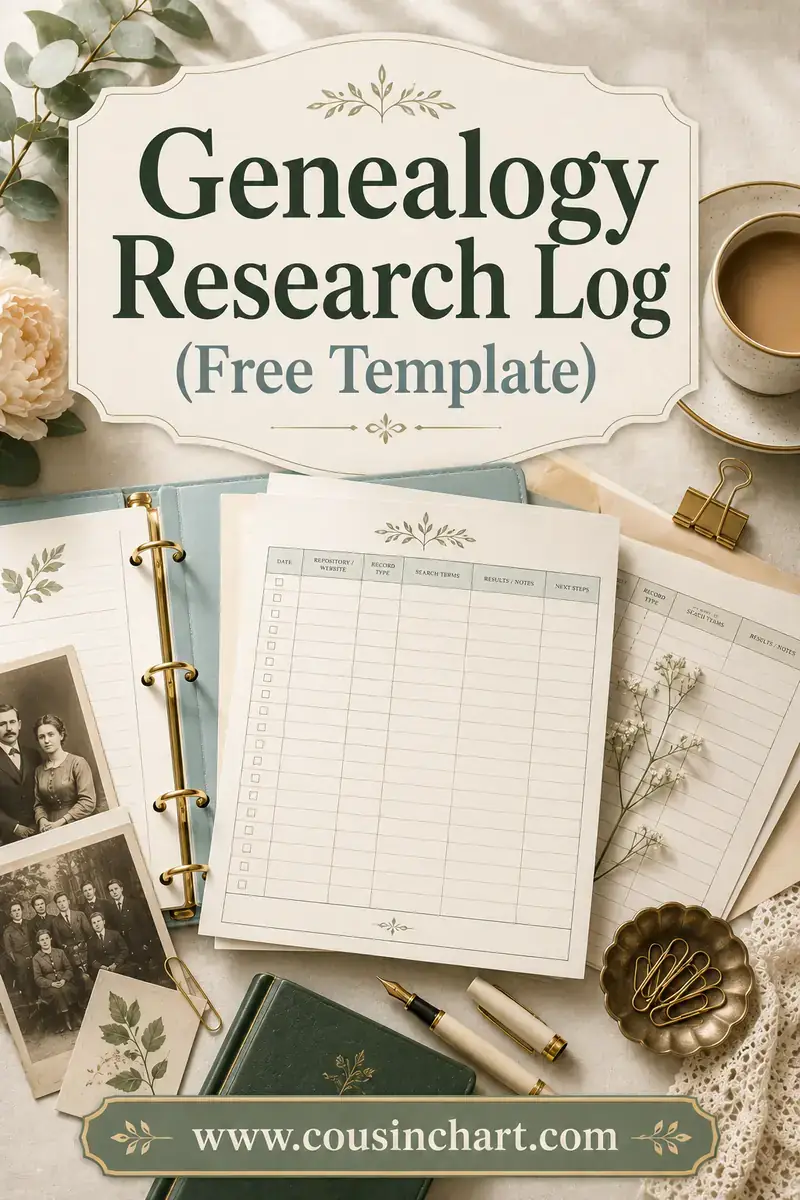
6. Start a research log
Write down every search, even the ones that find nothing. A "nothing found" note saves you from searching the same place twice next year.
7. Scan the papers in the closet
Birth certificates, letters, report cards, the family Bible. Scan a few a week and back them up in two places.
8. Write one family story
Not a whole book. Just one story, one page long, about one person. Share it at the next family gathering and watch what memories it shakes loose.
9. Search one new record set
Pick a record type you've never tried: a census year, city directories, church records or military records. One new source a quarter adds up fast.
10. Tackle one brick wall
Choose your most stubborn ancestor and give them one focused month. Our guide on how to break through a brick wall has a checklist to work through.
11. Record your family health history
Write down what you know about health conditions in your parents, grandparents, siblings, aunts and uncles. It's useful to share with your doctor, and much easier to gather while older relatives can still help.
12. Share your tree with the family
Print a simple tree for the kids, send a short update to cousins or post a photo with a story. Sharing is how new information finds you.
A month-by-month family history plan for 2027
If you like structure, here's one goal a month. Each takes a few evenings, not a few weekends.
| Month | Goal | Done when |
|---|---|---|
| January | Set up your filing system | Every grandparent's line has a folder |
| February | Label 10 old photos | 10 photos have names, places and years |
| March | Interview one older relative | One recording saved and backed up |
| April | Fix your relationship labels | Every cousin in your tree has the right term |
| May | Scan family papers | One box or folder is scanned and backed up |
| June | Write one family story | One page, shared with family |
| July | Search a new record set | Searched and logged, found or not |
| August | Add sources to old facts | Your direct line has a source for each date |
| September | Work one brick wall | A written plan and three new searches |
| October | Record family health history | A one-page summary for each side |
| November | Plan holiday questions | A short list to ask at family gatherings |
| December | Share your tree | A printed tree or update sent to relatives |
When December comes around again, our family history advent calendar gives you a tiny prompt every day from December 1 to 24, which is a cozy way to finish the year.
Genealogy goals for beginners
If this is your first year doing family history, keep it to three goals:
- Write down what you already know. Your parents, grandparents and great-grandparents, with any dates and places you remember.
- Ask one relative to fill in the gaps.
- Find one record for one ancestor. A census entry is a great first find.
Our guide on how to make a family tree walks you through those first steps.
Common mistakes with genealogy resolutions
- Too many goals at once. Two or three is plenty. Finishing small goals builds momentum.
- Goals that depend on luck. "Find my great-great-grandmother's parents" might take years. "Search three new record sets for her" is in your control.
- Adding facts without sources. It feels faster now and costs you hours later.
- Waiting to interview older relatives. Of all the goals on this list, this is the one to do first.
- Keeping it all to yourself. Relatives can't help with a tree they've never seen.
▶ Name any relative in the free calculator
Frequently Asked Questions
What are good genealogy New Year's resolutions?
Small, specific ones: label 10 old photos a month, interview one older relative, cite a source for every new fact, set up a simple filing system, and fix your relationship labels. Pick two or three rather than all of them.
How do I set family history goals for the new year?
Give each goal one action, a number and a deadline. 'Scan Grandma's recipe box by March' works far better than 'organize my research,' because you know exactly when it's done.
What genealogy goals should a beginner set?
Write down everything you already know about your parents, grandparents and great-grandparents, ask one relative to fill in the gaps, and find one record, like a census entry, for one ancestor.
How can I organize my family tree this year?
Start with one folder per grandparent's line, then one per couple. Add a source to each fact as you go, and keep a research log so you never repeat a search.
What genealogy goal should I do first?
Interview your oldest relatives. Records will still be there next year, but their memories and stories can't wait.
How do I keep my genealogy resolutions?
Choose goals that depend on you, not on luck. 'Search three new record sets' is in your control, while 'find my ancestor's parents' may take years. Finishing small goals builds momentum.