Family Reunion Games for All Ages
Most reunion games fail for one reason, and it is not the game. It is the teams. Age-banded teams — children against adults, young against old — produce a predictable result and half a room with nothing to do, while deliberately mixed teams turn every generation into a necessary asset. A seven-year-old spots things adults miss; an eighty-four-year-old is the only person who knows the answer to question four. Below is a set of games with actual rules: how many players, what you need, how long it runs, and the adaptation that stops it excluding a third of the room. For any relationship a game throws up, the cousin calculator will settle it.
Which game should you run first? Tap the closest match.
Tap an option above. Mix the teams by age — never band them.
Designing games that work across four generations
A reunion is the only party where the guest list spans eighty years. That single fact should shape every rule you write.
Mix the teams deliberately. Draw names from a hat, or assign by badge color so no team is all one branch. Mixed teams beat age-banded ones for the same reason mixed-ability classrooms work: everyone has one thing they alone can contribute, and the team quickly works out what it is.
Assume a third of the room cannot run. Between grandparents, pregnant relatives, anyone with a bad knee and the under-fives, a game requiring sprinting excludes a large minority. Running games are fine — as one item among several, never as the main event.
Give every game a seated version. A scavenger hunt has a "spot it from your chair" list. A relay has a passing version done sitting in a circle. Design the adaptation before the day, not apologetically on the spot.
Keep rounds under fifteen minutes. Attention across a wide age range collapses at about the quarter-hour mark. Two short rounds with a gap beat one long game every time.
Explain the rules twice, and demonstrate once. Say them, show one round, then start. Half the room will not have heard the first explanation over the noise, and older relatives will not ask you to repeat it.
Score loosely and award prizes generously. Precise scoring creates arguments in families that already have plenty. Small prizes for several categories — funniest, fastest, most stubborn — work far better than a single trophy.
| Game | Players | What you need | Time | Seated option |
|---|---|---|---|---|
| Family trivia | 10–100, teams of 4–6 | Questionnaire answers, printed rounds | 30–40 min | Yes, fully |
| Guess the baby photo | Any number | Numbered photos, answer slips | Runs all day | Yes, fully |
| Family history scavenger hunt | 12+, teams of 3–5 | Printed lists, phones for photos | 60–90 min | Partial |
| The name game | 8–30 | Nothing | 10 min | Yes, fully |
| Family feud style rounds | 10–60 | Survey results, a board | 20–30 min | Yes, fully |
| Reunion bingo | Any number | Printed grids, pens | 20 min | Yes, fully |
| Egg-and-spoon relay | 12–40 | Eggs, spoons, a lawn | 15 min | Passing version |
| Tug of war | 16+ | A thick rope, flat ground | 10 min | No |
| The memory chain | 6–20 | Nothing | 10–15 min | Yes, fully |
| Charades, family edition | 8–40 | Prepared slips | 20–30 min | Yes, fully |
Family trivia, built from a questionnaire
This is the best game on the list, and the only one that needs work in advance.
Send a short form out a month ahead. Five questions, no more: your earliest memory, a job you have had that would surprise people, something you have won, a place you have lived, and one thing nobody in the family knows about you. Short forms come back; long ones do not.
Build the quiz from what comes in. "Which cousin once worked as a lifeguard?" "Who has lived in four countries?" Every question is about someone in the room, which is why it holds attention in a way general knowledge never does.
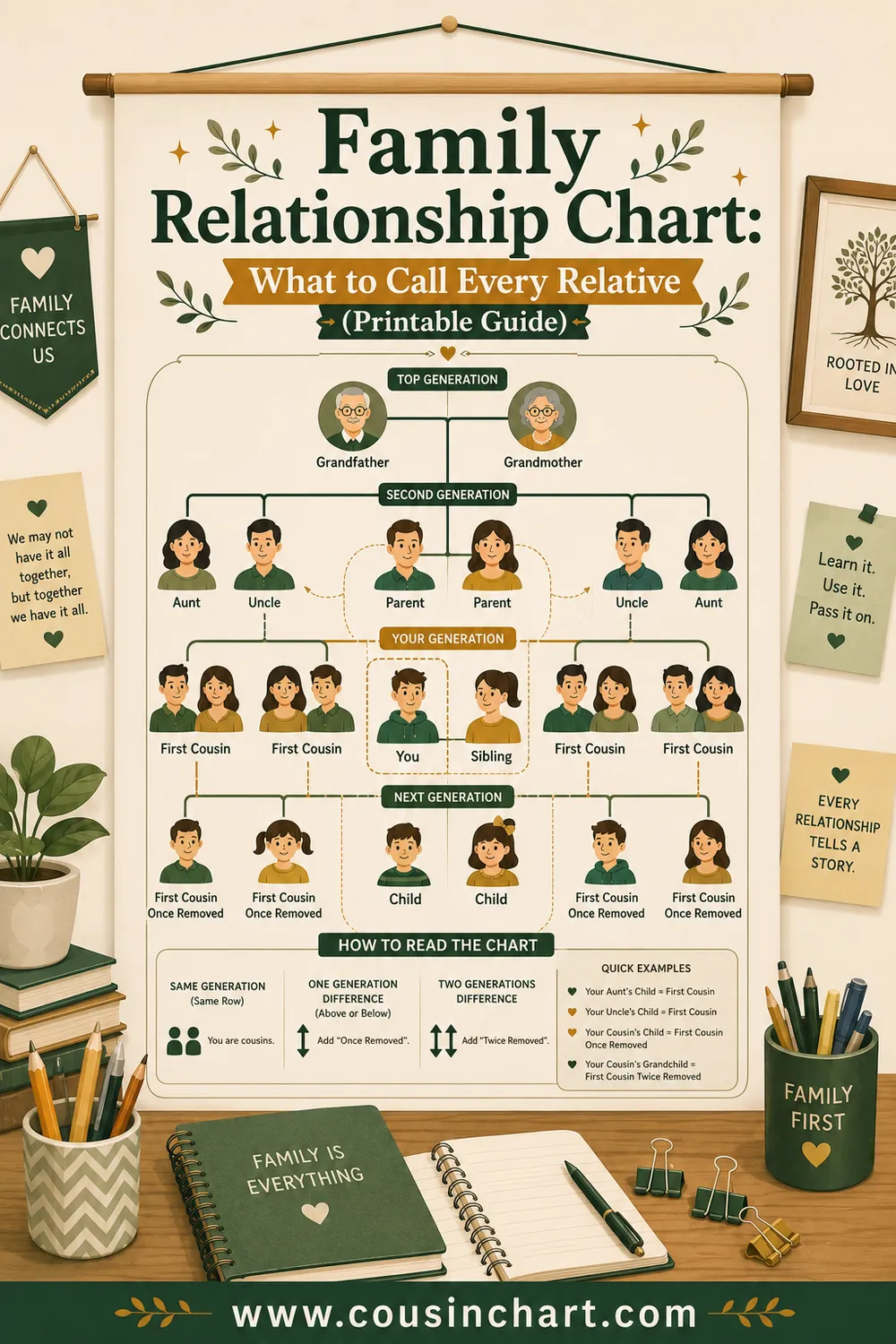
Add a family history round. Names of great-grandparents, the year the family arrived somewhere, the town on the marriage certificate. Keep a family relationship chart to hand for the inevitable dispute over what "second cousin once removed" means.
Run it in teams of four to six. Fewer and quiet people never speak; more and half the team disengages. Number the tables and hand out answer sheets rather than shouting buzzer-style, which favors the loudest.
Read the answers with the person standing up. The reveal is the game. "Which cousin was once arrested in Spain?" is funny; the cousin standing up to explain is the story people repeat for a decade.
Keep it to four rounds of eight. Thirty-two questions is about forty minutes with the laughter included, which is exactly as long as a room will sit still.
Photograph games
Photographs are the one thing every branch brings, and they carry three genuinely good games.
Guess the baby photo. Ask everyone to send a baby picture with the invitation. Number them on a board, hand out answer slips, and leave it running all afternoon with the reveal after the meal. It needs no supervision and no one is excluded.
Then and now. Pair a childhood photograph with a recent one, shuffle both sets, and ask people to match them. Harder than it sounds and unexpectedly moving.
Guess the decade. Show unlabelled photographs and score points for the closest decade, with bonus points for naming anyone in them. This one doubles as research — every correct identification is information you did not have before.
Recreate an old photograph. Pick a family picture from fifty years ago and restage it with the current generation in the same positions. It produces the best photograph of the day and takes ten minutes.
The photo-hunt board. Pin a dozen close-ups of details — a hand, a brooch, a doorway — cropped from family photographs, and ask people to find the full picture on the table. Children are much better at this than adults.
The family history scavenger hunt
A scavenger hunt is the only game that will hold teenagers for ninety minutes, and it can be loaded with genuine research value.
Use mixed teams of three to five, each with at least one adult and one person over sixty. Teams that skew young lose immediately on the family questions and stop trying.
Write three kinds of clue. Objects to find, photographs to take, and facts to collect from relatives. The third type is where the value sits: "find out the name of Grandma's elementary school" gets a fourteen-year-old talking to an eighty-year-old for ten minutes.
Score facts higher than objects. Ten points for a photograph of something blue, fifty for a written answer with the name of who gave it. The scoring tells the teams what the game is really about.
Set a hard finish time and a meeting point. Ninety minutes maximum, and one place everyone returns to. Hunts without a fixed end drift and people wander off to the food.
Collect the answer sheets afterwards. They are not scrap. Half a dozen teams' worth of collected facts is a genuine addition to the family record, and it costs you nothing but the photocopying.
Give one team the camera. Assigning a documentary job to the least competitive team means the hunt itself gets photographed.
Name games and mixers with rules
Games whose actual purpose is that people learn who everyone is.
The name game. Sit in a circle. Each person says their name, how they connect ("Ruth, Margaret's daughter"), and repeats everyone before them. Brutal by person fifteen and very funny. Cap the circle at about twenty.
Reunion bingo. Grids of squares — "has met a great-grandparent", "was born in another country", "shares my surname" — and people hunt for a signature in each. Signatures matter: they force an introduction.
Two truths and a family lie. Each person offers three statements about their branch of the family; the table votes on which is invented. Older relatives are devastatingly good at this.
The relationship challenge. Name two people in the room and ask a team to work out the exact relationship. Give them a printable cousin chart as a prop and the game teaches itself; the tool for what to call a relative settles the terminology.
Pass the question. A jar of prompts drawn from a list of questions to ask grandparents, passed around the table after the meal. Not competitive, but it works exactly like a game and produces far better material.
Big-group classics, adapted
Standard party games mostly break at more than twenty players. These adaptations hold.
Charades, family edition. Prepare slips from family stories rather than films — "the caravan holiday", "Uncle Ray's car". Everyone knows the references, which is what makes it funny.
Family feud rounds. Survey twenty relatives in advance with questions like "name something every family argues about at Christmas", then play the top answers. Two teams at the front, everyone else shouting.
Musical chairs, walking only. No running allowed. It slows the game down and makes it playable by anyone who can walk, without losing the panic.
Pictionary on a big pad. One easel, teams calling out. Scales to sixty people because only two people need to be at the front at any moment.
Newlywed-style couples quiz. Ask couples of every age the same questions separately, then compare. Put a couple married fifty years alongside one married a year and let the contrast do the work.
Outdoor and team games
Short, loud and finished before anyone gets bored.
Egg-and-spoon relay with mixed teams. Walking pace only. Age handicaps — under-eights carry a bigger spoon — keep it competitive rather than a formality.
Tug of war, branch against branch. Ten minutes, best of three, then stop. Use a proper rope and keep children off the ends.
Water balloon toss. Pairs step back after each successful catch. Works for six-year-olds and sixty-year-olds in the same round, which almost nothing else does.
Three-legged race with a big age gap enforced. Each pair must span at least thirty years. It is slower, funnier and far more inclusive than the standard version.
Sack race for under-twelves only. Be honest that it is a children's event and run it as a spectator sport for everyone else.
Rounders with running substitutes. Older relatives bat, a child runs for them. One rule change, and the game becomes playable by the entire family.
Seated games
The oldest people at the reunion hold the most information and are the first to be excluded. Fix that with the schedule.
The memory chain. "I remember Grandad's kitchen, and in it there was..." Each person adds an item and repeats the list. Genuinely difficult, entirely seated, and it surfaces details nobody has spoken aloud in decades.
Card and domino tables left permanently open. Not a scheduled game — a table that exists all afternoon so people who dislike organized fun have somewhere legitimate to sit.
Family Would I Lie To You. One person reads a story, true or invented, and the table interrogates them. Older relatives win this comfortably.
Guess the recipe. Small tastes of dishes brought to the reunion, and teams guess the ingredient or whose recipe it is.
Name that tune, by decade. One song per decade from the 1940s onward. The scoring is naturally balanced because each generation owns its own era.
Where in the world. Read out place names connected to the family and ask people to place them on a large map. Quiet, seated, and it teaches the family's migration history without a lecture.
Running the games on the day
Appoint one games person and give them a whistle. Not the host, who will be dealing with the caterer. One named person with the prizes, the printed sheets and the authority to start things.
Print everything the week before. Answer sheets, bingo grids, scavenger lists. Nothing kills a game faster than looking for a printer at two in the afternoon.
Run three games, not eight. One mixer, one thinking game, one physical game. Where those fit in the day belongs on the family reunion checklist with everything else that needs booking.
Leave gaps between them. The conversations in the gaps are the point of the reunion; the games exist to make those conversations start.
Keep the non-competitive things running alongside. The photograph tables, craft tables and interview corner from the wider list of family reunion activities should stay open while the games run, so nobody is forced to compete.
FAQ
What is the best game for a family where the branches barely know each other?
Family trivia built from a questionnaire sent out in advance. It gives everyone in the room something specific to learn about a relative they have never met, and the reveals do more introducing in forty minutes than an afternoon of small talk.
How do you include very old and very young relatives in the same game?
Change the rules rather than the game. A runner for anyone who cannot run, walking-pace relays, seated versions of anything competitive, and mixed teams so a four-year-old and an eighty-four-year-old are on the same side rather than opposed.
How long should a reunion game last?
Ten to fifteen minutes for physical games, thirty to forty for a full trivia quiz split into rounds. Anything longer loses the youngest and the oldest at the same time, and both are hard to win back once they have drifted off.
Do we need prizes?
Small ones help, and several small prizes beat one big one. Award funniest, most determined and best team name alongside the actual winner. Serious prizes make competitive families more competitive, which is rarely what a reunion needs.
What if not enough people want to join in?
Start the game with the people who do, in a visible place. Reunion games recruit by being watched. Never announce a game to a seated room and wait — set it up, begin, and the crowd assembles itself.
Can these games work indoors or in bad weather?
All the trivia, photograph, name and seated games work indoors without any change. Only the relay, tug of war and water games need outdoor space, so plan at least one wet-weather alternative for every outdoor item.
Play the games, keep the answers
Three games, mixed teams, and a seated option for each will carry a reunion of any size. Build the trivia from a questionnaire sent out a month ahead, pin the baby photographs to a board and let the answers accumulate all afternoon, and load the scavenger hunt with questions that can only be answered by asking a relative. Then keep the answer sheets — the collected facts from a scavenger hunt or a trivia round are often the only written record of what people knew that day. Run the games so the conversations start, and let the conversations run long. When two people at the same table cannot work out how they are connected, hand them the cousin calculator.