Printable Family Tree Charts (Free PDFs)
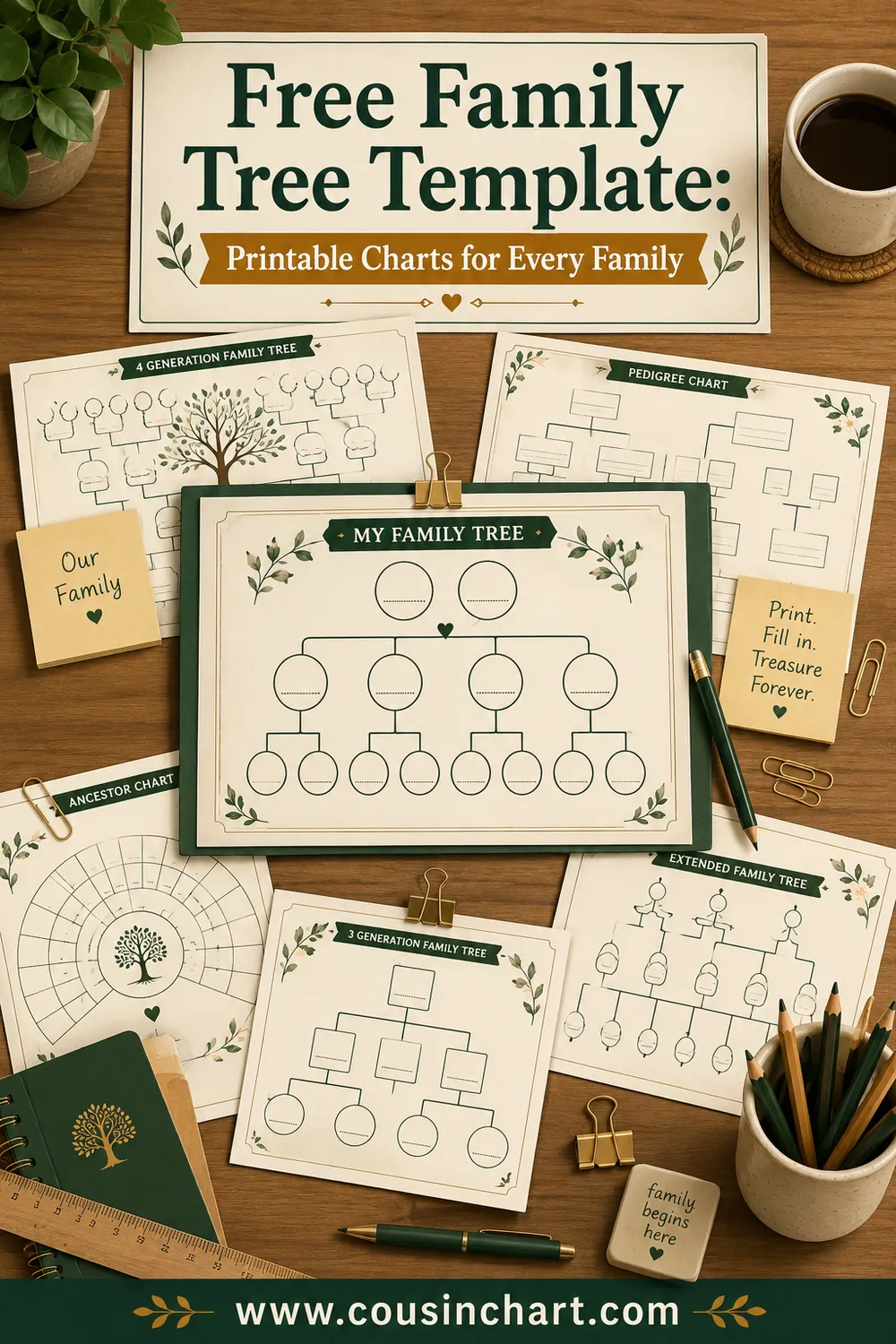
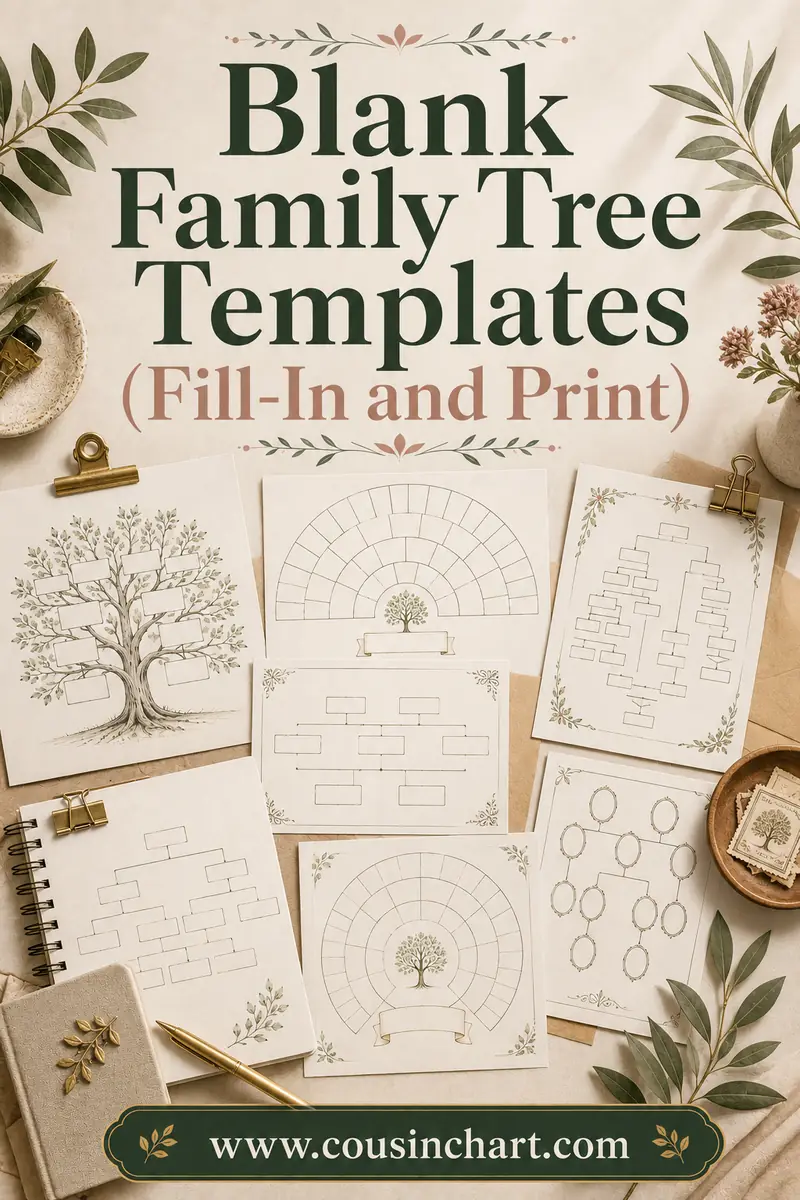
A printable family tree chart gets you from "we should really write this down" to actually writing it down in about two minutes: download the PDF, print at actual size, and start filling boxes. The free CousinChart chart pack covers the whole standard lineup — 3-, 4-, and 5-generation ancestor charts, a fan chart for framing, a sibling-friendly tree, and our printable cousin chart — all sized for Letter and A4 home printing, no signup, no watermark.
This is the full guide to that lineup: which chart does which job, the print settings that keep boxes at their designed size, what paper to use for charts that get handled at reunions, and how people actually display these things. Keep the free relationship calculator open while you fill anything in — charts show the seats, the calculator names the relationships, and the two together end every "so what are we to each other?" debate a family can produce.
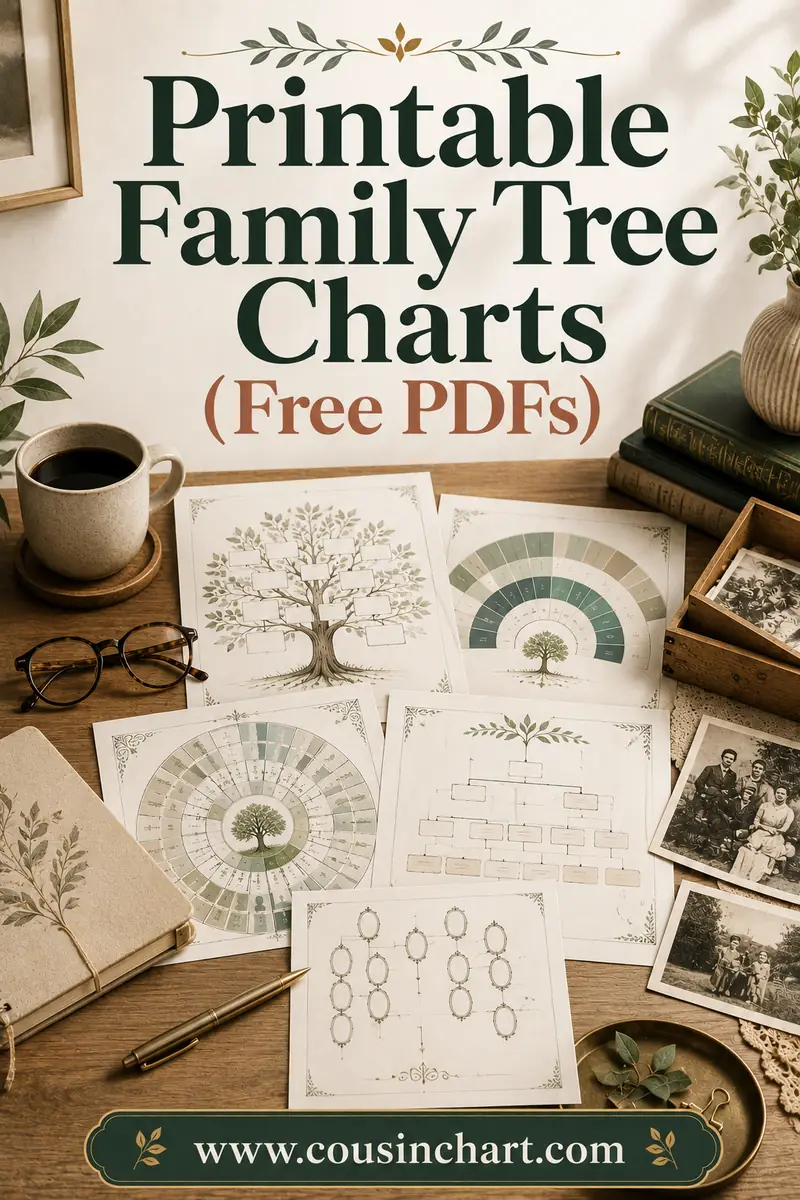
Free printables for this page
Download a blank PDF (US Letter or A4) — free, no sign-up — or customize it in the maker above before printing.
 3-Generation Family TreeYou, parents and grandparents. Portrait, big boxes, 10 minutes to fill.
 4-Generation Pedigree Chart
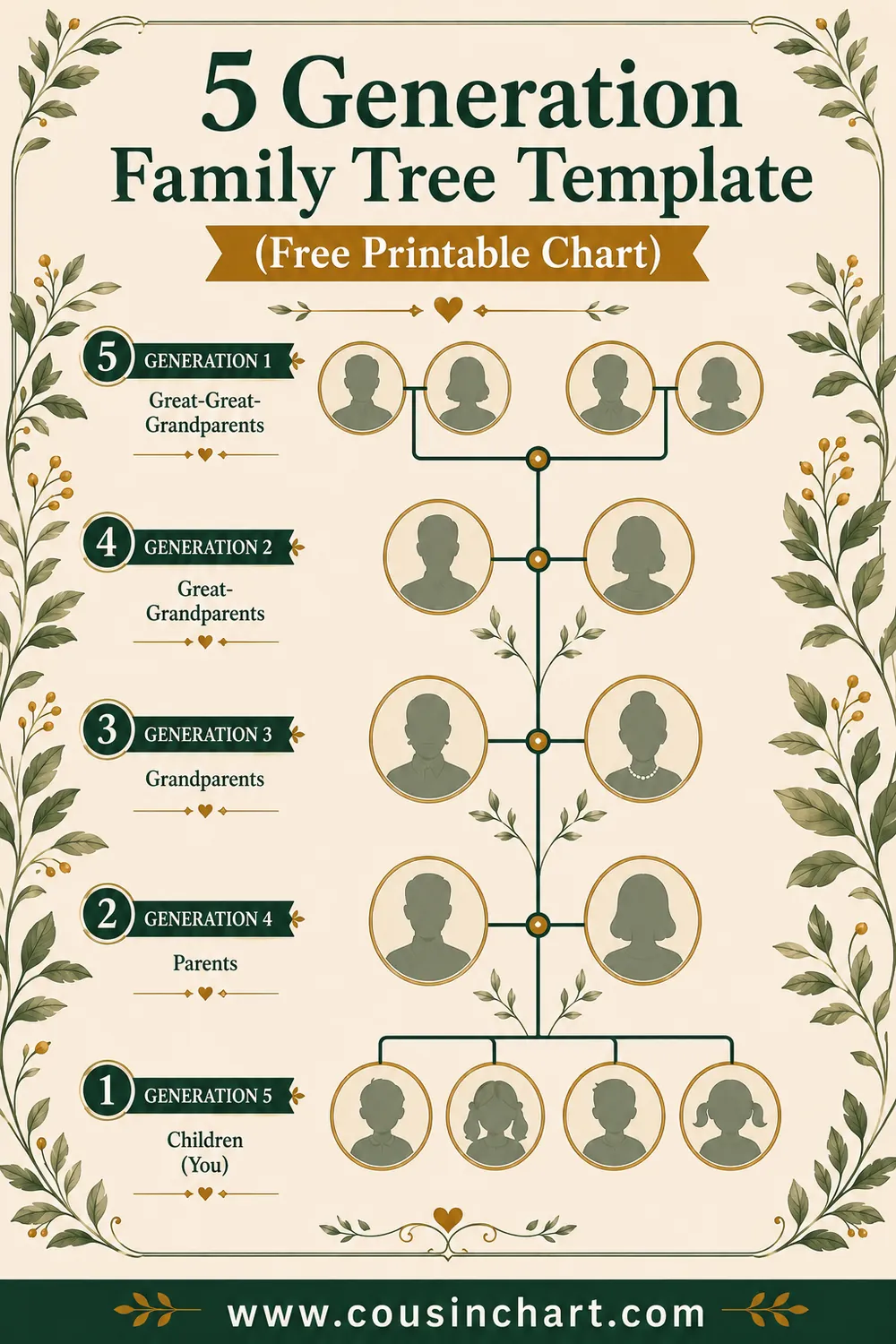
 5-Generation Pedigree Chart
 Blank Fan Chart (5 Generations)
 Family Tree With Siblings
 Kids' Family Tree
 Numbered Fan Chart (5 Generations)
 Cousin Relationship ChartThe classic cousin grid: 1st cousin, 2nd cousin, times removed.
 Descendant Chart
Relationship quick-check: tap a phrase to see who they are — every one of them has a spot on some chart below.
Tap a phrase above to see the answer.
Work out any family relationship →The printable lineup: what's in the pack
| Printable | Holds | Page | The job it does |
|---|---|---|---|
| 3-generation tree | 7 people | Letter/A4 portrait | Kids, classrooms, ten-minute wins |
| 4-generation chart | 15 people | Letter/A4 landscape | The adult starter chart |
| 5-generation chart | 31 people | Letter, better at 11×17" | Research binders |
| Fan chart | 31 in arcs | Portrait | Framing, gifts, Pinterest |
| Sibling tree | 9–13 | Portrait | School projects with brothers/sisters |
| Cousin chart | Relationship grid | Landscape | Settling "what are we?" at reunions |
The first five are trees — people in boxes. The last one is different and worth a word: the printable cousin chart is a reference grid (your common ancestor down one edge, generations across), and it's the sheet that answers relationship questions without anyone building a tree at all. Print it alongside whichever tree you choose; they're partners, not rivals.
Choosing among the trees
Match the chart to the person filling it:
- A child gets the 7-box tree. They know all six ancestors on it, so they finish, and finishing is the point.
- An adult starting out gets the 15-box chart. Three generations from memory plus eight great-grandparent boxes that turn into wonderful questions for the oldest relative in the family.
- A researcher gets the 31-box chart with pedigree numbering, because generation five is where memory ends and records begin.
- A gift-giver gets the fan — same 31 ancestors as the research chart, arranged in arcs that look intentional on a wall.
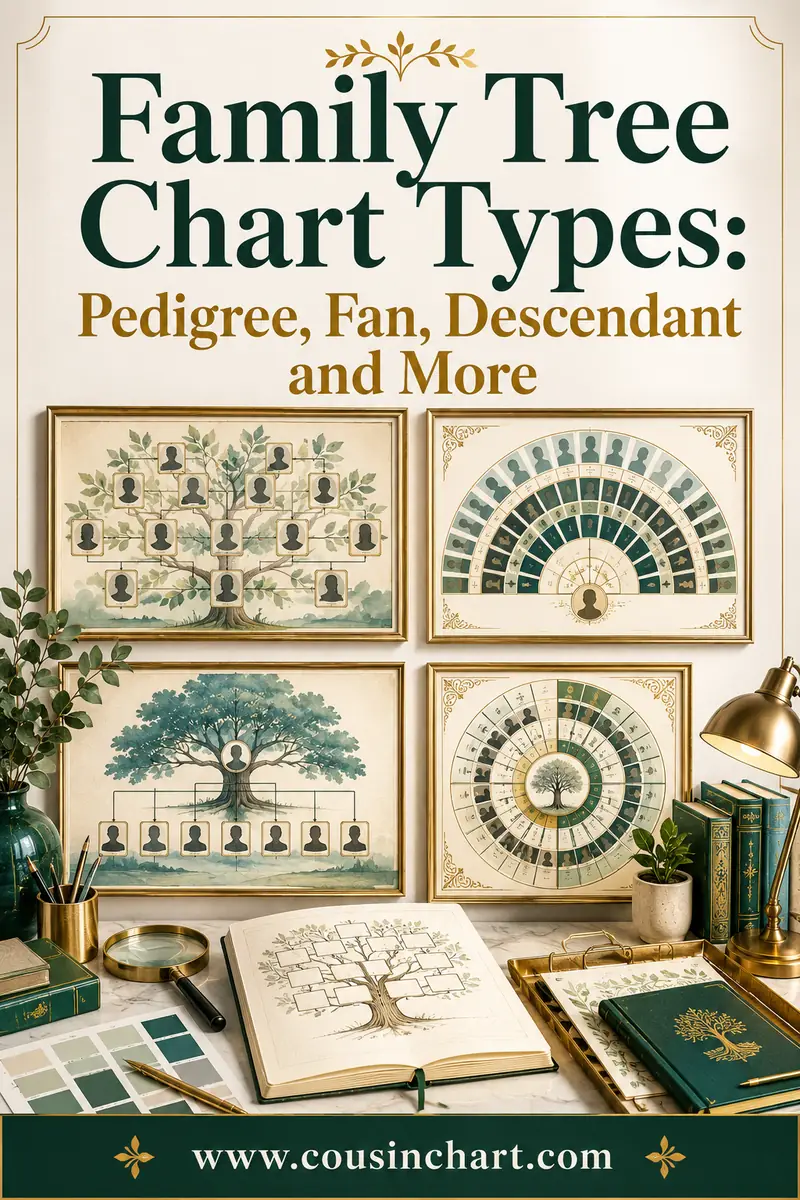
More on how these layouts differ structurally — and when a descendant or bow tie chart beats them all — in our family tree chart types guide.
Print settings that actually matter
PDFs are designed at exact dimensions; printers love to "help." Three settings protect the design:
- Scale: 100% / Actual Size. Never "Fit to page," which shrinks the whole chart 5–10% and with it every box you're about to write in. The charts already include printer-safe margins.
- Orientation: match the chart. Landscape charts printed portrait get auto-rotated and shrunk. Set it manually in the print dialog.
- Quality: normal is fine, "draft" isn't. Draft mode prints gray, thin lines that disappear under handwriting. For fan charts with fine arcs, step up to high quality.
A borderless-capable printer isn't required — no chart in the pack runs art to the paper edge. And if your home printer maxes out at Letter, remember that any copy shop enlarges a PDF to 11×17" for a dollar or two, which transforms the 5-generation chart from cramped to comfortable.
Paper: the difference between a printout and a keepsake
- Everyday 20 lb copy paper — fine for drafts and school projects. It ripples under heavy pen pressure and tears at reunion tables.
- 28–32 lb premium paper — the sweet spot for working charts. Takes fountain pen and marker without bleed-through, survives being passed around.
- 65–80 lb cardstock — the framing and gift grade. A fan chart on cream cardstock, hand-lettered, reads as "heirloom" from across the room.
- Lamination — for the cousin chart specifically. A laminated relationship grid plus a dry-erase marker becomes a reusable reunion prop: circle yourself, circle the cousin, trace to the answer, wipe, repeat.
Five ways people actually use these printables
1. The research binder
The 31-box chart up front, one blank family tree template per family line behind it, filled in pencil as records confirm names. The printed page is still the best interface genealogy has: no login, instant random access, annotations in the margins.
2. The reunion table
Tape the biggest chart to the wall, scatter pencils, let relatives fill their own branches. Add the laminated cousin chart and you've built a self-serve answer station — though someone always pulls out a phone anyway, and the free CousinChart calculator settles the second-cousin-once-removed arguments faster than the grid for the complicated paths.
3. The grandparent interview
Print the 15-box chart, visit, and fill the top row together. The chart is genuinely secondary — it's the excuse for ninety minutes of stories — but you leave with both the stories and eight verified names. Do this one soon; it's the printable with a deadline.
4. The classroom set
Teachers: the 7-box tree prints thirty copies for pennies and produces the only homework parents enjoy helping with. Send the sibling-tree version home with kids from bigger families, and expect at least one blended-family question — the answer is "add a box wherever there's love and connect it honestly," and the dashed-line convention handles the rest.
5. The wall piece
Fan chart, cardstock, best handwriting, thrift-store frame: a finished piece for under ten dollars that outperforms most hundred-dollar decor. Popular enough on Pinterest that "filled-in fan chart" is practically its own genre — if you pin yours, photograph it at an angle with the pen still on the paper; flat scans get scrolled past, in-progress shots get saved.
How to read the cousin chart (a 60-second lesson)
Since the cousin chart is the one printable people misread, here's the whole method. Find the ancestor you and the other person share. Count how many generations each of you is below that ancestor. Then:
- Same distance down? You're plain cousins, and the number comes from the distance: grandparents shared = first cousins, great-grandparents = second cousins, great-great-grandparents = third cousins.
- Different distances? Take the closer person's cousin number, and the difference in generations becomes the "removed" count. Your dad's first cousin is two steps from your shared great-grandparents; you're three steps. First cousin (the smaller distance) once removed (the one-step difference).
The printed grid does this counting for you — one edge is your distance from the shared ancestor, the other edge is theirs, and the cell where they meet names the relationship. Laminate it, and it answers picnic-table questions for a decade. For paths too tangled to trace with a finger (half-relations, "my cousin's grandmother's nephew"), the calculator exists precisely for the overflow.
A four-session workflow from blank to finished
Charts stall when treated as one giant task. This split finishes them:
- Session one — memory dump (20 minutes). Print the 15-box chart, fill every box you can without checking anything. Mark uncertain spellings with a pencil "?".
- Session two — the interview (one call). Take the question marks and empty boxes to the oldest available relative. This call typically completes generation three and most of generation four, and it's the session people regret postponing.
- Session three — verification (an evening). Check the interview answers against whatever documents the family holds — certificates in the drawer, the family Bible, obituary clippings. Ink what's confirmed; leave the rest pencilled.
- Session four — the fair copy. Transfer the verified chart onto a fresh printable (or the fan, if it's going on a wall) in your best hand. Date it. This is the copy that gets framed, photographed, and photocopied for cousins.
Total elapsed time: a week of odd moments. Total cost: four sheets of paper.
Preserving and sharing the finished chart
Paper is the interface, not the archive. When a chart reaches "done for now": scan or photograph it flat in daylight, store the image with your family photos (cloud folder, named "reyes-tree-2026"), and send it to the family chat — which reliably produces one more correction, which is the system working. Reprint the corrected fair copy annually if the family is growing; the dated versions become their own little archive of who arrived when. And keep the master PDFs bookmarked or pinned: the next school project, reunion, or curious cousin is a matter of when.
Printable vs. software: the honest comparison
Software wins on scale — hundreds of people, source citations, automatic chart redraws. Printables win on everything that matters early: zero learning curve, zero accounts, kitchen-table shareability, and the strange but real fact that relatives will correct a paper chart ("your grandmother's name was Elena, not Helen — who told you Helen?") while a screen makes them spectators. The workflow that uses both: paper for gathering and verifying, software once you cross about fifty confirmed people, and printed charts forever after as the display layer.
Start with paper. The free PDFs in the family tree template collection cost you one sheet to find out.
Keep the pack handy
Charts have a way of being needed suddenly — a school project due Thursday, a grandparent visit, a reunion someone scheduled for next month. Two habits fix that: save the pack's PDFs to a "family" folder on your phone or cloud drive, and pin the chart pages to a Pinterest board where the aunts can find them too. Blank charts are evergreen pins; the same fan chart gets re-saved every Mother's Day for a reason.
FAQ
Where can I get printable family tree charts for free?
The CousinChart printable pack includes 3-, 4-, and 5-generation charts, a fan chart, a sibling tree, and a cousin relationship chart as free PDFs — no account, no watermark. Print on Letter or A4 at 100% scale.
What's the best printable family tree for beginners?
The 4-generation, 15-box chart. Most adults can fill three of its four generations from memory, it fits one landscape page, and its eight great-grandparent boxes point you at exactly the right questions to ask older relatives.
What print settings should I use for family tree PDFs?
Actual size (100% scale), orientation matched to the chart, normal or high quality — never draft. "Fit to page" is the setting that silently shrinks your writing boxes; turn it off.
What paper is best for a family tree chart?
28–32 lb paper for working charts, 65 lb+ cardstock for anything framed or gifted, and lamination for reference sheets like the cousin chart. Ordinary copy paper works for drafts and classrooms.
Can I print these charts bigger than Letter size?
Yes — the PDFs scale cleanly to 11×17" and beyond at any copy shop for a dollar or two. The 5-generation chart in particular is far more writable at 11×17", and fan charts enlarge beautifully for framing.
How is a cousin chart different from a family tree chart?
A family tree chart holds your actual relatives' names in boxes. A cousin chart is a universal reference grid that shows what any two relatives are to each other based on their shared ancestor — no names required. Print both; they answer different questions.
Download, print, and start writing
That's the whole pitch: free PDFs, two minutes from download to pencil. Pick the chart that matches your project from the CousinChart pack — 7 boxes for tonight, 31 for the hobby, the fan for the wall — and print it at actual size. Then keep the free relationship calculator one tap away for the moment every chart eventually produces: a real person, a confusing path, and a family waiting for the answer.