Grand Aunt vs. Great Aunt: Which One Is Correct?
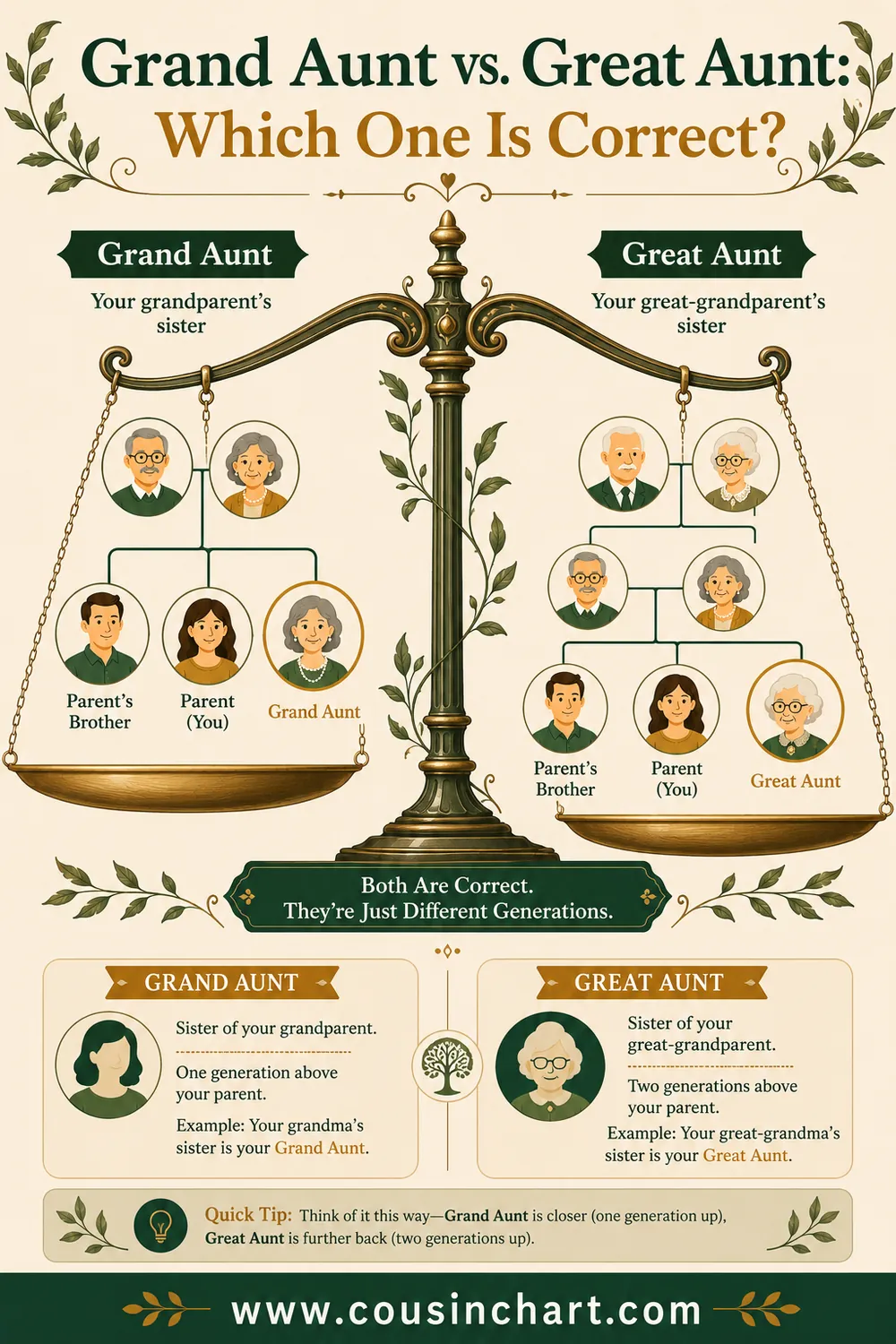
Your grandparent's sister is your grand aunt and your great aunt — both terms are correct, both appear in major dictionaries, and they mean exactly the same person. In everyday English, "great aunt" is far more common. Genealogists, though, prefer "grandaunt," because it keeps the naming logic parallel to "grandmother": grand for two generations up, great- stacked on top for each generation beyond that.
So you're not wrong either way. But if you've ever wondered why record-keepers insist on "grandaunt," or what to call your great-grandfather's sister, or what your great aunt's grandchildren are to you — this article sorts the whole ladder out. And when a relationship gets tangled, the free family relationship calculator on our homepage names it for you instantly.
Relationship quick-check: tap a phrase to see the correct term.
Tap a phrase above to see the answer.
Work out any family relationship →Both terms name the same person
Let's pin the definition down first. A grandaunt / great aunt is the sister of one of your grandparents — or the sister-in-law, if she married your grandparent's brother. She's your parent's aunt. You are her grandniece or grandnephew (also written great-niece and great-nephew, with the same two-spellings situation).
Merriam-Webster lists grandaunt and great-aunt as synonyms, and both have been in printed English for centuries. This isn't a case of one modern corruption and one proper term. They grew up side by side; everyday speech simply favored "great aunt" while genealogy favored "grandaunt."
Why genealogists prefer "grandaunt"
The genealogist's argument is about consistency. Look at how the direct line works:
- Your parent's mother is your grandmother.
- Your grandmother's mother is your great-grandmother.
- Her mother is your great-great-grandmother.
Grand marks two generations of distance; each great- adds one more. Applying the same system to siblings of your ancestors gives you:
- Your parent's sister: aunt
- Your grandparent's sister: grandaunt
- Your great-grandparent's sister: great-grandaunt
- Your great-great-grandparent's sister: great-great-grandaunt
Clean and unambiguous: the aunt's prefix always matches the grandparent she stands beside. Your great-grandmother and great-grandaunt are sisters, and their titles line up.
Now run the popular version. If your grandmother's sister is your "great aunt," what's your great-grandmother's sister? Logically, your "great-great aunt" — which means a great-great aunt is the sister of a great-grand mother. The prefixes are permanently off by one, and every generation deeper makes the mismatch worse. Genealogy software, lineage societies, and most family historians use grandaunt/granduncle to avoid exactly that confusion.
The generation cheat sheet
Here's the whole ladder, in both systems, with the DNA you'd expect to share with a blood relative at each rung:
| Relative | Genealogist's term | Everyday term | Avg. shared DNA |
|---|---|---|---|
| Parent's sister | Aunt | Aunt | ~25% |
| Grandparent's sister | Grandaunt | Great aunt | ~12.5% |
| Great-grandparent's sister | Great-grandaunt | Great-great aunt | ~6.25% |
| Great-great-grandparent's sister | Great-great-grandaunt | Great-great-great aunt | ~3.125% |
Two things worth noticing. First, the everyday column always carries one extra "great," which is the off-by-one problem in table form. Second, the DNA numbers are averages — real results vary because DNA is inherited in random chunks — but they halve neatly with each generation, just like the direct line does.
The same ladder runs downward, by the way. Your sibling's child is your niece or nephew; your sibling's grandchild is your grandniece/grandnephew (commonly great-niece/great-nephew); and so on. Whatever you are to her, she is the mirror of to you: if she's your grandaunt, you're her grandnephew or grandniece.
What her descendants are to you
This is where the question usually leads, because a grandaunt is often the ancestor of the "mystery cousins" at family reunions. Trace her line down:
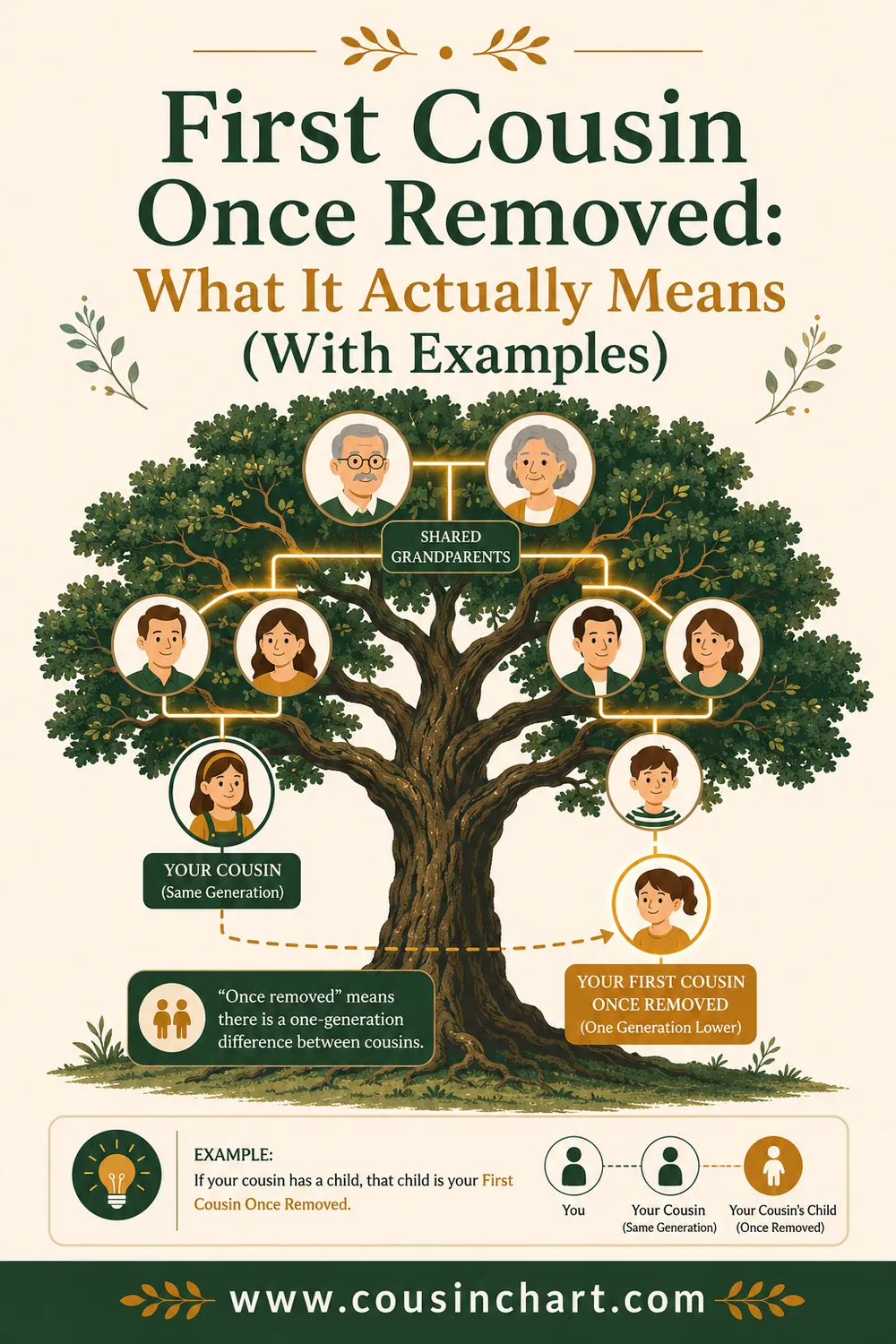
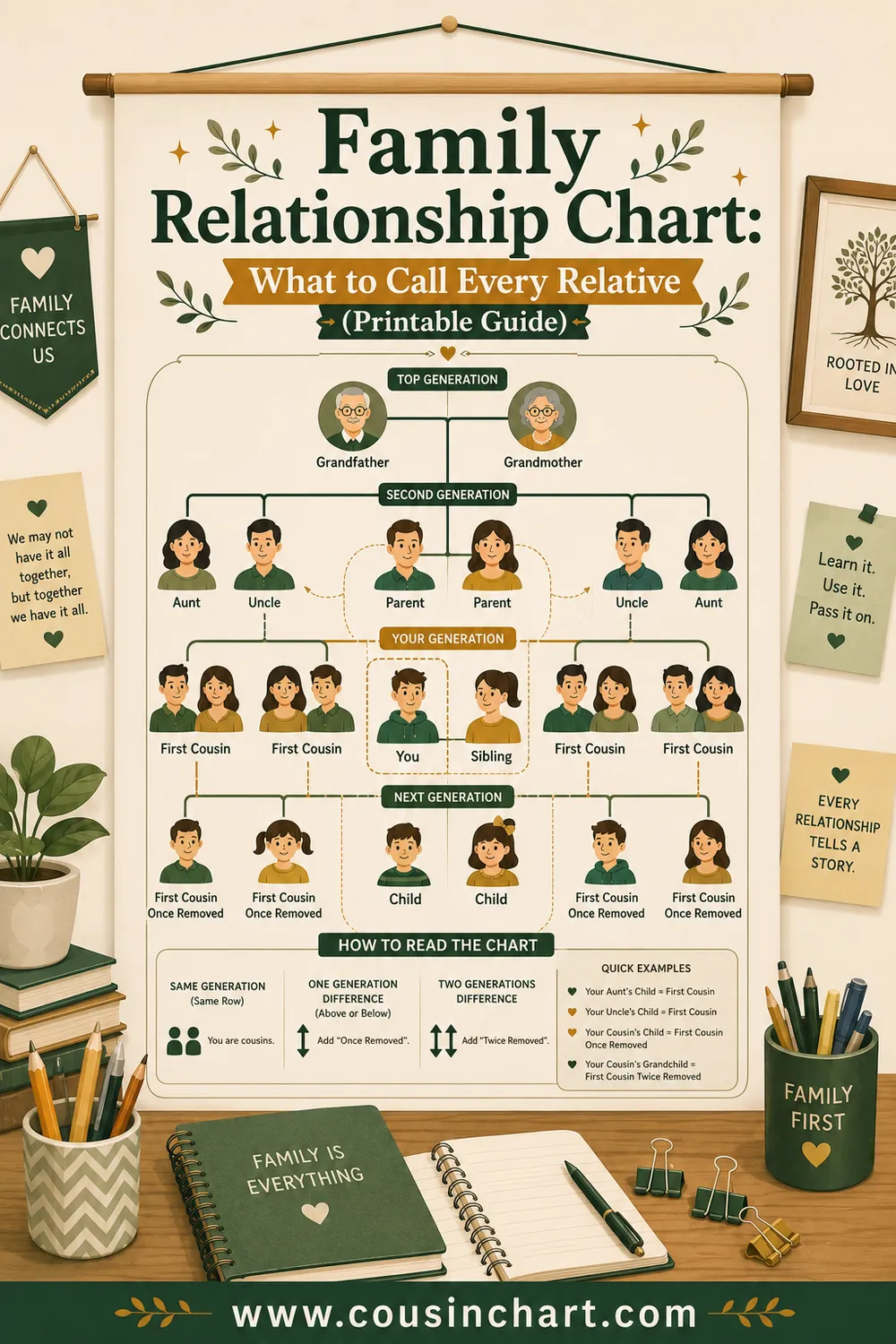
- Her children are your parent's first cousins — which makes them your first cousins once removed. One generation above you, sharing your great-grandparents.
- Her grandchildren are your second cousins. Same generation as you, sharing great-grandparents.
- Her great-grandchildren are your second cousins once removed, one generation below you.
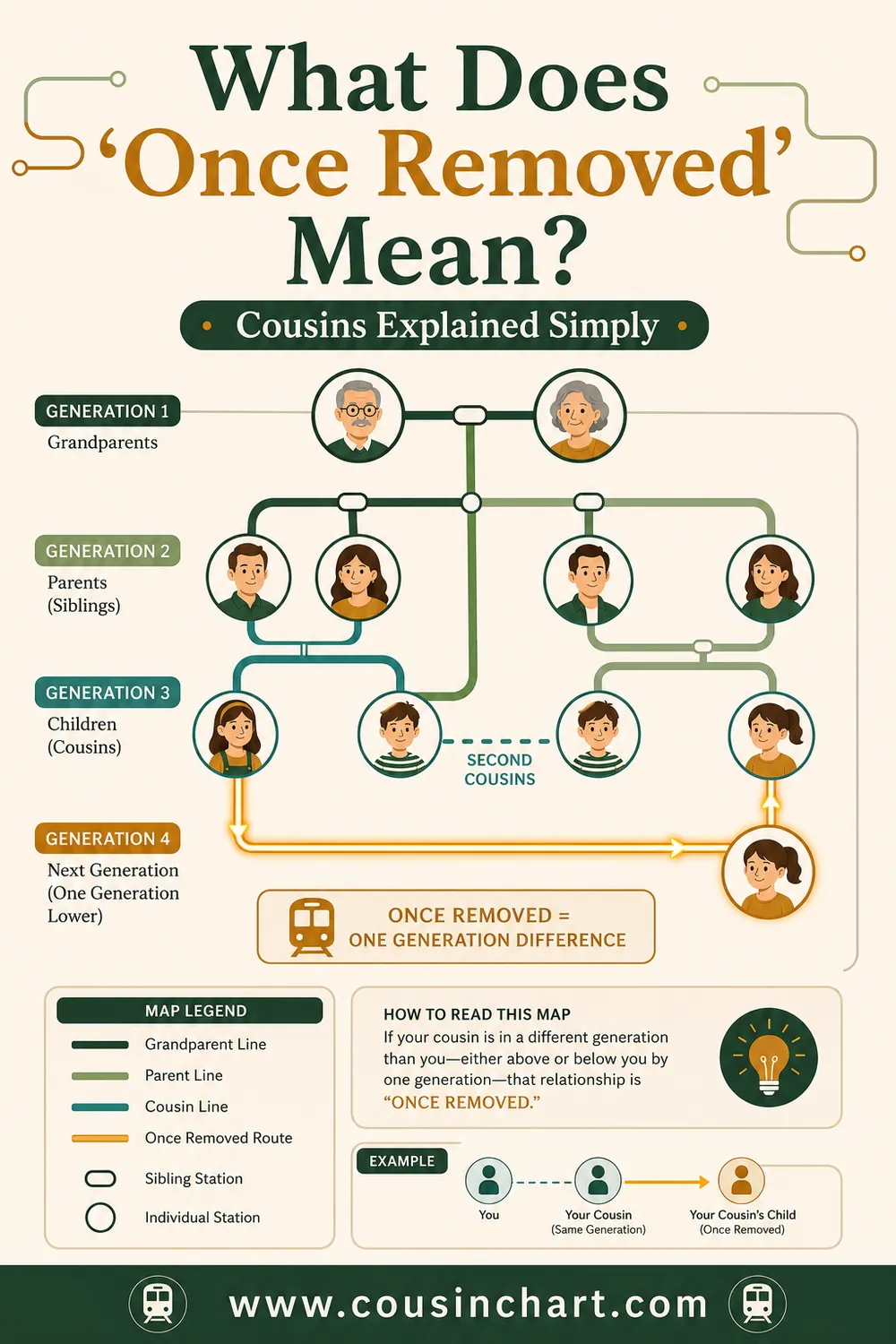
If "removed" is fuzzy, it just counts generation gaps — we've got a whole guide to what once removed means, and the first cousin once removed article walks through the most common case. Or let the relationship calculator do the counting: click "my grandmother" → "her sister" → "her grandchild" and it answers "second cousin" with the reasoning spelled out.
Which term should you actually use?
Honest advice: match your audience.
- Talking to family? Say great aunt. It's what most English speakers say, everyone understands it, and correcting Grandma's terminology at dinner rarely ends well.
- Building a family tree or writing to a genealogy society? Use grandaunt and granduncle. Records stay consistent, and anyone reading your chart can compute generations from the prefixes alone.
- Writing something public? Either is fine; just be consistent within the document. If precision matters, add the plain-English gloss once — "my grandaunt (my grandmother's sister)" — and move on.
One more practical note: hyphenation floats. You'll see great aunt, great-aunt, and greataunt; dictionaries generally prefer the hyphenated great-aunt, and grandaunt is written solid. None of the spellings change the meaning.
Watch for the split in the wild, too. Obituaries and newspapers almost always write "great-aunt," while DNA testing sites and genealogy software label the same person "grandaunt" in your match list — so the woman called your great aunt at the funeral and the grandaunt in your DNA results is one and the same relative. Knowing that the two vocabularies coexist saves a lot of second-guessing when records and relatives seem to disagree.
Where the two words came from
A little history explains why English ended up with duplicates. Both prefixes are old borrowings: grand- came into English from French after the Norman Conquest (grand-mère, grand-père), while great- is the native English intensifier that translated the same idea. For a few centuries the two competed across the whole kinship vocabulary — English speakers once said both "grandmother" and "great mother," and both "grandaunt" and "great aunt."
The direct line eventually standardized on a tidy compromise: grand- won the two-generation slot (grandmother), and great- became the stacking prefix for everything beyond (great-grandmother, great-great-grandmother). But the aunt and uncle words never finished the sorting process. "Great aunt" stayed dominant in speech, "grandaunt" survived in records and formal writing, and dictionaries simply kept both. So the "grand aunt vs great aunt" debate isn't a modern error to correct — it's a 500-year-old tie that genealogists, for practical filing reasons, have voted to break one way.
Two memory hooks if you want to keep the systems straight:
- Genealogist's rule: an aunt's prefix always matches her sibling's. Grandmother's sister = grandaunt. Great-grandmother's sister = great-grandaunt. If the prefixes on two siblings don't match, one of them is mislabeled.
- Everyday rule: count the "greats" people say, then add a generation. A spoken "great-great aunt" is usually the sister of a great-grand parent.
Grandaunts by marriage, half-grandaunts, and other edge cases
Real families are lumpier than charts, so here are the variants:
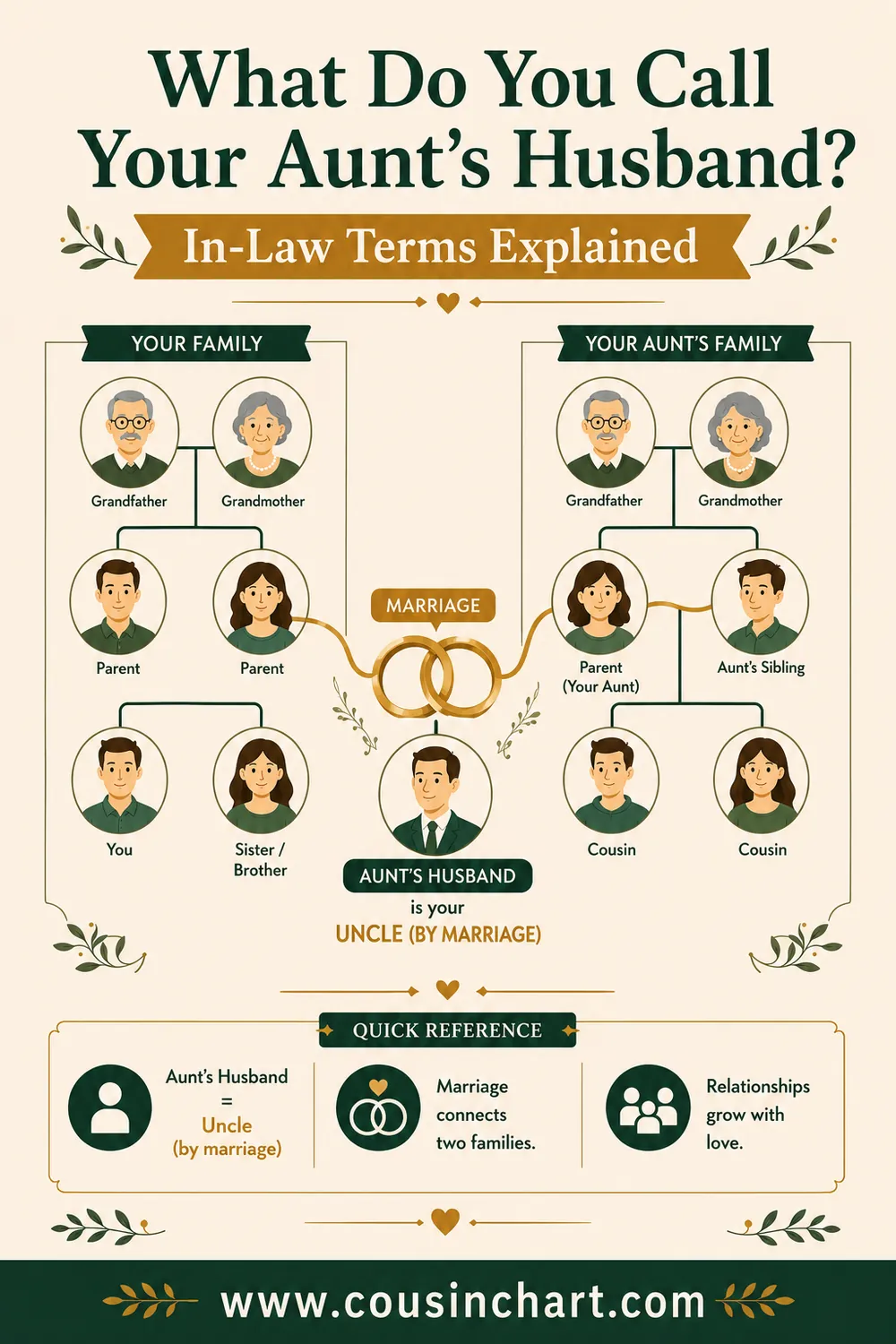
- Granduncle's wife: your grandaunt by marriage. Just as with your aunt's husband, the spouse takes the matching title, though she shares no DNA with you.
- Half-grandaunt: your grandparent's half-sister — they share one parent instead of two. She's still called a grandaunt in everyday speech; you'd share roughly 6.25% DNA instead of 12.5%.
- Step-grandaunt: the sister of a step-grandparent. No blood relation; the title is a courtesy.
- "Aunt" who's really a grandaunt: in many families, a grandaunt who helped raise the kids just gets called Aunt. Titles follow love as much as logic — the chart can stay precise even when the nicknames don't.
FAQ
Is it grand aunt or great aunt?
Both are correct and mean the same thing: your grandparent's sister. "Great aunt" dominates everyday speech; "grandaunt" is preferred in genealogy because it parallels "grandmother" — the prefixes then match generation for generation.
What do I call my great-grandmother's sister?
Genealogically, your great-grandaunt — her prefix matches her sister's (great-grandmother). In casual usage many people would say great-great aunt. Either way, she's three generations above you, and you'd share about 6.25% of your DNA with her on average.
What is my great aunt's child to me?
Your first cousin once removed. Your grandaunt's child and your parent are first cousins, so that person is one generation removed from you. Their children, in turn, are your second cousins.
Am I my great aunt's grandniece or great-niece?
Both terms work — the pairing mirrors exactly. If you call her your grandaunt, you're her grandniece or grandnephew; if you say great aunt, you're her great-niece or great-nephew. Same relationship, two naming systems.
How much DNA do I share with a great aunt?
About 12.5% on average — the same as with a first cousin or a half-sibling of a parent, though the exact figure varies from person to person. A grandaunt by marriage shares no DNA with you at all.
Does "grand" or "great" ever change the legal relationship?
No. The terms describe the same kinship degree either way. For inheritance, immigration, or DNA questions, what matters is the actual generational link — grandparent's sibling — not which prefix your family happens to use.
Name any relative in seconds
Grand aunt, great aunt — now you can use either with confidence, and you know why the family historian in your life insists on the first one. When the next puzzle comes along (her granddaughter? your granduncle's great-grandson?), skip the finger-counting: the free CousinChart family relationship calculator traces any path through your tree and gives you the correct term with a plain-English explanation. Ten seconds, no signup, argument settled.