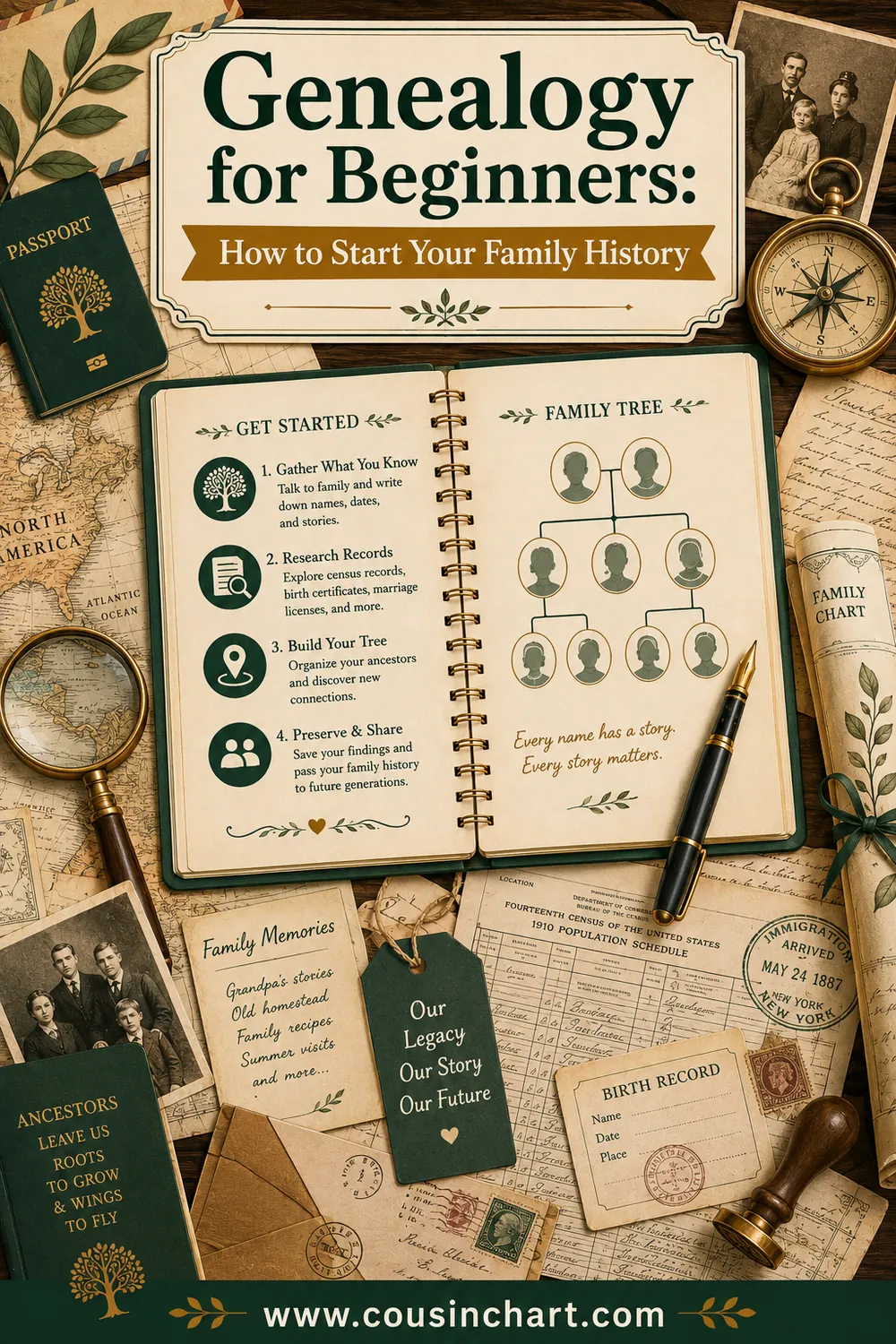
Genealogy for Beginners: How to Start Your Family History
Genealogy starts in one place: with you. Write down what you know about yourself, your parents, and your grandparents, then work backward one proven generation at a time using interviews and records — most of which are free. That's the entire method. Everything else in this hobby is just better ways of doing those two things: asking, and proving.
This is a true beginner's guide — no jargon, no purchases required. You'll learn the golden rules, the free record sources that do most of the heavy lifting (FamilySearch, the US census, Find a Grave), how to organize what you find, and what to do when the trail goes cold. Keep the free family relationship calculator on our homepage handy as you go: genealogy produces "wait, what's a first cousin once removed?" moments weekly, and it answers them in seconds.
Relationship quick-check: tap a phrase to see the correct term — you'll meet all of these in your research.
Tap a phrase above to see the answer.
Work out any family relationship →The three golden rules
Fifty years of genealogical practice boils down to three rules. Follow them and you'll avoid nearly every beginner disaster:
- Work from the known to the unknown. Start with yourself and move backward, proving each parent-child link before the next. Never start from a rumored famous ancestor and try to build down — that's how people spend years documenting someone else's family.
- Prove it twice. Aim for two independent sources per fact. Memories drift, census takers misheard, clerks misspelled. When sources disagree (they will), note both and prefer the record made closest to the event.
- Write down where you found everything. "Grandma's 1998 letter" or "1940 census, Chicago, sheet 4B" — even scrappy source notes turn a pile of names into research someone can trust and continue.
Step one: raid your own house, then your relatives' memories
Before touching a database, collect what already exists:
- Documents: birth and marriage certificates, obituaries, military papers, naturalization certificates, the family Bible, funeral cards, old letters.
- Photos: check the backs — names and dates written on photographs are primary evidence.
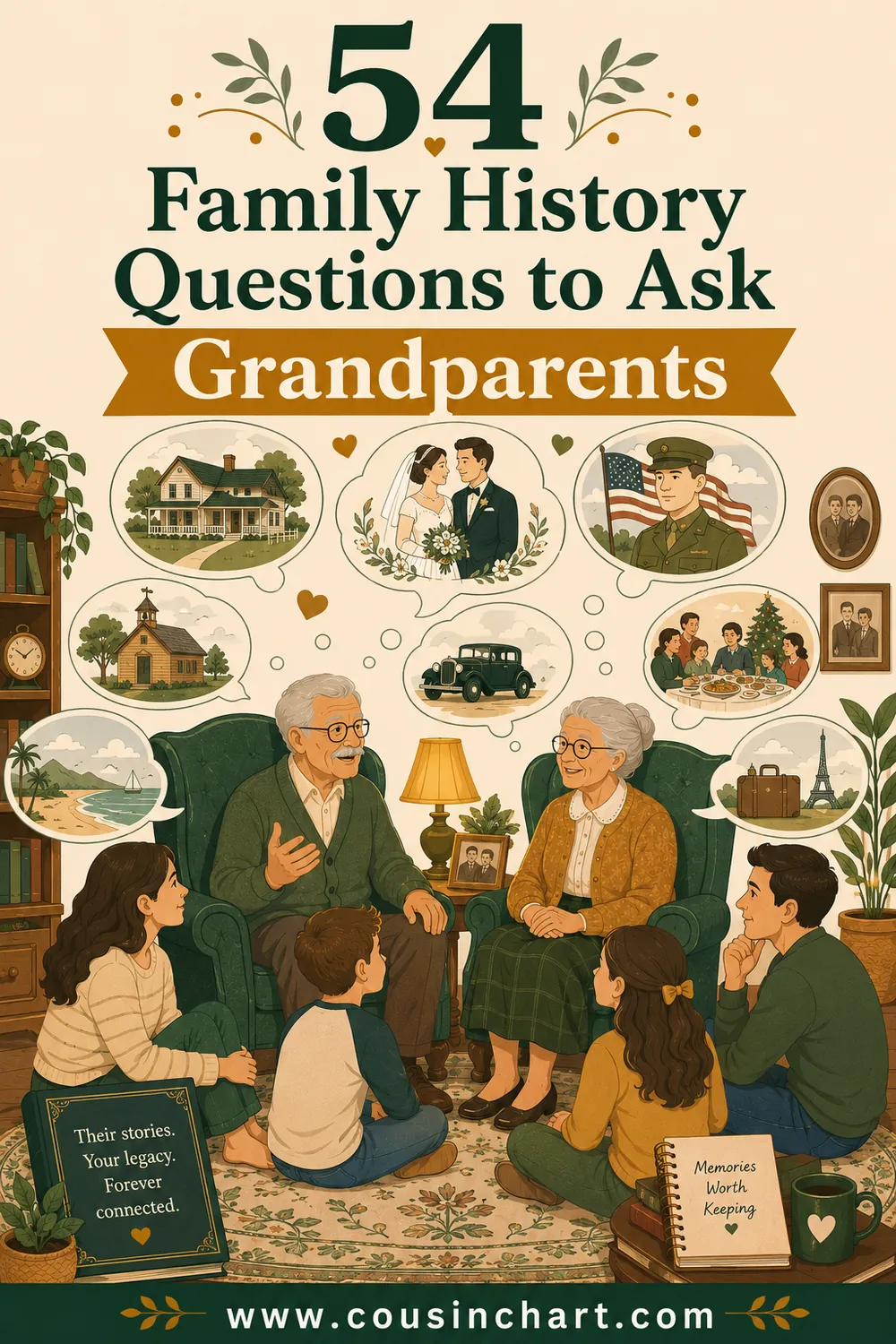
- People: your oldest relatives are the most valuable and most perishable source in genealogy. Interview them first, records later. Ask for full names, maiden names, dates, places, the immigration story, and who-has-the-documents. We've built a whole list of family history questions to ask grandparents — bring it and a voice recorder.
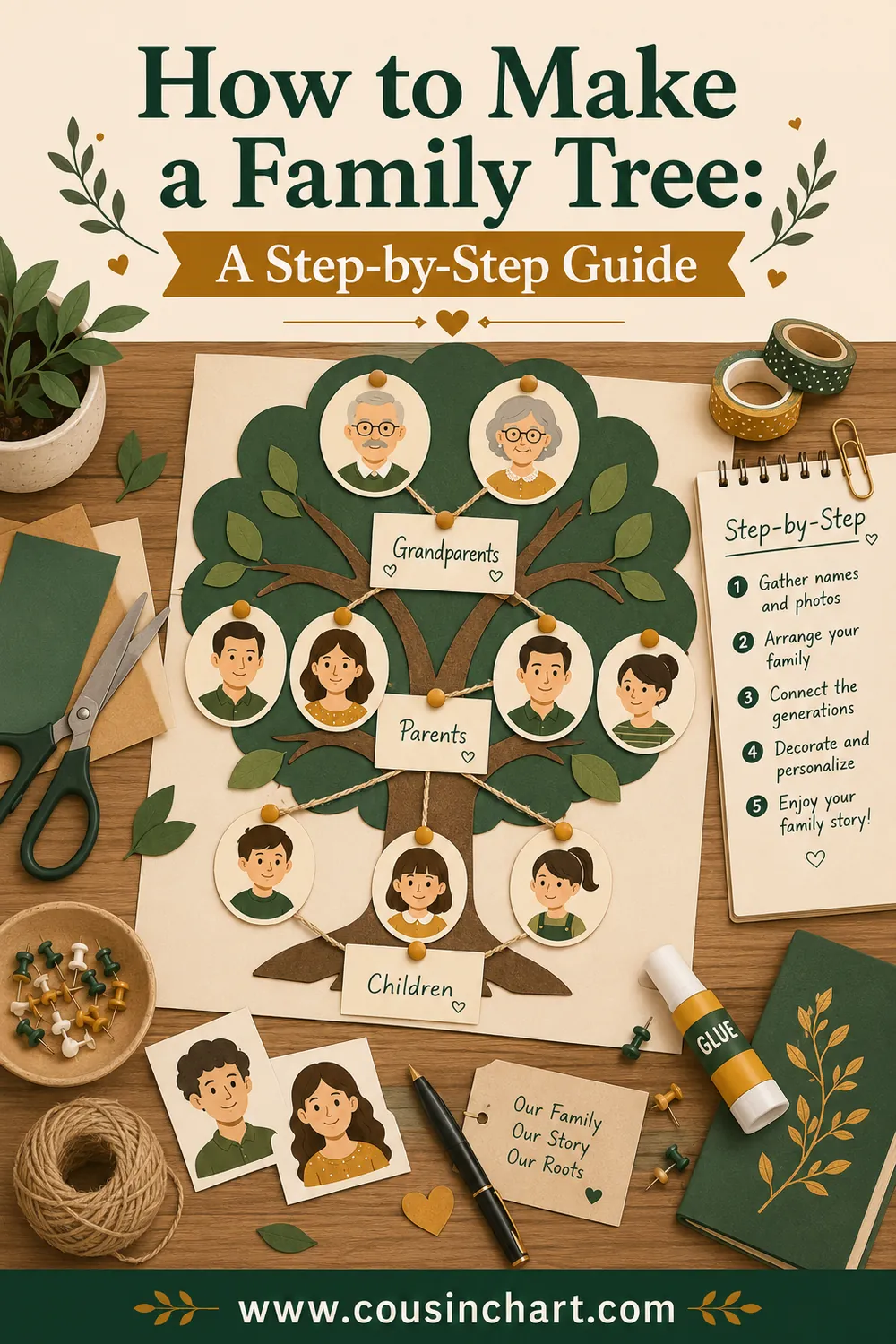
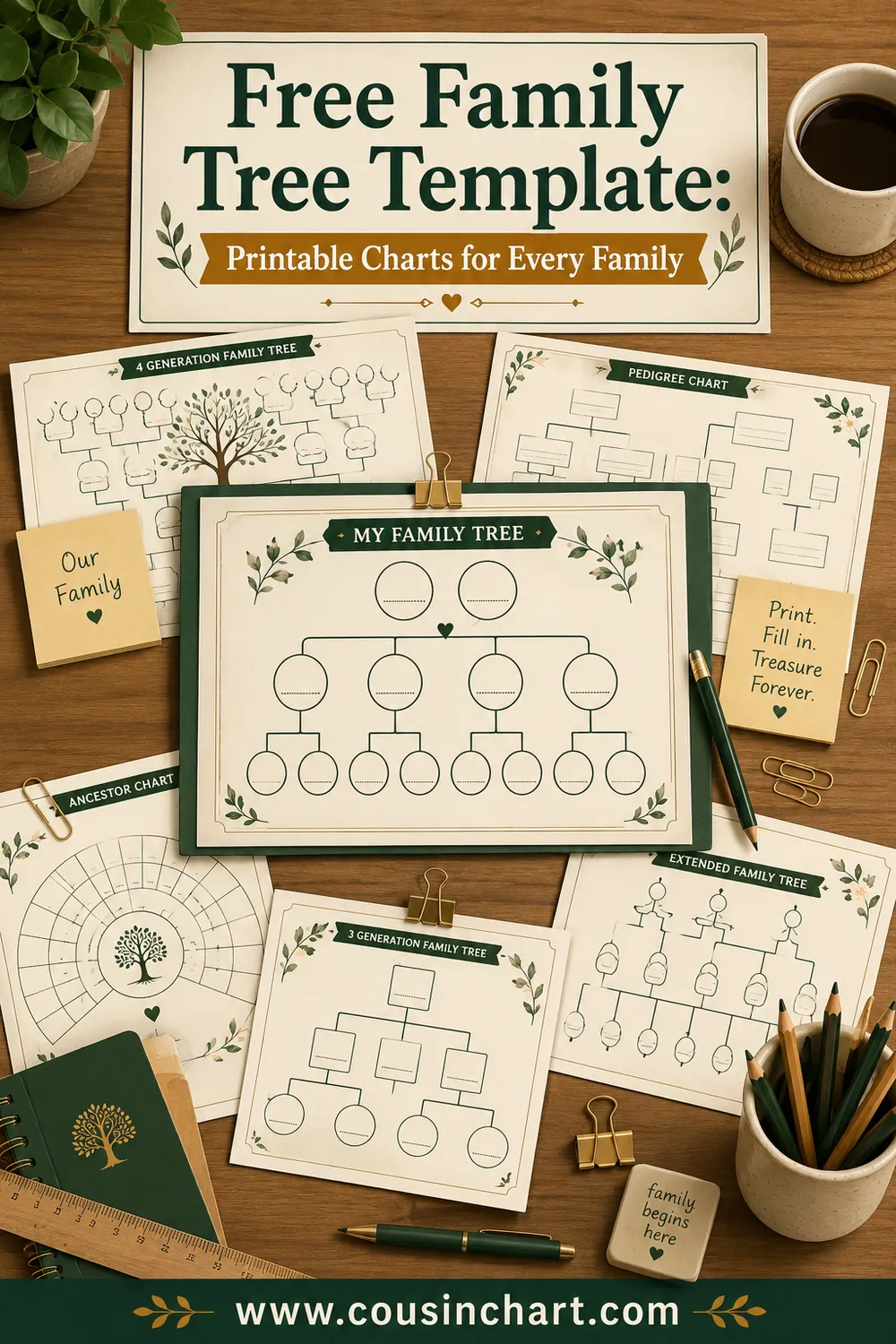
Then write up what you have on a chart. A printed free family tree template works perfectly: you in the first box, parents, grandparents, pencil for anything unproven. Most beginners can fill three generations on day one, and the empty boxes become your research list. (Not sure what to call the relatives you're charting? That's what the relationship calculator is for.)
The free record sources that do the heavy lifting
Here's the beginner's toolkit — all free:
| Source | What it gives you | Cost |
|---|---|---|
| FamilySearch.org | Billions of indexed records worldwide, free family tree | Free |
| US federal census (1790–1950) | Household snapshots every 10 years | Free |
| Find a Grave / BillionGraves | Burial dates, headstone photos, family plots | Free |
| State/county vital records | Birth, marriage, death certificates | Small copy fees |
| Chronicling America (Library of Congress) | Historic newspapers — obituaries, announcements | Free |
| National Archives (NARA) | Immigration, naturalization, military records | Free to search |
FamilySearch: your home base
FamilySearch.org, run by the Church of Jesus Christ of Latter-day Saints, is the largest free genealogy collection on earth — billions of birth, marriage, death, census, and church records, plus a massive collaborative family tree. It's free forever (account required, no payment ever requested). Search a grandparent's name with a birth year and place, and start attaching what you find. Commercial sites like Ancestry exist and are good — but a beginner can go years on FamilySearch alone.
The US census: a snapshot every ten years
The federal census (taken every decade since 1790) is the backbone of American genealogy. Each census lists households with names, ages, birthplaces, occupations, and — from 1880 on — each person's relationship to the head of household. Censuses become public after 72 years, so 1950 is currently the newest available; note that most of the 1890 census was destroyed in a 1921 fire, a gap every researcher learns to route around. Find an ancestor in 1950, then walk them back through 1940, 1930, 1920... watching children appear, occupations change, and immigrants' arrival years get recorded. All searchable free on FamilySearch and the National Archives.
Vital records, graves, and newspapers
- Vital records (birth, marriage, death certificates) are the gold-standard proof of parent-child links. Order copies from the state or county where the event happened; older records are often already digitized on FamilySearch.
- Find a Grave fills in death dates fast, and family members are often buried in adjacent plots — a cemetery page can sketch a whole family group.
- Old newspapers are underrated: obituaries routinely name every surviving child with their married names and towns. Chronicling America offers millions of pages free; many state archives host more.
- Immigration records: passenger lists (Ellis Island's are free online) and naturalization papers, which often state the ancestor's exact birthplace overseas — the single fact that unlocks research in the old country.
Organize before you drown
Genealogy generates paper and tabs at a frightening rate. Minimal viable organization:
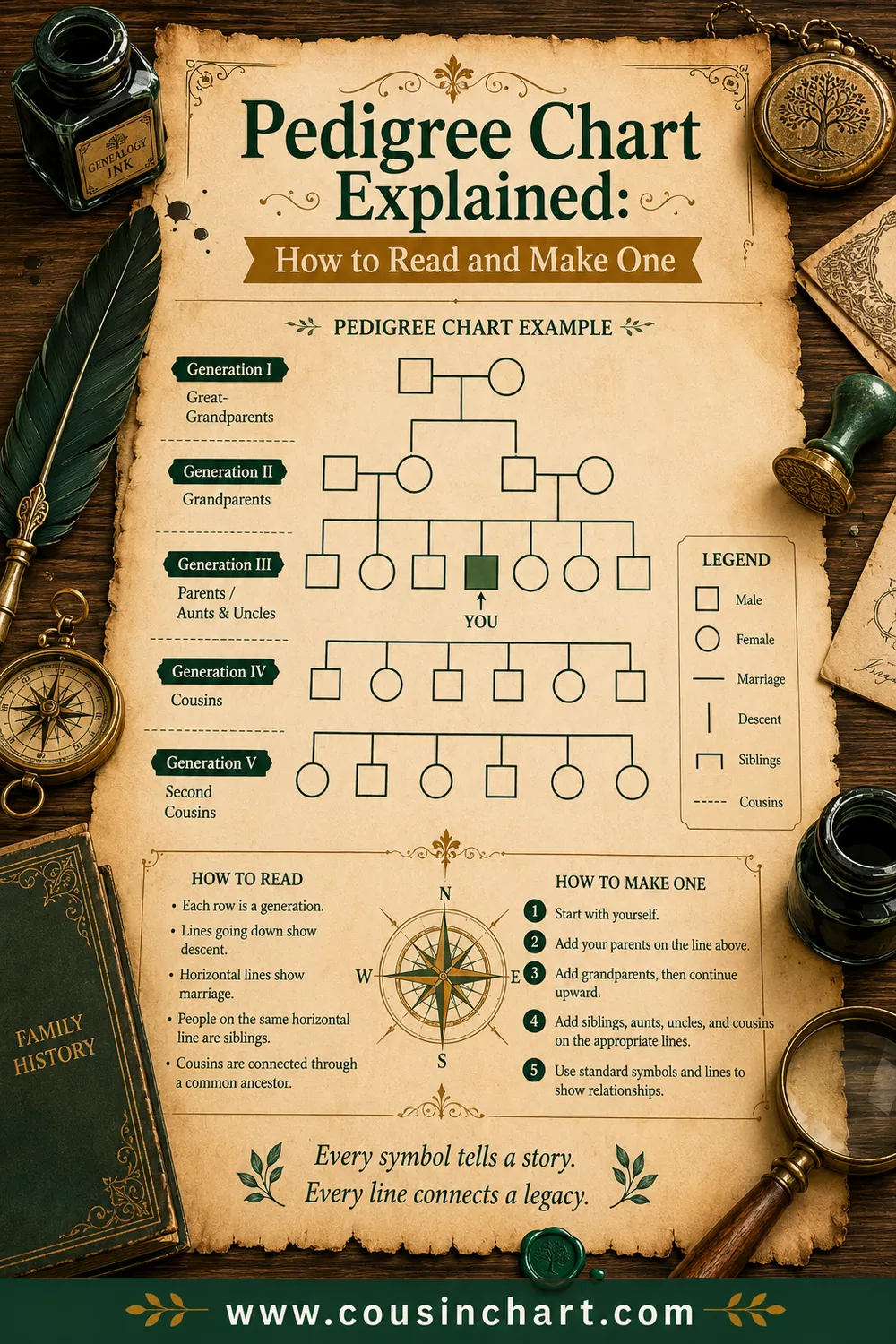
- One pedigree chart as your master map — the 5-generation template is the standard. (New to the format? See pedigree chart explained.)
- One page or file per family group — a couple plus their children, with facts and sources.
- A research log: one line per search — where you looked, for whom, what you found (including "nothing"). This is the habit that separates hobbyists who progress from hobbyists who re-search the same census five times.
- Consistent names and dates: maiden names for women, surnames in CAPS, dates as 4 Jul 1898.
DNA testing: useful, optional, not magic
Autosomal DNA tests (offered by several companies, typically $40–100) match you with relatives who've also tested and estimate shared ancestry. For beginners two facts matter: DNA complements records, it doesn't replace them — a match list without a tree is just a list of strangers — and match labels are estimates: "second cousin" on a DNA site means "shares about the right amount of DNA for a second cousin," which several other relationships also fit. When a match says they're your "2nd–3rd cousin," work out the actual paper connection — the calculator helps you translate "my grandmother's cousin's grandson" into a real term. Be aware, too, that DNA sometimes reveals surprises (unknown half siblings, misattributed parentage); test only if you're genuinely open to the answers.
When you hit a brick wall
Every line eventually stops — a missing record, a burned courthouse, an ancestor who seems to appear from nowhere. Standard ways through:
- Research the siblings. Your great-great-grandfather's brother's death certificate names the same parents yours would. Collateral relatives are the classic brick-wall solvent.
- Widen the geography. Families moved in clusters; check the neighbors on the census page — in-laws and cousins often lived next door.
- Question your assumption. Half of all brick walls are a wrong link one generation down — usually a guessed relationship. Re-verify.
- Ask for help. Local genealogical societies, library genealogy desks, and FamilySearch's free community are welcoming to beginners, and someone has usually already solved your county's records quirks.
Progress in genealogy is measured in months, not minutes — and that's the appeal. Each solved puzzle is permanent: a real person, recovered.
FAQ
How do I start genealogy with no experience?
Write down what you know about yourself, parents, and grandparents; interview your oldest relatives; then search FamilySearch.org (free) for records that confirm and extend each generation. Chart everything on a printed pedigree chart, working backward one proven link at a time.
Is genealogy expensive?
It doesn't have to be. FamilySearch, the US census, Find a Grave, Chronicling America, and the National Archives are all free, and together they can carry most American research back to the mid-1800s. Costs only appear if you order certificate copies, take DNA tests, or subscribe to commercial sites — all optional.
How far back can a beginner trace their family?
Most Americans can document four to six generations — typically to the mid-1800s — using free records. Beyond that depends on the country of origin and surviving records. Western European church records can reach the 1600s; other regions vary widely.
What's the difference between genealogy and family history?
Genealogy is the skeleton — names, dates, and proven parent-child links. Family history is the flesh — stories, photos, occupations, migrations. In practice everyone does both, and the interviews you record now are the family history your descendants will treasure most.
Should a beginner take a DNA test?
It's optional. DNA is powerful for confirming relationships and finding living cousins, but it only becomes meaningful alongside a documented tree. If you test, be genuinely prepared for surprises — unknown half siblings and unexpected parentage do turn up.
What do all the cousin terms mean in my research?
Cousin numbers count generations to the shared ancestor (first cousins share grandparents, second cousins share great-grandparents), and "removed" counts generation gaps between the two of you. The free relationship calculator turns any path — "my great-grandfather's brother's granddaughter" — into the correct term instantly.
Your first ancestor hunt starts tonight
Genealogy for beginners is gloriously simple: write down what you know, call the relative who knows more, prove it in the free records, repeat. Print a family tree template, open FamilySearch, and go find your great-grandparents in the 1950 census — most people locate a family member on their first evening. And when the records start producing grandaunts, half cousins, and thirds-once-removed, the free CousinChart relationship calculator will keep every one of them straight.